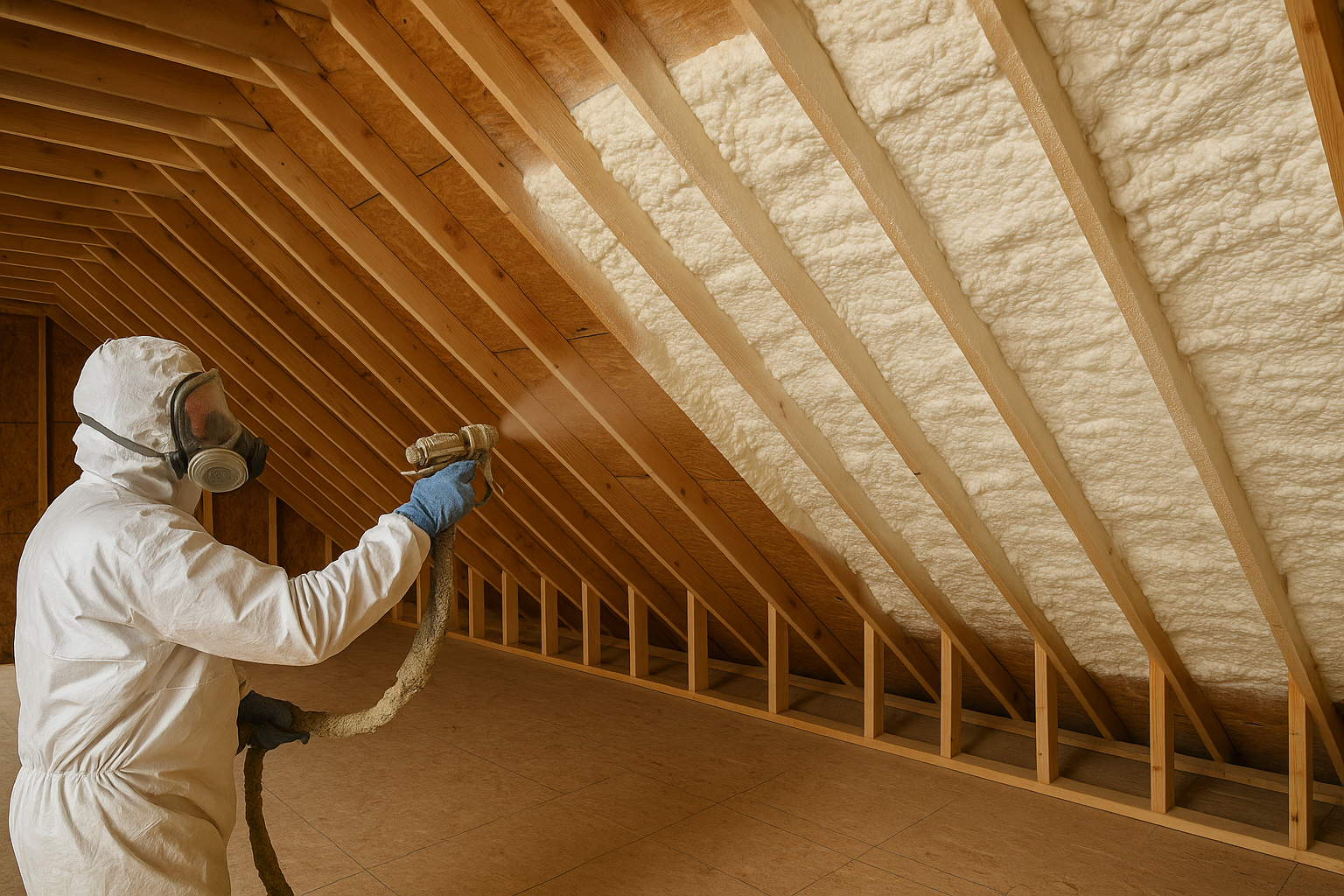
Choosing the proper insulation affects comfort, energy use, and indoor noise levels. Interior spaces need insulation that seals gaps without adding unnecessary weight or cost. Open-cell spray foam meets these needs by expanding into cavities and adapting to common interior conditions. It is often used in walls, ceilings, and rooflines where flexibility and sound control are essential.
What Makes Open-Cell Spray Foam Different?
Interior insulation performs well when it balances coverage and breathability. This balance helps explain why many builders choose open-cell spray foam for indoor use.
Structure and Material Characteristics
Open-cell foam expands into a soft, spongy material after application. Its cells remain partially open, which keeps the foam lightweight. This structure allows it to fill gaps around wiring, plumbing, and framing without stressing building materials.
Air Sealing Without High Density
Interior applications often focus on limiting air movement rather than providing structural strength. Open-cell spray foam seals air leaks by filling cracks and joints. This air control reduces drafts and helps HVAC systems maintain stable indoor temperatures.
Performance Benefits for Interior Spaces
Interior insulation should support daily comfort while remaining practical for typical construction. Open-cell spray foam offers benefits that align with these goals.
Thermal Comfort and Energy Control
By sealing air leaks, open-cell foam reduces heat transfer caused by uncontrolled airflow. This helps maintain more consistent temperatures between rooms. Although its R-value per inch is lower than that of closed-cell foam, its ability to reduce air leakage can improve overall energy performance in many interior assemblies.
Sound Reduction Between Rooms
Noise control plays a significant role in interior comfort. The foam’s open structure absorbs sound waves rather than reflecting them, which can reduce sound transfer between rooms and floors. Homes with shared walls or home offices often benefit from this acoustic performance.
Installation Flexibility and Cost Efficiency
Installers can apply open-cell foam efficiently due to its high expansion rate. This reduces the amount of material needed per square foot. Its lower density also generally makes it more cost-effective for larger interior areas.
Common Interior Applications
Interior spaces vary widely, but many share similar insulation needs. Open-cell spray foam adapts well to various indoor environments.
Walls and Ceilings
Interior walls benefit from both air sealing and sound control. Open-cell foam fills stud cavities, limiting air movement and helping reduce noise transfer. Ceilings can also benefit by improving temperature stability between floors.
Attics and Conditioned Rooflines
In attics designed as conditioned spaces, open-cell foam can be applied along rooflines. It helps support indoor temperature control while remaining vapor permeable, which may assist drying when assemblies are designed correctly. Proper ventilation and moisture design remain essential in these areas.
Considerations Before Choosing Open-Cell Foam
Every insulation choice depends on the space and climate. Open-cell foam is vapor-permeable, so moisture management is essential. Interior areas with higher humidity may require additional vapor control, depending on local codes and building design. Its lower R-value also means thicker applications may be needed to meet insulation requirements in colder climates.
Conclusion
Interior insulation works best when it improves comfort without complicating construction. Open-cell spray foam supports this goal through air sealing, sound absorption, and installation flexibility. Its performance fits many wall, ceiling, and conditioned-attic applications where comfort and efficiency are priorities. With proper moisture planning, it can be a reliable choice for many interior projects.