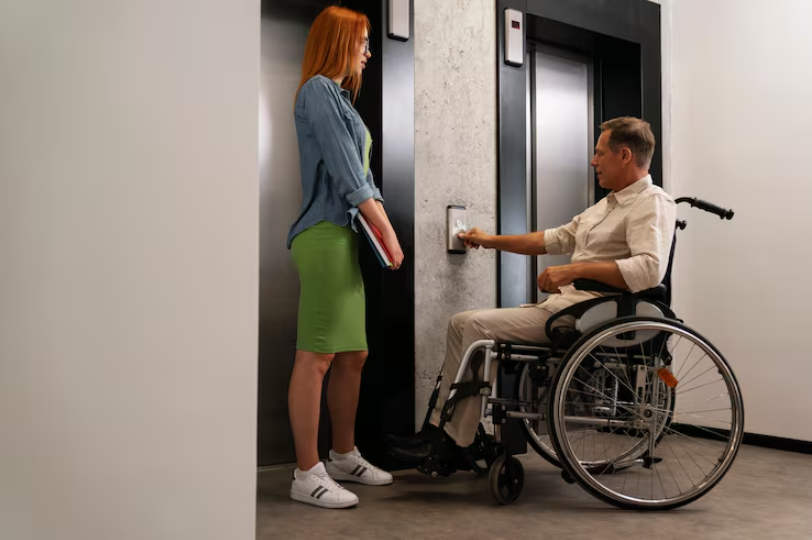
Most buildings and their surrounding areas still use steep steps and narrow stairs and unsafe ramps which fail to provide proper accessibility for wheelchair users. Simple tasks become difficult because of these barriers and they create high-stress situations which restrict people from achieving their basic needs.
People become extremely annoyed when their regular paths turn into difficult obstacles. The platform lift system provides users with safe and stable transportation which connects different building levels.
The system offers accessible movement throughout various types of buildings. The guide teaches you when to select a platform as the best solution and compares this option with other possibilities and shows you what to consider when picking one.
Understanding What a Platform Lift Really Offers
A platform lift is a compact lifting system that moves users between levels without the space demands of a full lift or the strain of a ramp. It is built for wheelchair users, people with limited mobility, and anyone who needs steady support.
Why It Works Well
- It fits into tight spaces.
- It runs at a safe speed with gentle movement.
- It handles wheelchairs with ease.
- It removes the need for long, steep ramps.
A wheelchair platform lift provides a stable platform that supports barrier-free movement without major changes to the building.
When a Platform Lift Becomes the Smarter Choice
1. When Space Is Tight and Ramps Won’t Work
Many properties do not have the space for a ramp that meets safety standards. Ramps that are too steep create risk and discomfort. It, however, takes up only a small footprint and still offers safe travel.
Signs a platform lift Is right for tight spaces
- There is little room for a long ramp.
- Stairways are narrow or steep.
- Outdoor access needs to stay compact.
In these cases, the lift becomes the logical solution that offers comfort without redesigning the building.
2. When You Need a Cost-Effective Alternative to a Passenger Lift
Full passenger lifts require planning permission, major building work, and a much higher budget. It, by contrast, provides reliable access at a fraction of the cost.
Key advantages
- Lower installation cost
- Reduced power use
- Simple maintenance
- Quicker installation time
A wheelchair platform lift gives the feel of a lift without the heavy engineering or ongoing expense.
3. When You Want Barrier-Free Movement Without Structural Changes
Older buildings often make accessibility upgrades difficult. Thick walls, awkward layouts, and limited headroom can all block large lift systems. It slips into these settings with ease.
Ideal for
- Listed buildings
- Schools and clinics
- Small offices
- Homes with limited renovation options
It offers support without stripping original features or carrying out major construction.
4. When Users Need Full Independence
For anyone who uses a wheelchair, independence matters. It can be operated with simple controls, allowing individuals to travel between levels without help.
Features that support independence
- One-touch controls
- Clear safety edges
- Smooth stop-start motion
- Automatic ramps or doors
The result is a safer and more confident daily routine.
5. When Safety and Stability Matter Most
Safety is at the heart of any accessibility solution. A well-designed platform lift includes sensors, gentle movement, secure rails, and emergency stop options.
Safety elements to look for
- Anti-slip platform surface
- Load capacity for different wheelchairs
- Soft start and stop technology
- Backup power supply
Each element works together to support secure and stress-free movement.
Comparing a Platform Lift to Other Accessibility Options
| Types of Lift | Best Use | Wheelchair Friendly | Space Needed | Cost |
| Platform Lift | Higher levels, tight spaces | Yes | Small footprint | Medium |
| Ramp | Small height changes | Yes | Large space | Low |
| Stairlift | Seated users only | No | Fits on stairs | Medium |
| Passenger Lift | Multi-storey access | Yes | Large structural area | Very High |
Types of Platform Lifts and When Each One Fits Best
Vertical Platform Lift
This lift travels straight up and down. It works well for short to medium heights and suits both indoor and outdoor spaces.
Best uses
- Garden level to ground floor
- Lobby to reception area
- Split-level homes
Inclined Platform Lift
This lift runs along the line of a staircase. It carries the wheelchair on a full platform and folds away when not in use.
Ideal settings
- Narrow staircases
- Heritage buildings
- Schools or small offices
It keeps the staircase usable while still offering full access.
Enclosed Platform Lift
This version has walls or panels around the platform. It delivers a lift-like feel without the cost of a full passenger lift.
Perfect for
- Offices with visitors
- Clinics
- Multi-storey homes
Choosing the Right Wheelchair Platform Lift
Selecting the right lift depends on the building, the users and the daily routine.
- Travel height
- Indoor or outdoor use
- Power supply needs
- User load and wheelchair size
- Noise level
- Control style
Thinking through these items helps match the lift to real-world needs.
Installation Needs
It often requires only a small fix to the wall or floor. Many models need no pit or shaft. This keeps disruption low during installation.
What installers look at
- Entry and exit points
- Space for the platform to fold or move
- Smooth access to power
- Safety clearances
The simple setup is a main reason people choose this path.
Benefits of a Platform Lift for Everyday Life
- Improved Comfort: The ride feels steady and safe, which helps users relax while moving between levels.
- Better Accessibility for Everyone: Visitors, staff and family members all gain from smooth access. It improves the experience across the whole building.
- Adds Value to the Property: Accessible spaces appeal to more people. It makes a property more welcoming and more adaptable.
- Supports Long-Term Ageing: People who plan to stay in their home for years often add a platform lift to secure future mobility needs.
Why a Wheelchair Platform Lift Enhances Barrier-Free Movement
A wheelchair platform lift for barrier-free movement delivers a seamless route through spaces that once felt limited.Users can travel independently through steep areas because the system protects them from accidents and enables safe passage.
The requirements for barrier-free movement extend beyond basic compliance because they need to provide people with dignified access which allows them to move freely and reach places without hindrance.
Conclusion
A platform lift becomes the smarter choice when space is tight, budgets are limited, or users need simple and secure access without major building work. The solution provides suitable accessibility for homes and offices and public spaces that need barrier-free movement without needing complex building changes.
The lift system provides wheelchair users and individuals who require constant support with a design that prioritizes their safety and comfort and independent mobility needs.
A lift selection process requires building layout understanding and user requirement analysis to deliver dependable access solutions for all operational days. It enables constant movement between areas while it creates a space that welcomes all people.
Frequently Asked Questions
What height can a platform lift travel?
The range covers many home entrances, split-level floors and workplace steps. The larger models of the system can achieve higher building heights which depend on the architectural design and structural framework of the facility.
Can a platform lift be used outdoors?
Yes. The majority of lifts come designed for outdoor operation because they include weatherproof panels and built-in drainage systems and strong exterior coatings. They function effectively at garden entrances and front steps and external staircases.
Do platform lifts need major construction?
In most cases, no. The majority of models require only a solid foundation and electrical power and sufficient area to operate the platform. The system design avoids the need for deep pits or vertical shafts or extensive structural modifications.
Is a platform lift safe for wheelchair users?
The wheelchair platform lift has built-in safety edges and non-slip surfaces and provides smooth speed control and secure handrails. The combination of these elements creates a secure system that enables passengers to travel safely and steadily.
You Can Read Also: Home Lifts Price in India: A Complete Cost Guide for Homeowners