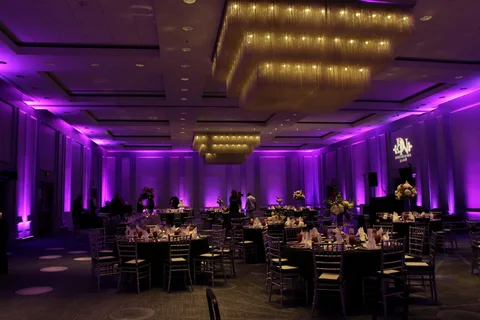
The role of lighting in wedding ceremony experience is so critical in terms of visibility, comfort and the general course of the process. Lighting should be taken carefully whether in a closed or outdoor environment so that the guests can move freely and so that focus is on the ceremony. Darkness may ruin key moments whereas even light will help the event to be clear and relaxed.
An organized wedding lighting sevice assists the decision maker in matching the lighting choices with the venue, time of day and attendees requirements. Planned lighting takes into account environmental factors, changes of direction, and other technical needs as opposed to the fixed venue lights which is particularly crucial with an indoor to outdoor movement or weather changes during the day.
The use of Lighting in Wedding Ceremony Planning
Planning of lights is not just concerning brightness. A structured wedding lighting service supports the movement of guests through different areas, defines focal points, and maintains comfort throughout the ceremony. Thoughtful lighting planning helps ensure that the ceremony remains visually balanced and easy to follow.
Supporting Ceremony Flow and Visibility
Proper lighting will ensure that the guests do not have to be in a dilemma of where they are going to be seated, aisle, and the entrance. The visibility makes the attendees concentrate on the ceremony instead of moving around the dark or uneven places. This is necessary in evening ceremonies or places that do not have a lot of natural lights.
Creating Visual Balance Without Discomfort
Too much brightness will be unpleasant, whereas too little will cause tension. Even lighting minimizes glare and shading which favor visual comfort. Lighting should be evenly spaced to prevent the focal points to get lost in the space surrounding.
Environmental Factors That Influence Lighting Choices
Each venue has environmental factors which influence the lighting choices. Knowing these factors will help to avoid the frequent problems at ceremonies.
Indoor Environmental Conditions
The ceiling height, the color of the walls and the available fixtures differ greatly in the indoor venues. Dark walls absorb light whereas reflective surfaces reflect light making the surfaces brighter. The ceiling height influences the distribution of light and the location where the fixtures are placed. These aspects affect comfort and clarity.
Outdoor Environmental Conditions
Outdoor ceremonies introduce variables such as terrain, nearby structures, and weather exposure. Uneven surfaces require careful illumination to ensure safe movement. Open areas often need wider coverage to prevent dark zones, which a planned wedding lighting service addresses effectively.
Seasonal and Time-Based Considerations
Ceremonies scheduled near sunset require adaptable lighting plans. Seasonal daylight changes affect when artificial lighting becomes necessary. Planning accounts for these transitions to avoid sudden lighting shifts during key moments.
Lighting Planning at the Various Areas of Ceremonies
Various ritual areas have varied functions. Certain lights should be considered in each area.
Ceremony Aisles and Walkways
The aisles and walkways should have uniform light. The guests ought to navigate freely without having to face glare or shadows. When the lights are too low or too high, it will distract the actual ceremony.
Seating and Guest Areas
Guest seating has the advantage of an easier lighting which does not create a focus on the subject. Evenly-distributed lighting ensures ease of comfort at the same time maintaining a centralized view of the ceremony.
Altar, Arch, and Focal Points
The area of focus needs a proper light that is not excessive in the environment but brings out the participants well. The correct lighting position does not create excessive light or dark contrasts and makes the expressions and details visible.
Technical Planning, Power, and Equipment
Technical planning makes certain that lighting systems are working during the ceremony.
Power Generation and Power Usage
Inside facilities can have pre-existing power, whereas outside environments might be necessitated by a temporary one. Load management will avoid outages and provide uniform performance. Planning takes into consideration the sum total power requirements of all fixtures.
Fixture Selection Based on Environment
The indoor and the outdoor light fixtures are not the same. Light can be controlled in enclosed areas but in open spaces it will be necessary to use those that are resistant to weather. Safety and reliability is facilitated by the use of suitable equipment.
Light Adjustments and Control Systems
Gradual changes in the lighting level are possible by control systems. Dimmers and centralized controls are used to control changes during entrances, vows or evening changes. This elasticity is helpful in facilitating the flow of the ceremonies.
Timing and Coordination on the Event
Lighting planning is most effective when it is aligned to the overall event plan.
TEAMING Lighting and Ceremony Schedule
The time of the ceremony determines the level and position of light. Scheduling of lighting is also carried out to maintain the lighting as things unfold. This will avoid inconvenience at critical times.
Collaborating with Event Professionals
There is coordination with the planners, photographers, and venue staff members to make sure that lighting enhances every part of the ceremony. Effective communication prevents disagreements and improves the general performance.
Overcoming Lighting Problems
Even properly designed ceremonies may not go without problems. Preparation is used in order to diminish their effects.
Combined Indoor-Outdoor Ceremony Spaces
The venues with both outdoors and indoors need to be provided with constant lighting strategies. A continuous flow assists in keeping continuity of the sight of the guest proceeding with the motion amongst the spaces.
High Number of Guests and Size of the venue
Bigger ceremonies should be covered without being overly bright. The strategic positioning secures a presence all over the space yet comfortably.
Unexpected Environmental Changes
The lighting requirements may be influenced by weather changes or schedule overheads. Flexibility is a way of making adjustments without interfering with the experience of the ceremony.
Conclusion
Considerate lighting design is an aid to a successful wedding ceremony held both indoors and outdoors. The development of a systematic method of a wedding lighting service can be achieved through the due care of environmental aspects, layout requirements, and technical needs to ensure that it is easy to keep clarity, comfort, and balance in the occasion. Lighting improves the ceremony without distracting it, which is well prepared, coordinated, and adaptable. Lighting When the lighting is thought through and considered, it becomes a silent facilitator of those moments which are the most important.
FAQs
What is the best time to plan lighting for a wedding ceremony?
Lighting planning should begin early in the event preparation process to align with the venue layout, ceremony timing, and seasonal daylight changes.
How does lighting affect guest comfort during a ceremony?
Balanced lighting improves visibility and reduces glare, helping guests move safely and stay focused without visual strain.
Are indoor and outdoor ceremonies lit in the same way?
No, indoor spaces allow more controlled lighting, while outdoor settings require wider coverage and weather-resistant fixtures.
Can lighting be adjusted during the ceremony?
Yes, control systems such as dimmers allow gradual changes to match entrances, key moments, and transitions from day to evening.