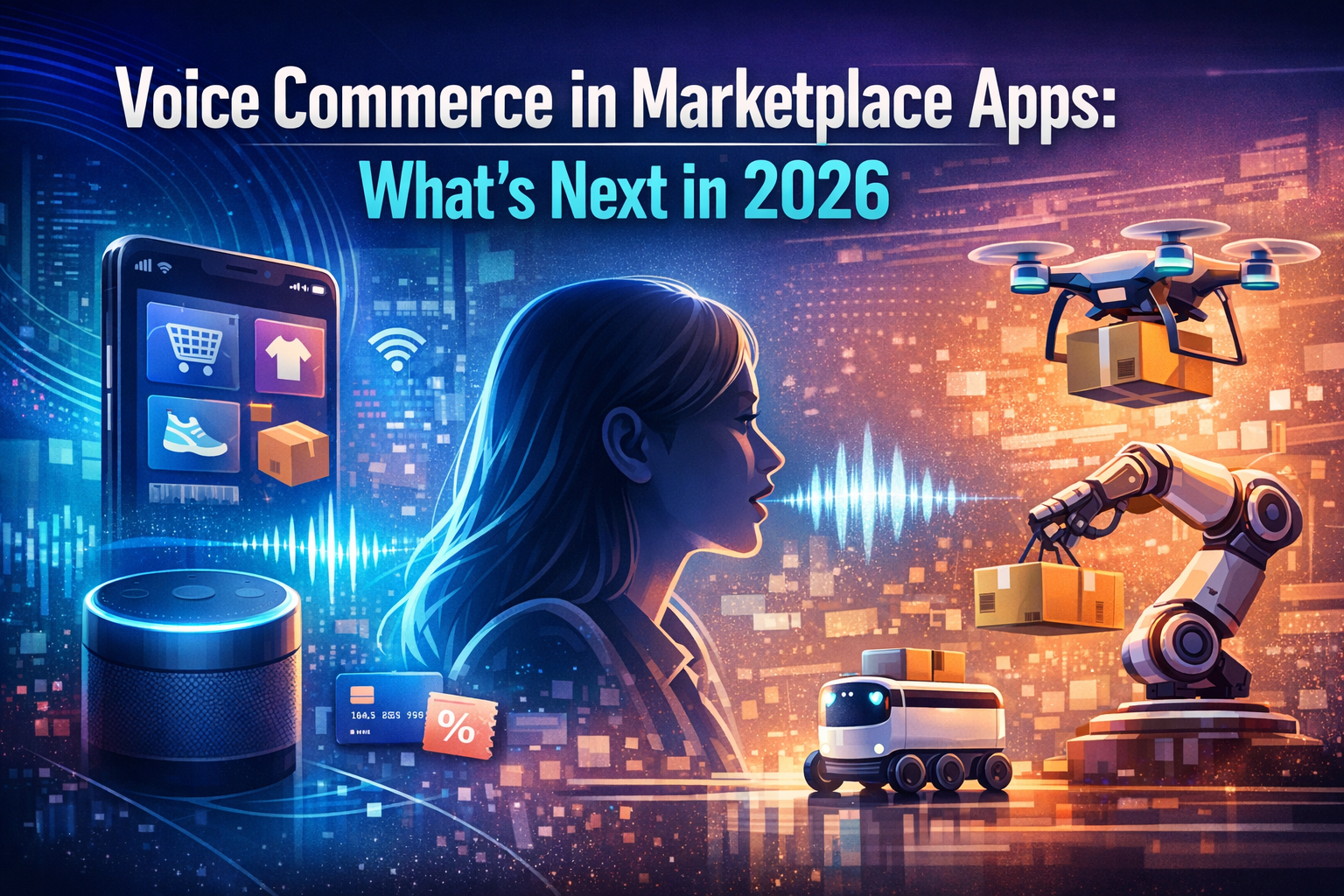
Voice technology is no longer a futuristic concept—it has become a practical, user-friendly interface that is reshaping how consumers interact with digital platforms. From asking smart assistants to reorder groceries to searching for products hands-free, voice commerce (v-commerce) is steadily gaining traction. As we move into 2026, voice-enabled experiences are emerging as a major differentiator for marketplace apps, redefining convenience, personalization, and accessibility.
For businesses planning to build or scale digital marketplaces, understanding the future of voice commerce is essential. This blog explores how voice commerce is evolving, why it matters for marketplace apps, key trends for 2026, and how partnering with the right marketplace app development company can help you stay ahead of the curve.
What Is Voice Commerce?
Voice commerce refers to the use of voice commands to search for products, compare options, place orders, track deliveries, and manage returns through marketplace platforms. It leverages technologies such as:
- Natural Language Processing (NLP)
- Artificial Intelligence (AI)
- Speech recognition
- Conversational interfaces
Instead of typing queries or navigating menus, users interact with apps using natural spoken language—making the shopping experience faster and more intuitive.
Why Voice Commerce Matters for Marketplace Apps
Marketplace apps are complex ecosystems with multiple sellers, vast product catalogs, and diverse user journeys. Voice commerce simplifies these complexities by offering frictionless interaction.
Key Benefits for Marketplace Platforms
- Hands-free convenience for users on the go
- Faster product discovery and checkout
- Improved accessibility for elderly and visually impaired users
- Higher engagement and retention rates
- Enhanced personalization through AI-driven voice insights
As consumer expectations evolve, voice is becoming a natural extension of omnichannel commerce strategies.
Market Adoption: Why 2026 Is a Turning Point
By 2026, voice-enabled devices and AI assistants are expected to be deeply integrated into smartphones, cars, smart TVs, and wearable devices. This ubiquity is pushing marketplaces to rethink user experience design.
Key drivers accelerating voice commerce adoption include:
- Growth of AI-powered assistants
- Increasing trust in voice recognition accuracy
- Expansion of multilingual voice support
- Rise of smart home and connected ecosystems
- Demand for faster, zero-touch shopping experiences
Marketplace businesses that invest early will gain a competitive edge in both user experience and brand recall.
Key Voice Commerce Trends in Marketplace Apps for 2026
1. Conversational AI for Product Discovery
In 2026, voice search will go far beyond basic keyword matching. Conversational AI will understand context, intent, and preferences.
Example:
“Show me budget-friendly wireless headphones with good battery life.”
Voice assistants will analyze reviews, price ranges, seller ratings, and user behavior to deliver curated results. This level of intelligence requires advanced AI models—something an experienced marketplace app development company can architect effectively.
2. Voice-Enabled Personalized Recommendations
Voice commerce will become deeply personalized. Marketplaces will use voice interaction data combined with browsing and purchase history to deliver tailored suggestions.
Benefits include:
- Smarter cross-selling and upselling
- Context-aware recommendations
- Increased average order value (AOV)
This personalization is a key factor that separates an average platform from one built by the best app development company.
3. Multilingual & Regional Voice Support
Global and regional marketplaces are increasingly focusing on localization. In 2026, voice commerce will support multiple languages, accents, and dialects—especially important for markets in the Middle East, Asia, and Africa.
Multilingual voice capabilities will:
- Expand reach to non-English-speaking users
- Improve inclusivity
- Drive adoption in emerging markets
4. Voice-Driven Checkout & Payments
Voice-enabled checkout is set to become more secure and seamless. With biometric authentication and voice recognition, users will be able to complete purchases using voice commands alone.
Examples:
- “Buy this product now.”
- “Use my saved card and deliver tomorrow.”
Security layers such as voice biometrics, device authentication, and AI fraud detection will ensure trust and compliance.
5. Integration with Smart Devices & IoT
Marketplace apps in 2026 will integrate seamlessly with:
- Smart speakers
- In-car systems
- Wearables
- Smart TVs
This allows users to browse, reorder, and track purchases from anywhere. Voice commerce will no longer be limited to mobile apps—it will become a connected ecosystem experience.
6. Voice-Based Customer Support
Customer support is a critical component of marketplace success. Voice-enabled virtual assistants will handle:
- Order status inquiries
- Returns and refunds
- Seller communication
- Complaint resolution
This reduces operational costs while improving response time and customer satisfaction.
Voice Commerce Use Cases Across Marketplace Verticals
E-commerce Marketplaces
- Voice search for products
- Reordering frequently purchased items
- Voice-based deals and offers
Service Marketplaces
- Booking services via voice
- Checking availability
- Rescheduling appointments
Hyperlocal Marketplaces
- Finding nearby stores or services
- Voice-driven delivery tracking
B2B Marketplaces
- Quick reorders
- Inventory checks
- Supplier communication
Technology Stack Behind Voice Commerce
Building voice commerce features requires a robust and scalable tech foundation:
- AI & NLP engines (for intent recognition)
- Speech-to-text and text-to-speech APIs
- Cloud-based AI infrastructure
- Secure payment gateways
- Data analytics and machine learning models
Partnering with a skilled marketplace app development company ensures seamless integration of these technologies without compromising performance or security.
UX/UI Design Challenges in Voice-First Marketplaces
Voice-first experiences demand a shift in design thinking. Unlike traditional UI, voice interactions rely on:
- Clear conversational flows
- Error-handling dialogues
- Minimal friction in confirmations
- Smart fallback to visual UI
A voice-plus-visual hybrid approach will dominate in 2026, ensuring users always have clarity and control.
Security & Privacy Considerations
With voice data being highly sensitive, marketplaces must prioritize:
- End-to-end encryption
- Compliance with data protection regulations
- Secure voice authentication
- Transparent data usage policies
A trusted best app development company will design voice commerce systems with privacy-by-design principles.
Business Benefits of Voice Commerce for Marketplaces
Implementing voice commerce delivers measurable business value:
- Higher conversion rates
- Reduced cart abandonment
- Stronger customer loyalty
- Improved accessibility compliance
- Competitive differentiation
Voice is no longer a “nice-to-have”—it’s becoming a strategic investment.
How to Prepare Your Marketplace App for Voice Commerce in 2026
- Assess user readiness and use cases
- Start with voice search & support, then expand
- Invest in AI-driven personalization
- Choose scalable cloud infrastructure
- Partner with an experienced marketplace app development company
Early adoption allows you to test, refine, and scale voice features before competitors catch up.
Choosing the Right Development Partner
Not all development teams are equipped to build advanced voice commerce solutions. Look for a best app development company that offers:
- Proven marketplace development experience
- Strong AI and NLP expertise
- Scalable, future-ready architecture
- Security-first development approach
- UX-focused design thinking
The right partner ensures your marketplace is not just voice-enabled—but voice-optimized.
Conclusion
As we enter 2026, voice commerce is set to redefine how users interact with marketplace apps. Faster discovery, personalized experiences, hands-free shopping, and intelligent support are becoming the new standards. Businesses that embrace this shift early will unlock new growth opportunities and deliver exceptional customer experiences.
Whether you’re launching a new platform or upgrading an existing one, working with a reliable marketplace app development company and the best app development company can help you build a voice-powered marketplace that’s ready for the future.