
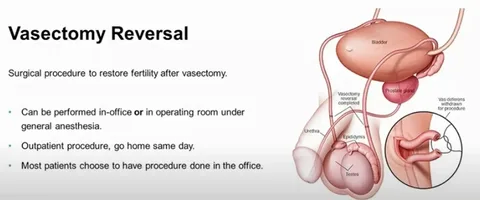
Vasectomy is widely regarded as one of the safest and most effective forms of permanent male contraception. Advances such as no-scalpel techniques, refined occlusion methods, and improved patient counseling have significantly reduced complication rates. Despite these improvements, outcomes are not uniform for all patients. A small but clinically important subset experience complications such as hematoma, infection, chronic post-vasectomy pain, or delayed azoospermia.
The emergence of machine learning (ML) risk prediction offers a transformative approach to addressing this variability. Vasectomy and Machine Learning Risk Prediction focuses on using data-driven models to identify individual risk profiles before, during, and after the procedure. By leveraging large datasets and computational intelligence, clinicians can move toward truly personalized vasectomy care.
Understanding Machine Learning in Clinical Risk Prediction
Machine learning is a subset of artificial intelligence that enables systems to learn patterns from data and make predictions without being explicitly programmed for each scenario. In healthcare, ML algorithms analyze complex relationships among patient variables that are difficult to detect using traditional statistical methods.
In the context of Vasectomy and Machine Learning Risk Prediction, these models can integrate data such as:
- Patient age and body mass index
- Medical history and prior scrotal surgeries
- Anatomical variations
- Surgical technique used
- Post-operative symptom patterns
By identifying hidden correlations, ML systems can estimate the likelihood of specific outcomes and complications with increasing accuracy.
Why Risk Prediction Matters in Vasectomy
Although vasectomy is a low-risk procedure overall, its elective nature means that even minor complications can significantly affect patient satisfaction and quality of life. Traditional risk assessment relies on clinician experience and generalized guidelines, which may not fully account for individual variability.
Vasectomy and Machine Learning Risk Prediction introduces a shift from population-based averages to patient-specific insights. Predictive analytics can help answer critical questions before the procedure:
- Which patients are at higher risk for post-vasectomy pain?
- Who may require extended recovery monitoring?
- Which occlusion method is best suited for a given anatomy?
Such insights support better decision-making and more transparent patient counseling.
Data Sources for Machine Learning Models
Effective ML risk prediction depends on high-quality data. For vasectomy applications, relevant data sources include:
Electronic Health Records (EHRs)
EHRs provide structured clinical data such as demographics, diagnoses, medications, and follow-up outcomes. When aggregated across thousands of cases, they form the backbone of predictive modeling.
Surgical and Procedural Data
Details regarding surgical technique, operative time, anesthesia type, and intraoperative findings add procedural context to risk prediction models.
Patient-Reported Outcomes
Symptoms such as pain intensity, swelling, and functional impact are often underrepresented in traditional datasets. Machine learning models incorporating patient-reported outcomes can better predict chronic complications.
Imaging and Diagnostic Inputs
Ultrasound findings and anatomical measurements can further refine predictions related to procedural complexity and recovery trajectories.
Machine Learning Models Used in Vasectomy Risk Prediction
Several ML approaches are applicable to Vasectomy and Machine Learning Risk Prediction, each with unique strengths:
Supervised Learning Models
These models learn from labeled datasets where outcomes are known. Examples include logistic regression, decision trees, random forests, and gradient boosting machines. They are particularly useful for predicting binary outcomes such as complication versus no complication.
Neural Networks
Neural networks excel at identifying nonlinear relationships among variables. In vasectomy risk modeling, they may uncover subtle interactions between anatomy, technique, and post-operative symptoms.
Ensemble Models
By combining multiple algorithms, ensemble models often achieve higher predictive accuracy and robustness, reducing the risk of overfitting.
Predicting Short-Term Complications
One of the earliest applications of Vasectomy and Machine Learning Risk Prediction is the identification of short-term complications. ML models can estimate the likelihood of:
- Hematoma formation
- Post-operative infection
- Excessive swelling or bruising
Predictive alerts may prompt clinicians to adjust surgical technique, apply enhanced hemostasis, or schedule closer follow-up for high-risk patients.
Predicting Chronic Post-Vasectomy Pain
Chronic post-vasectomy pain syndrome (PVPS) remains one of the most challenging and unpredictable outcomes. Traditional predictors are limited and inconsistent. Machine learning offers a promising avenue for early risk identification.
By analyzing large datasets that include pain trajectories, nerve-related symptoms, and psychosocial factors, ML models may identify patients at higher risk for chronic pain. This enables proactive counseling, alternative technique selection, or early intervention strategies.
Optimizing Surgical Technique Selection
Not all vasectomy techniques carry the same risk profile for every patient. Vasectomy and Machine Learning Risk Prediction supports technique optimization by matching patient characteristics with procedural approaches.
For example, predictive models may suggest:
- No-scalpel approaches for patients with favorable anatomy
- Specific occlusion methods for those at higher risk of recanalization
- Modified handling techniques for patients with prior scrotal surgeries
This level of personalization improves outcomes while preserving procedural efficiency.
Enhancing Patient Counseling and Shared Decision-Making
Machine learning risk prediction enhances the quality of informed consent. Instead of relying on generalized statistics, clinicians can present individualized risk estimates based on real-world data.
This transparency improves patient understanding, manages expectations, and builds trust. Patients who feel informed and prepared are more likely to report higher satisfaction and adherence to post-operative instructions.
Post-Procedure Monitoring and Early Intervention
Risk prediction does not end after surgery. Vasectomy and Machine Learning Risk Prediction extends into post-operative monitoring through digital health tools.
Wearable devices, mobile health apps, and automated symptom tracking can feed real-time data back into predictive models. These systems can flag abnormal recovery patterns and prompt timely clinical intervention, reducing progression to chronic complications.
Ethical and Data Governance Considerations
The use of machine learning in elective procedures raises important ethical considerations. Data privacy, algorithmic bias, and transparency must be carefully managed.
Models must be trained on diverse datasets to avoid reinforcing disparities. Clinicians should understand model limitations and avoid overreliance on algorithmic outputs. Machine learning should augment, not replace, clinical judgment.
Limitations and Challenges
Despite its promise, Vasectomy and Machine Learning Risk Prediction faces several challenges:
- Limited availability of large, standardized vasectomy datasets
- Variability in documentation quality across institutions
- Need for external validation of predictive models
- Integration barriers with existing clinical workflows
Addressing these challenges is essential for responsible and effective implementation.
Future Directions
The future of Vasectomy and Machine Learning Risk Prediction lies in multimodal data integration and real-time analytics. Advances may include:
- AI-assisted intraoperative decision support
- Continuous learning models that update with new data
- Integration with robotic and imaging technologies
- Predictive dashboards for clinicians and patients
As these systems mature, vasectomy care may become a model for precision medicine in outpatient surgery.
Conclusion
Vasectomy and Machine Learning Risk Prediction represents a paradigm shift from standardized care to individualized risk-based decision-making. By harnessing the power of data and computational intelligence, clinicians can better anticipate complications, tailor techniques, and enhance patient outcomes.
While challenges remain, the integration of machine learning into vasectomy care offers a future where precision, transparency, and personalization are central to even the most routine surgical procedures.
FAQs
1. How accurate are machine learning models in predicting vasectomy risks?
Accuracy depends on data quality and model design. When trained on large, diverse datasets, ML models can outperform traditional risk assessments, but they should always complement clinical judgment.
2. Will machine learning replace surgeon decision-making in vasectomy?
No. Vasectomy and Machine Learning Risk Prediction is designed to support, not replace, clinicians by providing data-driven insights that enhance personalized care.