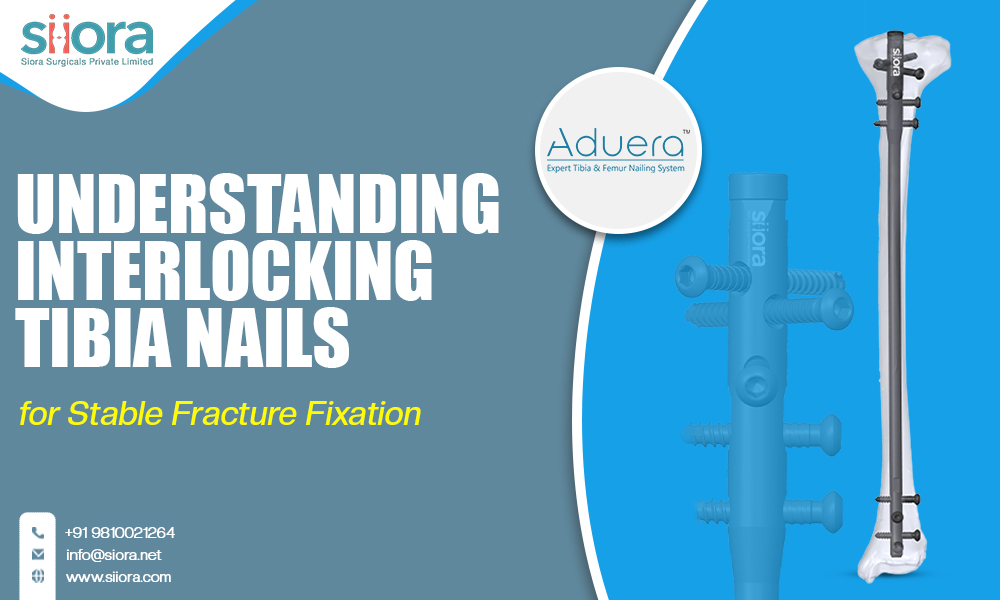
Interlocking tibia nails have transformed how doctors handle shinbone fractures, offering a smart, internal way to keep breaks stable while the bone mends. These interlocking expert nails slide straight into the marrow canal of the tibia, acting like a strong scaffold that locks in place with screws to prevent shifting. They’re a game-changer for everything from high-energy crashes to simple slips, letting patients walk sooner with less hassle.
How Do They Work in Action?
Picture this: a nail—often titanium for its toughness—gets inserted through a small entry point near the knee, down through the bone’s hollow center, and out past the fracture toward the ankle. Transverse screws then lock it top and bottom, turning a wobbly break into a rigid setup that handles weight right away. This three-point fixation stops rotation, shortening, or angulation, especially crucial in the tibia’s skinny diaphysis where side forces love to pull things apart.
Perfect for Tough Fractures
Surgeons reach for these in mid-shaft cracks from bike wrecks or falls, but they shine in distal third breaks too—as long as the lowest 4 cm stays intact. Comminuted patterns, where bone shatters into bits, get solid control, and even open wounds with soft tissue damage work if cleaned first. Pairing with fibula plating adds extra stability for syndesmosis issues, dodging malunions that mess up ankles long-term.
Why Stability Beats Everything?
Unlike casts that let bones drift or plates needing big cuts, interlocking nails share loads naturally, sparking callus formation without killing blood flow. That means union in 12-20 weeks, even in smokers or diabetics prone to delays. Static locking holds firm for oblique spirals, while dynamic options let slight slide for compression in simple gaps—surgeons pick based on the X-ray mess.
Surgery Made Straightforward
The procedure kicks off with patient supine, knee flexed, and a precise patellar tendon split for entry. Ream the canal carefully to match nail size, reduce the fracture closed if possible, then hammer it home under fluoro guidance. Locking comes next: proximal screws freehand or jig-guided, distal via perfect circles to avoid nicks that weaken metal. Total time? Often under 90 minutes, with blood loss minimal since muscles stay mostly untouched.
Real Recovery Wins
Post-op, folks elevate the leg, start antibiotics, and toe-touch weight in days if stable. Crutches fade by week six, full stride in three months for most. Complications like infections hover under 3%, non-unions rare with good alignment—way better than external fixes that itch and infect. Kids heal lightning-fast, adults reclaim sports or jobs without bulky hardware scars.
Edge Over Old-School Fixes
Orthopedic implants plates demand stripping the vast periosteum, hiking infection odds in contaminated legs. External pins track germs, and casts shrink muscles. Nails? They hug the bone’s biomechanics, letting early motion fight stiffness. Studies clock 95% union rates, low malalignment under 5 degrees if fibula’s addressed. For open Gustilo types, primary nailing post-debridement cuts sepsis versus delayed ops.
Tips for Best Outcomes
Nail length matters—too short backs out, too long jams joints. Center it in the wide metaphysis to dodge varus tilt, use polar screws for distal hold, and K-wires temporarily. Modern multi-directional locks tackle comminution, while supple designs flex with tibia bow. Follow-up X-rays every four weeks spot unions early.
Interlocking tibia nails boil down to reliable engineering that respects the leg’s demands. From ER chaos to rehab laps, they steady fractures so people move on, not just mend. No wonder orthos swear by them for stable, drama-free fixation.