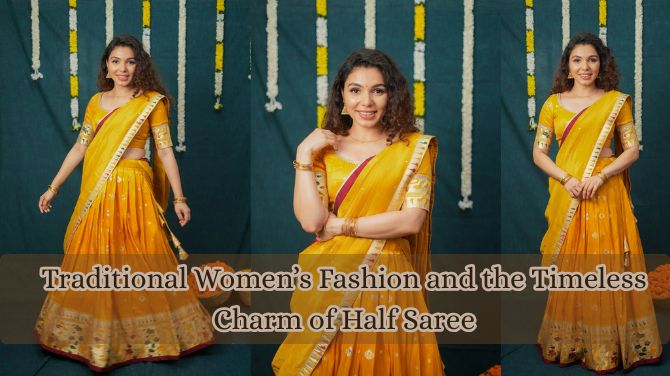
Traditional women’s fashion in India is a beautiful expression of culture, heritage, and elegance passed down through generations. From region to region, clothing styles reflect history, customs, and celebrations. Among the many classic outfits that define Indian Ethnic Wear for Women, the half saree holds a special place. It represents grace, transition, and timeless beauty, making it a cherished attire for young women during significant cultural moments.
The Essence of Traditional Women’s Fashion
Traditional fashion for women in India is deeply rooted in craftsmanship and symbolism. Each garment tells a story through its fabric, colors, motifs, and draping styles. Outfits like sarees, lehengas, salwar suits, and half sarees are not just clothing choices but cultural identities. They are worn during festivals, weddings, religious ceremonies, and family functions, creating a strong emotional connection with tradition.
What makes traditional attire timeless is its adaptability. While designs evolve with changing fashion sensibilities, the essence remains intact. This balance between tradition and modern aesthetics has helped classic outfits stay relevant across generations.
Understanding the Half Saree Tradition
The half saree, also known as a coming-of-age outfit, is traditionally worn by young women in South India. It symbolizes the transition from childhood to womanhood and is often associated with important milestones. The outfit consists of three elements: a long skirt, a blouse, and a dupatta draped like a saree pallu.
This attire beautifully bridges the simplicity of childhood clothing and the elegance of a full saree. Over time, the half saree has evolved beyond rituals and is now embraced as a fashionable ethnic outfit for weddings, festivals, and cultural events.
Craftsmanship and Design Appeal
One of the most striking aspects of the half saree is its intricate craftsmanship. Rich silk fabrics, zari borders, temple motifs, floral patterns, and vibrant color combinations bring the outfit to life. Traditional weaving techniques and hand embroidery add depth and luxury to the ensemble.
Designers today experiment with pastel shades, contrast blouses, contemporary prints, and lightweight fabrics while preserving the traditional structure. This fusion makes the half saree appealing to modern women who value comfort along with cultural elegance.
Styling the Half Saree for Modern Occasions
The versatility of the half saree allows it to be styled in multiple ways. Accessories play a key role in enhancing the look. Traditional jewelry like temple necklaces, bangles, waist belts, and jasmine flowers elevate the outfit’s charm. Hairstyles such as braids or soft curls complement the traditional vibe while adding a modern touch.
Footwear choices also matter. Classic sandals or embellished flats blend well with the outfit, making it suitable for long celebrations. Whether worn at weddings, engagements, or festive gatherings, the half saree offers a graceful and youthful appearance.
Cultural Significance and Emotional Value
Beyond fashion, the half saree carries emotional significance. It is often gifted by family members and worn during memorable ceremonies, creating lasting memories. Many women look back fondly on their first half saree as a symbol of tradition, pride, and family heritage.
In today’s fast-paced fashion world, such emotional connections make traditional attire even more valuable. The half saree continues to be celebrated not just as clothing but as a meaningful cultural experience.
A Timeless Outfit in a Changing Fashion World
As fashion trends come and go, traditional outfits like the half saree remain evergreen. Its ability to adapt while staying rooted in culture ensures its lasting appeal. Whether styled traditionally or with a modern twist, it continues to attract women of all ages.
The enduring charm of this outfit lies in its elegance, symbolism, and versatility. Known by many as the Langa Davani Dress, it stands as a timeless representation of traditional women’s fashion, gracefully blending heritage with contemporary style.