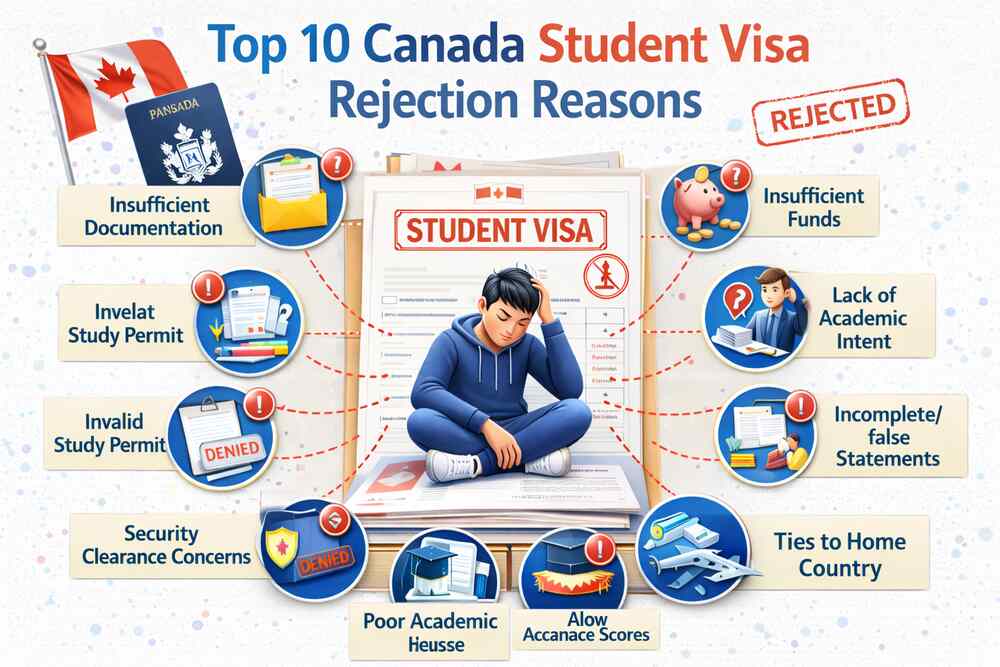
Do you plan to study in Canada but fear a student visa refusal? Many students apply with high hopes yet face rejection due to small gaps in their file.
You can prepare better before applying by understanding the common reasons. Many students also seek guidance from an ICCRC lawyer in Qatar to review their documents and avoid mistakes before submission.
This article explains why applications fail and what visa officers often question during review.
Financial Proof Issues
Visa officers must see clear proof that you can pay tuition fees and living costs in Canada. Many applications fail because bank statements show low balance or sudden large deposits.
Some students submit fake papers or unclear sponsor details. Others forget to include proof for the full study period. If funds are borrowed without records this can also raise doubts. Officers want to know where the money comes from and how it will be used.
Study Plan Issues
A clear study plan shows why you chose a course and how it fits your past studies. Many refusals happen when the course has no link to academic history or work background.
Officers may doubt the reason for studying if the plan feels copied or vague. Choosing a lower-level course without explanation can also raise questions.
Some students fail to explain career goals after graduation. When the study plan lacks logic or details the application may be refused.
Academic Background Gaps
Your academic history must match the course you choose in Canada. Many refusals happen when grades are very low or when there are long study gaps with no clear reason. Officers may question why studies stopped or changed suddenly.
If gaps are due to work health or exams they must be explained with proof. Choosing a course that does not match past subjects can also raise doubts.
Language Score Issues
Language test scores show if you can study in English or French in Canada. Many refusals happen when scores are too low for the chosen course. Some students submit expired test results or wrong test types.
Officers may also question results that do not match past education in English. Poor section scores can be a problem even if the total score looks fine. When language ability seems weak the visa officer may doubt your study plans.
Document Errors
Many visa refusals happen due to missing or wrong documents. Students may forget to upload forms transcripts or letters. Some files have spelling mistakes or do not match other records.
Old passports or unclear scans can also cause issues. Officers check each paper closely for accuracy. If dates names or numbers differ it creates doubt. Submitting fake or edited papers leads to direct refusal.
Home Country Ties
Visa officers look at your ties to your home country to judge if you will return after studies. Many refusals happen when students fail to show family job or property links. If you are single unemployed or have no clear future plans at home this can raise doubts.
Weak ties suggest a risk of staying in Canada without status. Documents like job letters family records or assets can support your case. When ties look weak the application may be refused.
Past Visa Refusals
Previous visa refusals can affect a new Canada student visa application. Officers review past records to see patterns or repeated issues. If earlier refusals were due to funds study plans or documents and nothing has changed this raises concern.
Some students hide refusal history which leads to direct rejection. Each refusal must be declared with honest explanation and new proof.
Funds Source Clarity
Visa officers must understand where your study money comes from. Many refusals happen when the source of funds is unclear or poorly explained. Large deposits without history can raise doubt.
Cash savings with no income proof also create questions. If parents or sponsors support you their income papers must match the amount shown. Loans without approval letters may not be accepted.
Institution Choice Doubts
Visa officers check if the chosen college or university is genuine and suitable. Many refusals happen when students select private or unknown institutions with poor records. Courses that look like a shortcut to work can raise doubt.
If the school does not match your academic level or goals officers may question your intent. Some students choose programs with low value or weak outcomes.
Return Intent Doubts
Officers must believe you will leave Canada after completing your studies. Applications may be refused if future plans are unclear or focus only on staying in Canada.
While pathways like the PNP program for Canada exist, your study plan should clearly explain career goals linked to your home country, not immediate settlement.
FAQS
Why do Canada student visas get refused?
Canada student visas are often refused due to weak financial proof, poor study plans, low academic records, document errors, or doubts about return intent.
How much financial proof is required for a Canada student visa?
You must show enough money to pay tuition fees and living costs for the full study period. Visa officers also check where the money comes from and if it is genuine and stable.
Can unclear bank statements cause visa refusal?
Yes. Low balances, sudden large deposits, borrowed funds without proof, or unclear sponsor details can quickly lead to refusal.
What makes a strong study plan for Canada?
A strong study plan clearly explains why you chose the course, how it matches your past studies or work, and how it helps your future career in your home country.
Do study gaps affect Canada student visa approval?
Yes. Long study gaps without explanation can raise doubts. Gaps due to work, health, or exams must be explained with proper proof.
Can low language test scores lead to refusal?
Yes. Low or expired IELTS or French test scores can cause refusal. Even low scores in one section may be a problem for your chosen course.
How important are documents in a student visa application?
Very important. Missing forms, wrong details, spelling mistakes, unclear scans, or fake documents can lead to direct refusal.
What are home country ties and why do they matter?
Home country ties show you will return after studies. These include family, job offers, property, or clear future plans. Weak ties increase refusal risk.