Is buying a water tank really as easy as choosing a size and checking the price?
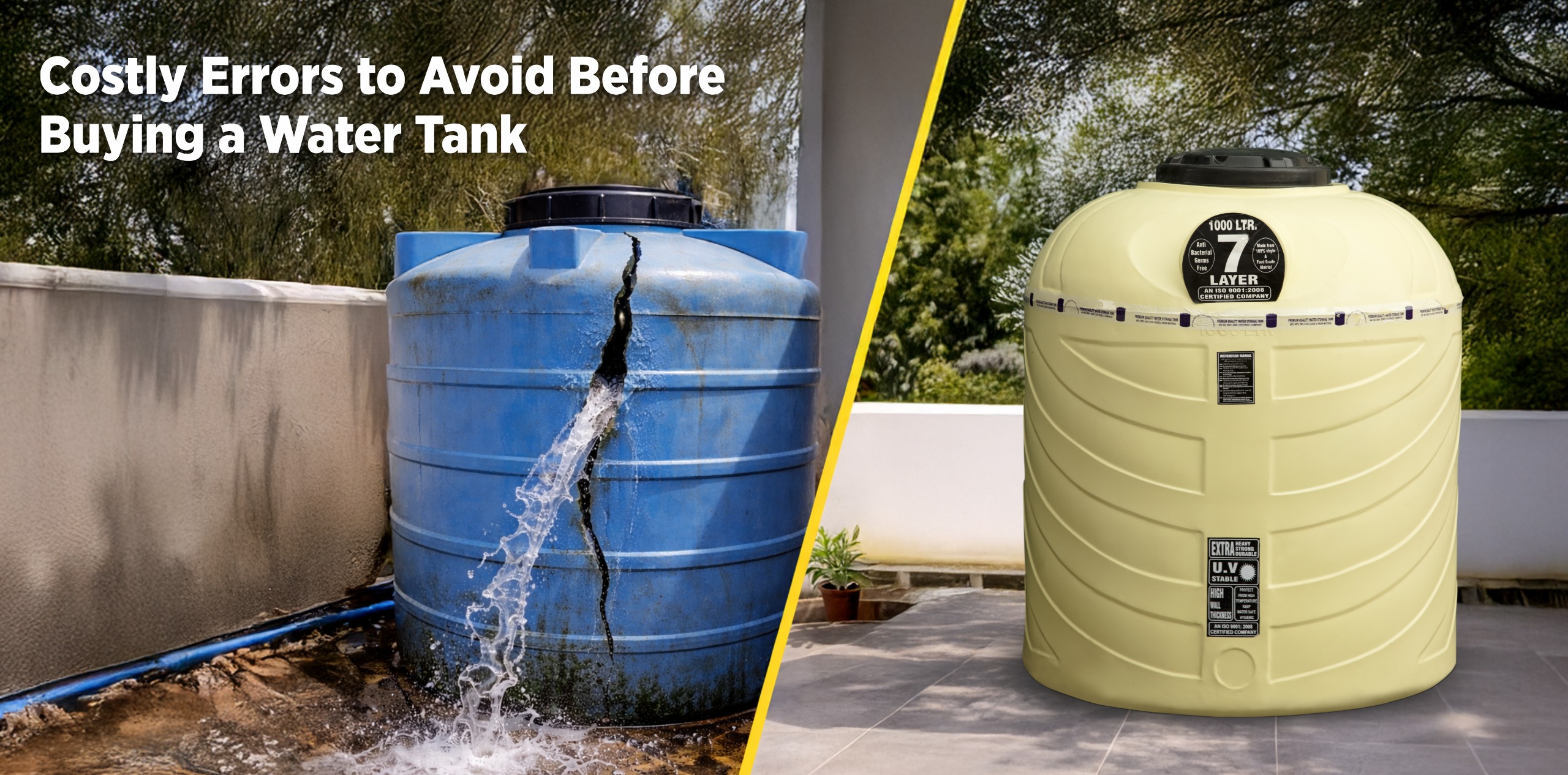
Most people think so, until leaks appear, water quality drops, or replacement costs hit sooner than expected. A water tank is not just a one-time purchase; it’s a long-term investment that directly affects water safety, durability, and daily convenience. Whether it’s for a home, commercial space, or industrial facility, one small oversight today can lead to years of inconvenience and unnecessary expenses tomorrow.
So why do so many buyers get it wrong?
Because decisions are often based only on price or capacity, while crucial technical and practical factors are ignored. Is the material suitable for your water usage? Will the tank withstand your local climate? Is it safe for long-term water storage?
In this blog, we uncover the top 10 common mistakes people make while buying a water tank, and more importantly, how to avoid them. With the right knowledge, you can choose a tank that delivers performance, safety, and value for years to come.
1. Ignoring Material Quality
One of the most frequent mistakes is choosing a tank without understanding the material used in its construction. Not all plastics or metals are created equal, and inferior materials can degrade quickly. Here are some key points to look out for:
- The tank should be manufactured using 100% virgin raw material.
- Look for food-grade resin suitable for storing potable water.
- Avoid recycled plastics that may compromise water safety.
High-quality materials provide strength, resistance to weather changes, and longer life, which makes them a worthwhile investment.
2. Choosing the Wrong Capacity
Another common error is underestimating or overestimating water requirements. A tank that is too small leads to frequent refills, while an oversized one wastes space and money. Consider the following:
- Daily household or operational water consumption.
- Number of users or occupants.
- Seasonal variations in water usage.
Accurate capacity planning ensures uninterrupted supply and optimal use of space without unnecessary expense.
3. Overlooking Manufacturing Technology
Many buyers fail to consider how the tank is made. Manufacturing technology directly impacts durability and uniformity. Rotational moulding technology is a strong indicator of quality because:
- It produces seamless, hollow tanks.
- Wall thickness remains uniform.
- The structure is stronger and less prone to leaks.
Understanding the process behind production helps you distinguish between average and premium options.
4. Ignoring Layer Design
Tank layers play a crucial role in insulation, hygiene, and durability. Buying a single-layer or basic design to save money often backfires in harsh climates. Modern tanks offer:
- Multiple layers for insulation.
- Inner layers that prevent bacterial growth.
- Outer layers that protect against sunlight.
A thoughtfully designed multi-layer tank performs better across seasons and maintains water freshness longer.
5. Missing UV Protection Features
Sunlight exposure is unavoidable for most installations, yet many buyers forget to check UV resistance. Prolonged exposure without protection weakens the structure and affects water quality. Essential features include:
- Carbon or UV-stabilised outer layers.
- Protection against algae formation.
- Reduced heat absorption.
A plastic water tank with proper UV protection lasts longer and keeps stored water safer for daily use.
6. Ignoring Shape and Structural Design
Shape is not just an aesthetic choice. Structural design affects stability, pressure distribution, and ease of installation. Some of the reasons why cylindrical designs work better are:
- Even pressure distribution as water pushes outward.
- Lower centre of gravity.
- Easier transportation and placement.
Ignoring these aspects can lead to deformation or instability over time.
7. Focusing Only on Price
Price-driven decisions are among the most costly mistakes in the long run. Cheaper tanks may lack essential features, leading to repairs or early replacement. Instead of just comparing prices, do the following:
- Compare material quality and features.
- Check warranties and certifications.
- Evaluate long-term maintenance costs.
A slightly higher upfront cost often translates into years of reliable service and fewer headaches.
8. Forgetting Climate Compatibility
Not all tanks perform equally in varying weather conditions. Some crack in extreme cold, while others deform in intense heat. A good tank should:
- Withstand both high and low temperatures.
- Remain unaffected by seasonal changes.
- Protect water from excessive heat exposure.
A well-designed water storage tank adapts seamlessly to changing climates, making it suitable for diverse regions.
9. Neglecting Hygiene and Safety Features
Water safety is often assumed rather than verified. Tanks without antibacterial properties can allow algae and microbes to grow. Look for:
- Smooth inner surfaces.
- Anti-bacterial additives.
- Air-tight lids to block dust and insects.
These features are essential for maintaining clean, odour-free, and safe water for everyday use.
10. Overlooking Installation and Maintenance Needs
Finally, many buyers fail to think beyond the purchase day. Installation complexity and ongoing maintenance requirements matter just as much. Smart considerations include:
- Ease of transportation and handling.
- Minimal maintenance requirements.
- Resistance to cracks and leaks.
Tanks designed for low upkeep save time, effort, and recurring expenses throughout their lifespan.
Quick buying checklist
Before finalising your purchase, it helps to pause and run through a simple checklist. These quick points bring together everything discussed above so that you can double-check before you commit.
- Check that the tank is made from 100% virgin, food-grade raw material suitable for potable water.
- Calculate the right capacity based on daily usage, number of users and seasonal demand.
- Prefer tanks manufactured using advanced technologies like rotational moulding for uniform strength.
- Choose a multi-layer design that supports insulation, hygiene and long-term durability.
- Ensure proper UV protection to prevent structural damage and algae formation.
- Opt for a stable, cylindrical shape that distributes pressure evenly.
- Compare features, warranties and maintenance costs instead of focusing only on price.
- Confirm the tank can withstand local climate conditions, both heat and cold.
- Look for hygiene-focused features such as smooth inner walls, antibacterial protection, and air-tight lids.
- Consider ease of installation, transportation, and low maintenance requirements
Conclusion
Avoiding these common mistakes can make a significant difference in performance, safety and longevity. A water tank is not just a container but a long-term utility asset that supports daily living and operations. By focusing on material quality, design, technology, and hygiene, you ensure peace of mind for years to come. Most importantly, buying from reputed water storage tank manufacturers ensures that you receive certified products backed by innovation, reliability, and long-term support. Making an informed choice today helps secure a dependable water solution for the future.