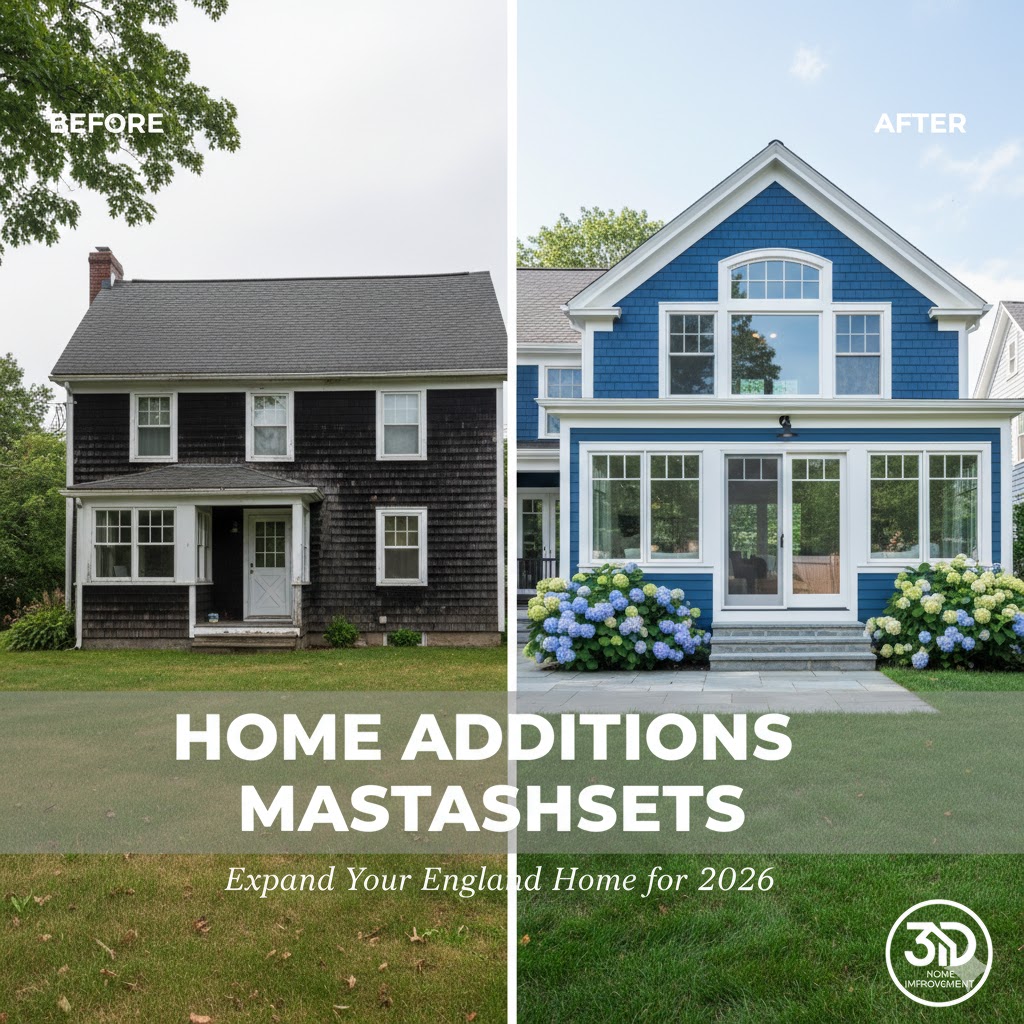
For many homeowners in the Bay State, the decision to expand isn’t just about adding square footage—it’s about preserving the charm of a neighborhood they love while adapting to the needs of a modern lifestyle. Whether you are living in a historic Cape in Barnstable, a triple-decker in Worcester, or a colonial in Middlesex County, the demand for more space has never been higher.
In 2026, the Massachusetts real estate market continues to favor those who invest in their existing footprint. With housing inventory remaining tight, adding a master suite, a sunroom, or a specialized workspace is often a far more strategic financial move than navigating the competitive buying market. However, building in the Commonwealth requires a specific understanding of local geography, seasonal weather patterns, and the newly implemented 10th Edition of the State Building Code.
Why Now is the Best Time for Home Additions in Massachusetts
The local landscape for has shifted significantly over the last few years. As of 2026, Home Addition in Massachusetts has streamlined several regulations regarding Accessory Dwelling Units (ADUs), making it easier for homeowners to build “in-law suites” or guest cottages. This legislative shift has opened the door for multi-generational living and potential rental income, which are major drivers for home additions in Massachusetts today.
Beyond the legal changes, the return on investment (ROI) for specific projects in the Northeast remains impressively high. Because land is at a premium in Eastern Massachusetts, “building up” or “building out” effectively increases your equity in a way that often exceeds the initial construction costs. From the North Shore to the Berkshires, adding functional, conditioned space is the most reliable way to future-proof your investment.
Navigating the 780 CMR 10th Edition Building Code
One of the most critical aspects of planning your project is ensuring compliance with the latest state standards. As of early 2026, all new residential construction must adhere to the 10th Edition of the Massachusetts State Building Code (780 CMR). This update places a heavy emphasis on:
Energy Efficiency (Stretch Code): Massachusetts continues to lead in green building. Most new additions now require superior insulation values and high-performance windows to meet the state’s aggressive decarbonization goals.
Climate Resilience: New rules regarding flood protection and wind resistance are particularly relevant for homeowners on the South Shore or Cape Cod, where coastal weather can be unforgiving.
Structural Safety: The 10th Edition aligns closely with the 2021 International Residential Code, ensuring that foundations and framing are built to withstand the unique snow loads of a New England winter.
Popular Addition Trends for the Bay State Homeowner
What are people actually building this year? The trends reflect a blend of tradition and technology:
The “New England” Sunroom
Because our summers are beautiful but our winters are long, four-season sunrooms have become a top choice. These aren’t the drafty porch enclosures of the past. Modern sunrooms use thermal-break glass and integrated HVAC zones to create a bright sanctuary that remains 70 degrees even when there is two feet of snow outside.
Second-Story Dormers and Pop-Tops
In towns with smaller lot sizes like Somerville or Brookline, horizontal expansion isn’t always an option. Adding a full second story or strategic “dog-house” dormers allows homeowners to gain bedrooms and bathrooms without sacrificing their precious backyard space.
Integrated Mudrooms
With our mud, slush, and salt, a dedicated transition space is a necessity, not a luxury. High-end mudroom additions with heated floors and custom cabinetry are currently one of the highest-rated projects for daily satisfaction.
If you are interested in seeing how these spaces come together, you might want to explore our recent project gallery or read our guide on selecting durable materials to see how we handle the rugged Massachusetts climate.
The Permitting Process: What to Expect
In Massachusetts, the permitting process is handled at the municipal level, meaning the rules in Newton might differ slightly from those in Springfield. However, the general workflow remains consistent:
Zoning Analysis: Before picking up a hammer, you must ensure your project doesn’t violate “setback” requirements (the distance your house must be from the property line).
Conservation Commission: If your property is near wetlands or a coastal resource, you will likely need a “Notice of Intent” and approval from your local Conservation Commission.
HIC and CSL Verification: In Massachusetts, your lead contractor must hold a Construction Supervisor License (CSL) and be registered as a Home Improvement Contractor (HIC). This is your primary protection as a consumer.
Budgeting for Your Massachusetts Project
While costs vary by county, the average price per square foot for a high-quality addition in 2026 ranges from $250 to $600+, depending on the complexity (kitchens and baths being on the higher end due to plumbing). It is vital to include a 10-15% contingency fund, especially in older homes where “opening up the walls” might reveal ancient wiring or structural surprises common in 19th-century New England architecture.
Conclusion
Expanding your home is a journey that requires patience, vision, and a deep respect for the structural integrity of your original house. In a state as historically rich as Massachusetts, every home addition is a chance to blend the past with the future. By following the latest building codes and choosing a design that complements your neighborhood’s aesthetic, you aren’t just adding a room—you are enhancing your quality of life and securing your financial future.
At 3D Home Improvement, we specialize in bringing these visions to life across the Commonwealth. We understand the unique challenges of building in Massachusetts, from the rocky soil of the interior to the strict energy requirements of our coastal towns. Our team is committed to a “design-build” philosophy that ensures your project is structurally sound, aesthetically beautiful, and fully compliant with all 2026 standards. Let us handle the complexities of the 10th Edition code and local zoning so you can focus on the excitement of your new space. Your dream home is already right where you live; we’re just here to help you find the room to grow.