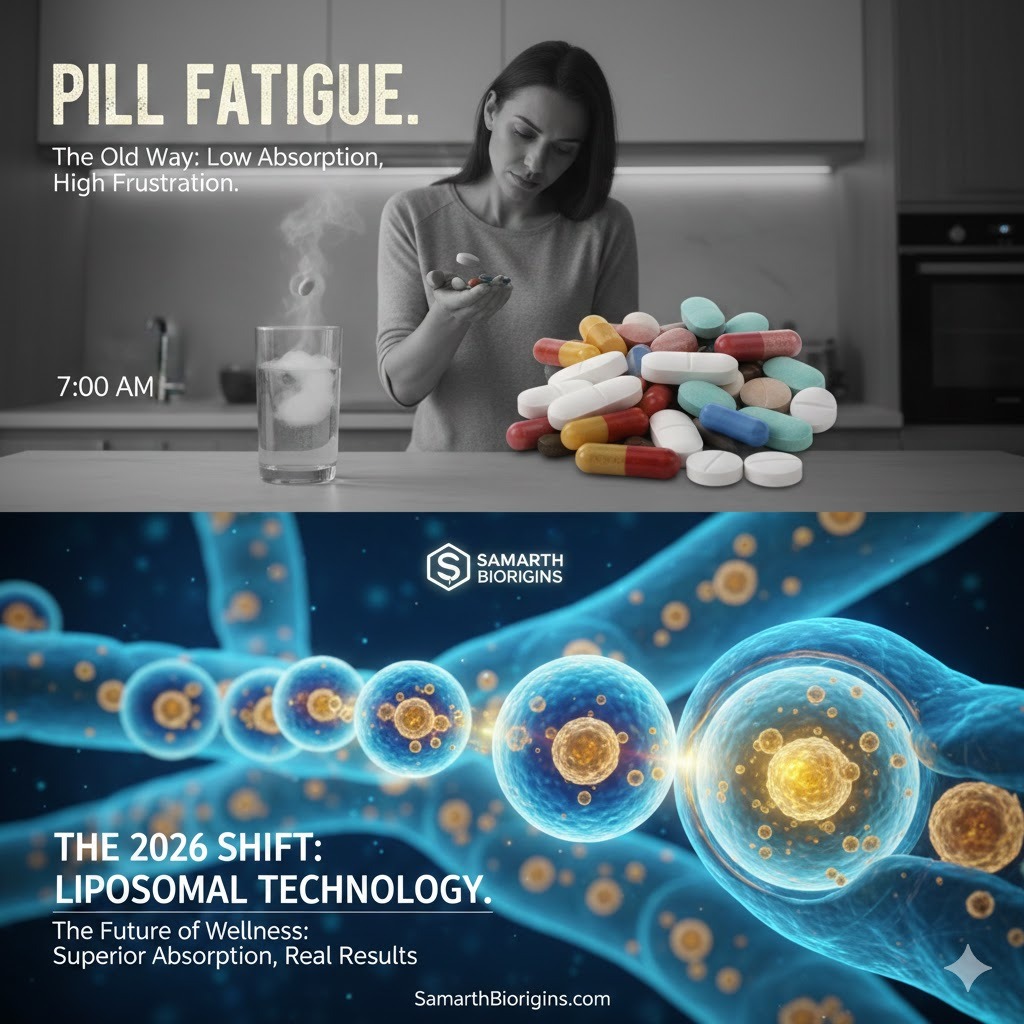
We’ve all been there. It’s 7:00 AM, you’re standing in your kitchen, and you’re staring down a handful of dry, chalky tablets. You knock them back with a gulp of water, hoping they don’t get stuck in your throat, and get on with your day.
This is “pill fatigue.” And frankly, consumers are sick of it.
For decades, the wellness industry operated on a simple, albeit flawed, premise: if you pack enough vitamins into a hard shell, the body will figure out the rest. But as we look toward 2026, the cracks in that logic are showing. People are realizing that swallowing a multivitamin doesn’t guarantee health. In fact, for many traditional supplements, you’re paying for expensive urine.
The industry is pivoting. We are moving away from the “horse pill” era and entering the age of high-tech delivery systems. Specifically, liposomal technology.
This isn’t just a shiny new trend for biohackers in Silicon Valley. It’s a fundamental shift in how we deliver nutrients to the human body. Brands that ignore this shift risk becoming the Blockbuster Video of the supplement aisle.
The Problem: Your Stomach is a Harsh Environment
To understand why liposomal tech is taking over, we have to look at why traditional pills often fail.
When you swallow a standard Vitamin C tablet, it drops into your stomach—a churning acid bath designed to break things down. That acid destroys a significant chunk of the nutrient before it ever reaches your small intestine, where absorption actually happens.
Even if the nutrient survives the acid, it still has to pass through the intestinal wall and into the bloodstream. Many compounds, like curcumin (from turmeric) or glutathione, are notoriously bad at crossing this barrier. They are too large, or they don’t play well with water.
So, you might buy a 1000mg pill, but your body might only use 50mg of it. The rest? Flushed away. It’s like trying to fill a bucket that has a massive hole in the bottom. You keep pouring more in, but you aren’t actually retaining much.
What Are Liposomes? (Think “Microscopic Bodyguards”)
Enter the liposome.
If the scientific name sounds intimidating, the concept is surprisingly simple. A liposome is essentially a microscopic bubble.
The outer shell of this bubble is made of the same stuff as your own cell membranes: phospholipids (usually from sunflowers or soy). Because this material matches your body’s cells so perfectly, your body recognizes it. It doesn’t attack it; it welcomes it.
Inside this protective bubble, we hide the nutrient—whether that’s Vitamin C, Iron, or Melatonin.
Think of it like a Trojan Horse. The liposome travels through the harsh environment of your stomach, protecting the precious cargo inside from acid and enzymes. When it reaches your cells, it merges with the cell wall and deposits the nutrient directly where it needs to go.
It’s an elegant solution to a biological problem. Instead of fighting the body’s digestion process, liposomal technology works with it.
Why Liposomal Delivery Beats the Pill
For brands looking to stand out in a crowded market, the benefits of switching to liposomal formulations are impossible to ignore.
1. Absorption That Actually Justifies the Price Tag
The biggest selling point is absorption. We call this “bioavailability.”
With traditional oral supplements, bioavailability can be shockingly low. But by wrapping nutrients in that lipid layer, we see absorption rates skyrocket. You don’t need to put 5,000% of the daily recommended value in a capsule just to hope 10% gets absorbed. You can use a precise dose and know it’s hitting the mark.
2. No More Stomach Aches
High doses of certain minerals and vitamins wreak havoc on the gut. Magnesium can send you running to the bathroom. Iron pills are infamous for causing cramps and nausea. Vitamin C can cause acid reflux.
Liposomes solve this. Because the nutrient is encapsulated, it doesn’t come into direct contact with the stomach lining. It glides through the digestive tract without triggering that irritation. It’s a gentler, smarter way to supplement.
3. Efficiency Over Quantity
Consumers are getting smarter. They are reading labels. They know that “more” doesn’t always mean “better.” They want efficiency. A small dose of a liposomal product can often outperform a massive dose of a traditional powder. This allows brands to create smaller, more convenient serving sizes that pack a heavier punch.
Who is Leading the Charge?
This shift requires serious expertise. You can’t just whip up liposomes in a bathtub. It requires advanced biotechnology and precise manufacturing standards.
This is where industry leaders like Samarth Biorigins come into the picture.
Samarth Biorigins isn’t just another contract manufacturer; they are a B2B powerhouse driving this tech forward in the US, UK, and India. Their story actually began during one of the most difficult periods in recent history: the COVID-19 pandemic.
While the world locked down, the team at Samarth saw a desperate need for effective immune support. They started with a mission to develop lactoferrin supplements (a protein found in milk with powerful antiviral properties). But they hit the same wall everyone else did: standard lactoferrin breaks down too easily in the gut.
They didn’t settle for a mediocre product. They pivoted to liposomal technology to protect the nutrient and unlock its full potential. Today, they help brands across the globe transition from outdated delivery methods to advanced, high-bioavailability solutions. They empower companies to stop selling “hope” and start selling results.
Challenges and Considerations for Brands
Of course, moving to high-tech delivery systems isn’t without its hurdles. If it were easy, every generic store brand would have done it by now.
The Cost Factor:
Making a liposomal product costs more than pressing a tablet. The raw materials (those high-quality phospholipids) are pricier, and the equipment is more specialized. Brands have to educate their customers on why the product costs a few dollars more. (Hint: Tell them it actually works).
Stability and Taste:
Liquid liposomal products can sometimes have stability issues if not formulated correctly. They can separate or degrade if exposed to too much heat. Taste is another battleground. Phospholipids can have a distinct flavor. However, top-tier manufacturers like Samarth Biorigins have cracked the code on creating stable, palatable ingredients that don’t taste like a chemistry experiment.
The Verdict: Adapt or Expire
The nutraceutical market is ruthless. Trends come and go, but effectiveness never goes out of style.
By 2026, we predict that “liposomal” won’t just be a buzzword on premium products; it will be the baseline expectation for educated consumers. The days of tossing back a handful of hard-to-swallow pills are numbered.
For brands, the choice is clear. You can stick to the old ways, fighting for margins on a product that your customers eventually realize isn’t working. Or, you can embrace technology. You can partner with innovators like Samarth Biorigins and offer a product that delivers on its promise.
The future of health isn’t about what you eat. It’s about what you absorb.