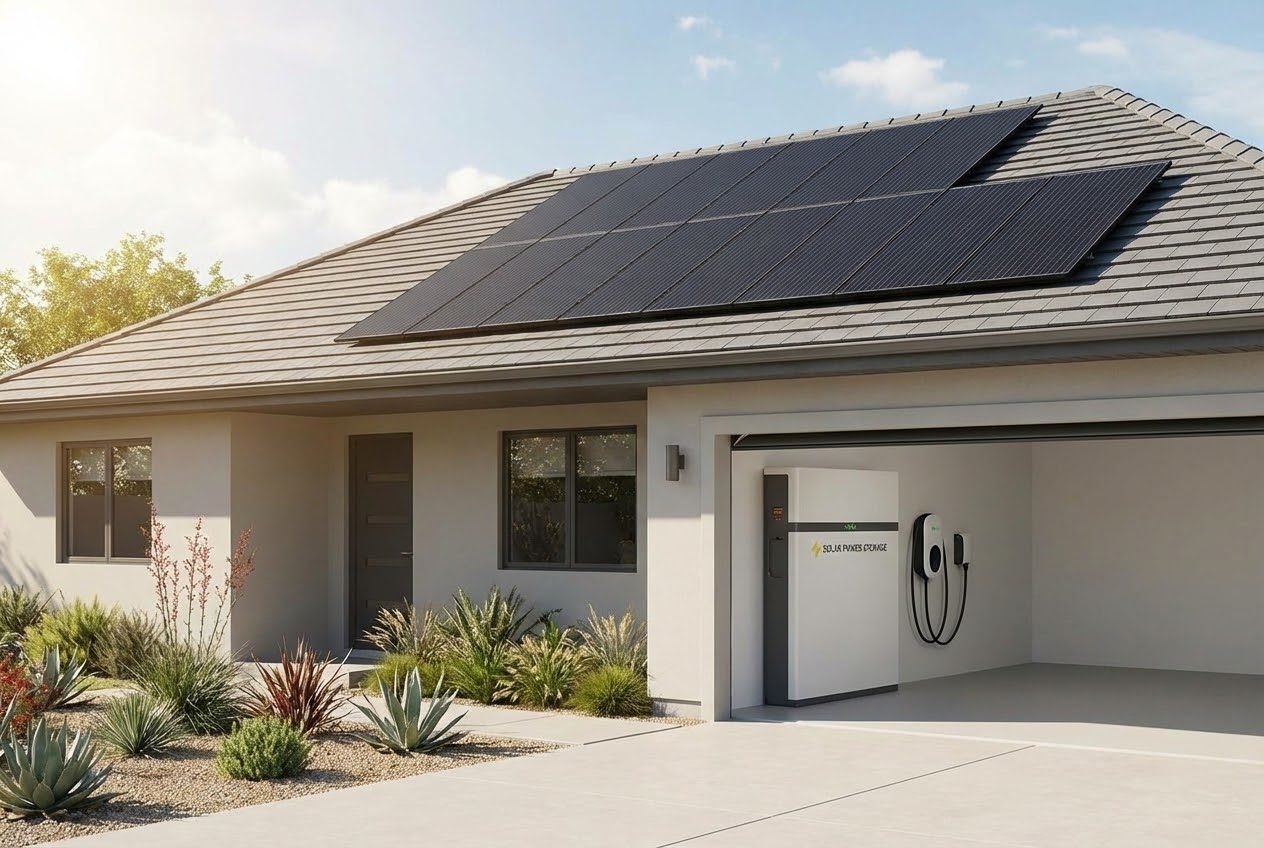
Solar Energy System Batteries transform solar installations from grid-dependent systems into truly independent power solutions. Battery storage captures daytime solar production and stores excess electricity for nighttime, cloudy periods, and grid-outage scenarios. Without proper battery sizing and chemistry selection, solar systems remain partially dependent on utility grids, forfeiting energy independence benefits and driving up system investment.
Solar + Storage Integration Overview
Grid-Tied Solar (No Battery):
- Daytime surplus exports to the utility
- Net metering credit reduces evening bills
- Grid outage = immediate power loss
- Maximum 30-40% bill reduction
Solar + Battery Storage:
- Daytime surplus charges batteries
- Evening/night draws from storage
- Grid outage = uninterrupted power
- 60-80% bill reduction possible
- True energy independence
Battery-equipped systems cost 40% more but deliver quantifiable independence value impossible without storage.
Battery Chemistry Selection for Solar
Lead-Acid Batteries (Flooded/AGM):
- Cost: $4-6 per kWh
- Usable capacity: 50% (remaining 50% must stay charged)
- Lifespan: 5-7 years
- Cycles: 800-2,000
- Maintenance: Water checks required (flooded)
Lithium Iron Phosphate (LiFePO4):
- Cost: $8-12 per kWh
- Usable capacity: 95% (nearly complete discharge possible)
- Lifespan: 10-15 years
- Cycles: 5,000+
- Maintenance: Zero
Per-Cycle Cost Analysis:
Lead-acid: $5/kWh ÷ 1,000 cycles = $0.005/cycle
LFP: $10/kWh ÷ 5,000 cycles = $0.002/cycle
Lithium wins 60% cost advantage long-term
Battery Capacity Calculation for Homes
Step 1: Determine Daily Energy Usage
- Average US household: 25-30 kWh/day
- Review 12-month utility bills
- Account for seasonal variation
Step 2: Calculate Nighttime Requirements
- 12-hour night duration
- 50% of daily consumption: 12-15 kWh
- Add 20% buffer: 14-18 kWh required
Step 3: Add Rainy Day Reserve
- 2-3 consecutive cloudy days
- 30-45 kWh additional capacity
- Total system: 45-63 kWh recommended
Step 4: Round to Practical Size
- 48-64 kWh lithium systems (scalable 12-16 kWh modules)
Solar Production Matching Battery Capacity
Undersized Battery Scenario:
- 10 kW solar array produces 50 kWh daily
- 13 kWh battery capacity (too small)
- Battery full by 11am
- Remaining 37 kWh exports unused to grid
- Severe underutilization
Properly Sized System:
- 10 kW solar array
- 48 kWh battery storage
- Captures 95%+ daily production
- Supplies 24-36 hours autonomy
Oversized Battery Risk:
- 100 kWh battery
- Rarely achieves 80%+ charge
- Expensive underutilization
- Unnecessary additional cost
Aim for 150-200% daily production capacity.
Off-Grid vs Grid-Tied Battery Configuration
Off-Grid Systems (Remote Properties):
- 100% self-sufficiency required
- Larger batteries (5-7 days autonomy typical)
- Diesel/propane backup generator
- Complex inverter/charger systems
- Higher cost, maximum independence
Grid-Tied with Battery (Urban/Suburban):
- Grid provides backup during low-production periods
- Smaller batteries (24-36 hours autonomy)
- Simpler installation/integration
- Lower cost, practical independence
- Growing standard residential configuration
Temperature Impact on Solar Batteries
Cold Climate Battery Performance:
- Lead-acid: Severe (50%+ capacity loss at freezing)
- LFP: Excellent (90%+ capacity retained to 0°F)
- Heater elements can maintain LFP optimal temperature
- Cold climates strongly favor lithium selection
Hot Climate Considerations:
- All battery chemistries degrade faster at 95°F+
- Shade/ventilation critical for battery enclosures
- Thermal management systems prevent degradation
- LFP’s superior temperature tolerance saves money
Inverter Sizing & Battery Compatibility
Hybrid Inverter Selection (Manages Solar + Storage):
- Converts DC battery power to AC household power
- Rating must match peak loads (not total capacity)
- 8-10 kW hybrid inverters serve most homes
- Oversizing adds cost without benefit
Battery Management System (BMS) Integration:
- Automatic balancing prevents cell degradation
- Temperature monitoring prevents thermal runaway
- Disconnect protection during faults
- Essential for lithium safety
Warranty & Performance Guarantees
Lead-Acid Warranties:
- 2-3 year typical coverage
- Pro-rated after year 2 (declining value)
- Excludes maintenance-related failures
Lithium Warranty Standards:
- 10-year minimum (many brands 15 years)
- 80%+ capacity guarantee through warranty period
- BMS failures covered
- Replacement obligation (not pro-rated)
Lithium warranties reflect manufacturer confidence in longevity.
Real-World Financial Return
Typical US Installation (48 kWh LFP):
- Solar array: $18,000
- Battery storage: $20,000
- Installation/permits: $8,000
- Total: $46,000
25-Year Returns:
- Electricity cost avoidance: $95,000
- Federal tax credit (30%): $13,800
- State incentives: $8,000
- Net return: $70,800 profit
Per-Month Economics:
- Average system: $195/month ROI
- 13-year payback period
- 12+ years free electricity remaining
- Inflation protection (electricity rises 3%/year)
Maintenance & Longevity
Lead-Acid Batteries:
- Monthly water checks
- Equalization charging quarterly
- Corrosion cleaning annually
- Replacement by year 7
Lithium Batteries:
- Zero maintenance required
- Automatic temperature monitoring
- 15-year operational lifespan
- Warranty protection ensures performance
Maintenance elimination alone justifies lithium premium.
Conclusion
Solar energy independence requires proper battery storage sizing, chemistry selection, and system integration. While lithium batteries cost 40-50% more initially, superior lifespan (15 vs 5 years), maintenance elimination, and per-cycle economics justify investment. Homeowners combining solar arrays with LFP battery systems achieve genuine energy independence with 25+ year financial returns impossible through electricity grid reliance.