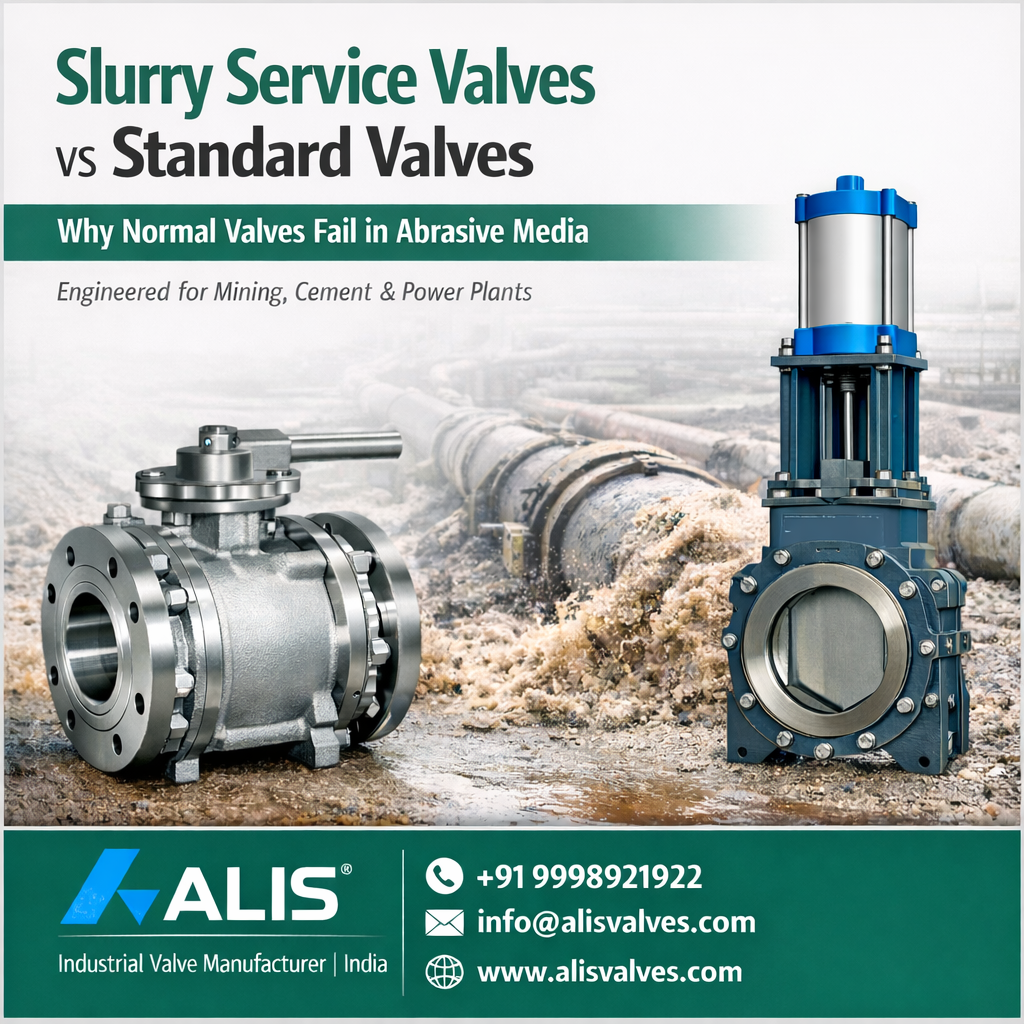
Cement plants operate in some of the harshest process conditions in any industry. From raw material handling to clinker cooling, ash disposal, and slurry transport, valves are constantly exposed to abrasive media, high dust content, and solid-laden fluids. One of the most common mistakes in cement plants is the use of standard industrial valves in slurry applications. While these valves may work initially, they often fail prematurely. This article compares slurry valves and standard valves in cement plant applications and explains their performance differences in real operating conditions.
Understanding Slurry Applications in Cement Plants
Slurry in cement plants typically contains raw meal, limestone particles, clinker dust, fly ash, and other abrasive solids mixed with water. These slurries are highly erosive due to the hardness and angular shape of particles. In addition, cement slurry systems often operate continuously, making downtime extremely costly.
Valves in these applications must handle constant abrasion, prevent clogging, maintain sealing integrity, and operate reliably over long periods. Any weakness in valve design quickly leads to leakage, seizure, or complete valve failure.
What Are Slurry Valves
Slurry valves are specifically designed to handle abrasive and solid-laden fluids. They are engineered with wear resistance as the primary design objective. Common slurry valve types used in cement plants include slurry gate valves, knife gate valves, pinch valves, and specially designed slurry ball valves.
These valves focus on reducing wear, allowing solids to pass freely, and ensuring long service life even in severe conditions.
What Are Standard Valves
Standard valves include commonly used gate valves, globe valves, ball valves, and butterfly valves designed for clean liquids, gases, or mildly contaminated fluids. These valves are widely used in utility services such as water, air, and steam within cement plants.
However, standard valves are not designed to handle continuous exposure to abrasive slurry. Their internal geometry, materials, and sealing mechanisms make them vulnerable in cement slurry service.
Design Differences and Flow Path
One of the key performance differences between slurry valves and standard valves lies in internal design.
Slurry valves feature straight-through or full-bore flow paths with minimal obstructions. This allows cement slurry to pass without settling or accumulating inside the valve. Dead zones are minimized, reducing the risk of blockage and uneven wear.
Standard valves often have reduced bore designs, internal cavities, and sharp corners. In cement slurry applications, these areas become collection points for solids. Over time, buildup occurs, increasing operating torque and eventually causing the valve to jam.
Material Selection and Abrasion Resistance
Cement slurry is extremely abrasive, making material selection critical.
Slurry valves are manufactured using abrasion-resistant materials such as high-chrome alloys, hardened steel, rubber linings, ceramic coatings, and replaceable wear sleeves. These materials are specifically chosen to resist erosion and impact from cement particles.
Standard valves typically use cast iron, carbon steel, or stainless steel with soft elastomeric seats. While suitable for clean services, these materials wear rapidly when exposed to cement slurry. Soft seats are especially vulnerable and are often the first components to fail.
Sealing Performance and Leakage
Maintaining tight shut-off in cement slurry systems is challenging.
Slurry valves are designed with protected or metal-to-metal sealing arrangements that continue to perform even as wear occurs. Many slurry valves include replaceable seats or liners that help maintain sealing integrity over time.
Standard valves rely heavily on soft sealing elements. Cement particles embed into these seals, creating grooves and scratches that lead to leakage. Once the sealing surface is damaged, restoring tight shut-off becomes difficult without complete valve replacement.
Clogging and Operational Reliability
Cement slurry has a strong tendency to settle when flow velocity drops.
Slurry valves are designed to reduce clogging by minimizing internal cavities and allowing solids to move freely. Knife gate and pinch valves are particularly effective in preventing buildup.
Standard valves are more prone to clogging because slurry particles accumulate around seats, stems, and discs. This buildup increases friction and often leads to incomplete opening or closing, compromising process control and safety.
Operating Torque and Actuation
As abrasion increases, so does operating torque.
Slurry valves are designed with heavy-duty stems, bearings, and actuation systems capable of handling high torque loads. They are commonly paired with pneumatic or electric actuators designed for severe service.
Standard valves experience a rapid increase in operating torque when used in cement slurry service. This can overload actuators, cause stem bending, and result in actuator failure, especially in automated systems.
Maintenance and Downtime
Maintenance frequency is a critical performance indicator in cement plants.
Slurry valves are designed for predictable wear and easier maintenance. Replaceable wear parts allow maintenance to be planned during scheduled shutdowns, reducing unplanned downtime.
Standard valves often fail unexpectedly in slurry applications. Frequent repairs, seat replacements, and valve changeouts increase downtime and maintenance costs, negatively impacting plant productivity.
Service Life and Total Cost of Ownership
Although slurry valves typically have a higher initial cost, their long-term performance offers significant economic advantages.
Slurry valves provide longer service life, fewer failures, and lower maintenance frequency. This results in reduced downtime, lower spare part consumption, and improved plant availability.
Standard valves may appear cost-effective at purchase, but their short service life in cement slurry applications leads to higher total cost of ownership. Repeated failures and production losses quickly outweigh any initial savings.
Safety and Environmental Considerations
Valve failure in cement slurry systems can lead to spills, dust release, and unsafe working conditions. Slurry valves offer more reliable isolation, reducing the risk of leakage and improving overall plant safety.
Standard valve failures increase the risk of unplanned releases and emergency maintenance, exposing personnel to hazardous conditions.
Conclusion
In cement plant slurry applications, slurry valves clearly outperform standard valves. Their abrasion-resistant materials, optimized flow paths, robust sealing systems, and heavy-duty construction make them suitable for handling aggressive cement slurry under continuous operation.
Standard valves, while effective for clean and utility services, are not designed to withstand the severe conditions present in cement slurry systems. Using them in such applications results in rapid wear, frequent maintenance, and higher operating costs.
For cement plants aiming to improve reliability, reduce downtime, and lower lifecycle costs, slurry valves are the superior and more economical choice.