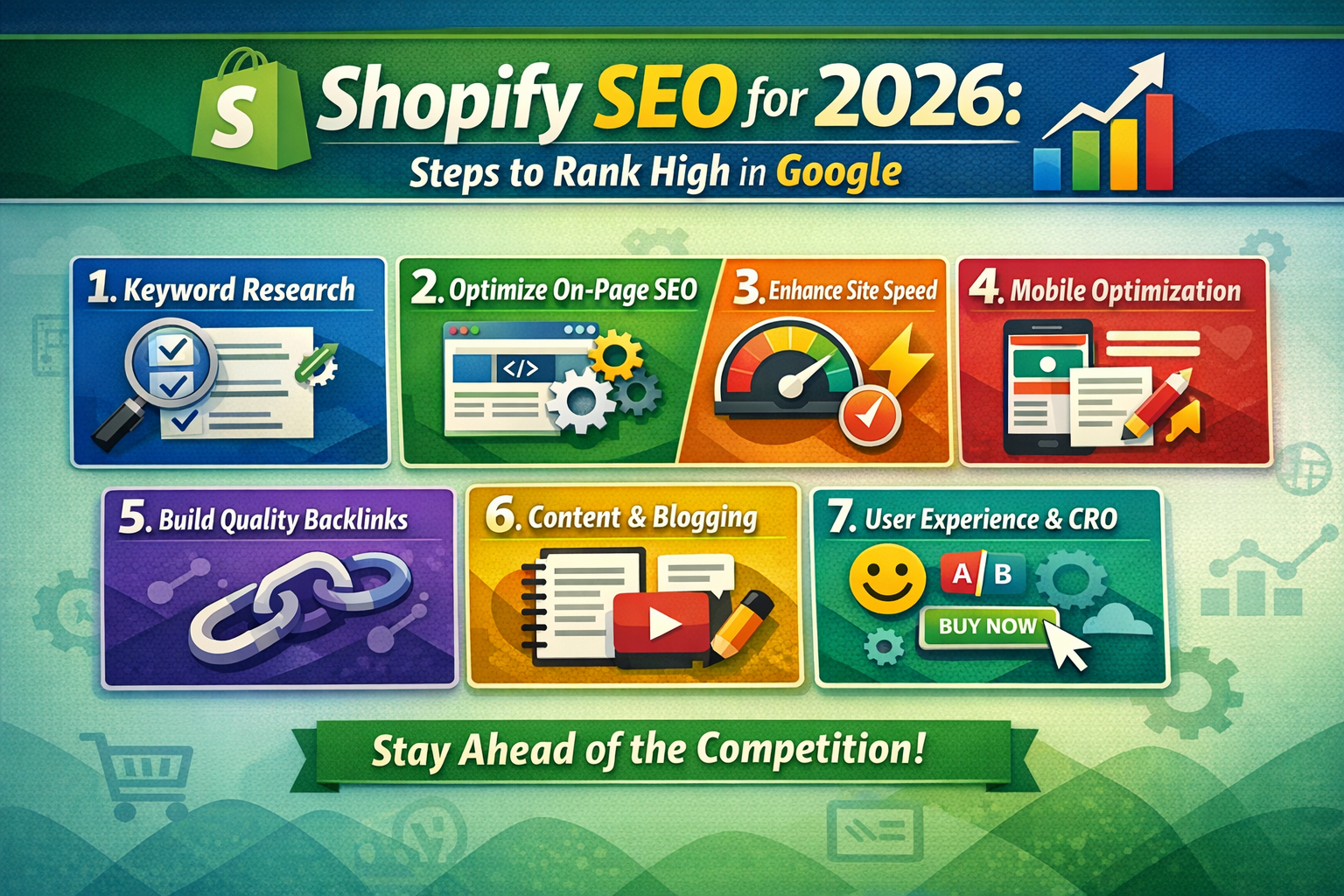
Ecommerce competition is accelerating, and Shopify stores are no longer competing only on products or pricing. In 2026, ranking high on Google requires a deeper understanding of AI-driven search, user intent, and technical excellence. For businesses targeting global and regional markets—especially those focused on SEO in Dubai—Shopify SEO must evolve beyond basic keyword optimization into a structured, performance-focused strategy.
This guide breaks down the most important steps Shopify store owners must take to stay visible, competitive, and conversion-ready in 2026.
How Shopify SEO Is Changing in 2026
Google’s search ecosystem is now shaped by AI Overviews, zero-click searches, and intent-based ranking. This means ecommerce SEO is less about stuffing product pages with keywords and more about clarity, trust, and usability.
Shopify SEO in 2026 focuses on:
-
Search intent matching, not just keywords
-
Fast, mobile-first experiences
-
Structured data that AI can understand
-
Authority signals across content and products
Stores that adapt early gain a strong advantage.
Step 1: Build an Intent-Driven Keyword Strategy
Keyword research still matters, but the approach has shifted. Instead of targeting only high-volume terms, Shopify stores must map keywords to intent:
-
Informational: buying guides, comparisons, FAQs
-
Commercial: best products, alternatives, reviews
-
Transactional: product-specific searches
Create content hubs around product categories and support them with blogs, guides, and FAQs. This structure helps Google understand topical relevance and improves rankings across multiple queries.
Step 2: Optimize Shopify Site Structure
A clean site structure improves crawlability and user experience. Shopify stores should follow a logical hierarchy:
Home → Categories → Subcategories → Products
Avoid orphan pages and excessive clicks to reach products. Use breadcrumb navigation and internal links to reinforce relationships between pages. A clear structure helps both users and search engines navigate the store efficiently.
Step 3: Master Technical SEO on Shopify
Technical SEO will be a defining factor in 2026 rankings. Key priorities include:
-
Fast page load times (optimize images and scripts)
-
Mobile-first design and usability
-
Clean URLs and canonical tags
-
Proper handling of duplicate content from filters and variants
Shopify handles many technical basics well, but custom themes and apps can introduce issues. Regular audits are essential.
Step 4: Optimize Product Pages for AI and Users
Product pages must serve both humans and AI systems. Each page should include:
-
Clear, descriptive product titles
-
Unique product descriptions (not manufacturer copy)
-
Bullet-pointed features and benefits
-
FAQs addressing buyer concerns
Structured content increases the likelihood of being included in AI summaries while also improving conversion rates.
Step 5: Use Structured Data to Stand Out
Schema markup helps Google understand your products and display rich results. Shopify stores should implement:
-
Product schema (price, availability, reviews)
-
FAQ schema for common questions
-
Breadcrumb schema for navigation
Well-implemented structured data improves visibility and click-through rates, even in AI-influenced SERPs.
Step 6: Content Marketing for Shopify SEO
Content is no longer optional for ecommerce. Blogs, guides, and comparison articles help capture informational searches and build authority.
Effective content ideas include:
-
Buying guides and “best of” lists
-
Product comparisons
-
How-to articles related to product usage
-
Industry trends and insights
Many Shopify brands investing in SEO in Sharjah are seeing success by combining product SEO with localized, intent-driven content.
Step 7: Optimize for Mobile and Core Web Vitals
Mobile traffic dominates ecommerce, and Google prioritizes mobile performance. Focus on:
-
Fast Largest Contentful Paint (LCP)
-
Low Cumulative Layout Shift (CLS)
-
Responsive design across devices
A smooth mobile experience directly impacts rankings, engagement, and sales.
Step 8: Build Trust and E-E-A-T Signals
Google increasingly evaluates trustworthiness, especially for ecommerce sites. Strengthen E-E-A-T by:
-
Adding detailed About and Contact pages
-
Showing real customer reviews and testimonials
-
Displaying policies clearly (returns, shipping, privacy)
-
Highlighting brand story and expertise
Trust signals improve both rankings and conversions.
Step 9: Leverage User-Generated Content
Reviews, Q&A sections, and customer photos add freshness and credibility to product pages. They also naturally introduce long-tail keywords and conversational language that align with AI search patterns.
Encourage reviews post-purchase and respond to questions publicly to show active engagement.
Step 10: Track the Right SEO Metrics
In 2026, Shopify SEO success goes beyond traffic numbers. Monitor:
-
Keyword visibility and impressions
-
Product page engagement
-
Conversion rates by traffic source
-
Growth in branded searches
These metrics show how SEO contributes to long-term brand growth, not just rankings.
Step 11: Prepare for AI-Driven Search Experiences
AI Overviews and zero-click results will continue expanding. Shopify stores must structure content so it can be extracted, cited, and trusted.
Use:
-
Clear answers at the top of content sections
-
Lists and tables where relevant
-
Consistent terminology across pages
This approach increases visibility even when users don’t click immediately.
Conclusion
Shopify SEO in 2026 is about alignment—between intent, technology, content, and trust. Stores that focus only on keywords will fall behind, while those that optimize holistically will gain sustainable visibility and sales.
By improving site structure, technical health, product content, and authority signals, Shopify brands can stay competitive in an AI-driven search environment. For businesses expanding regionally, especially those investing in SEO in Dubai, adopting these forward-looking strategies will be key to ranking high in Google and driving consistent ecommerce growth.