Introduction
Selective Estrogen Receptor Modulators (SERMs) are a unique and important class of drugs that interact with estrogen receptors in a tissue-specific manner. Unlike estrogen, which generally exerts the same effect throughout the body, SERMs can act as estrogen agonists in some tissues while behaving as estrogen antagonists in others. This selective activity makes SERMs highly valuable in the treatment of hormone-related conditions such as breast cancer, osteoporosis, and infertility. Over the past several decades, SERM drugs have played a critical role in advancing hormonal therapy by maximizing therapeutic benefits while minimizing unwanted side effects.
Definition
A Selective Estrogen Receptor Modulator (SERM) drug is a class of compounds that bind to estrogen receptors and act either as estrogen agonists or antagonists depending on the target tissue, selectively stimulating or blocking estrogen’s effects in different parts of the body. This tissue-specific action allows SERMs to provide beneficial estrogenic effects in some organs (such as bone) while inhibiting estrogen activity in others (such as breast or uterine tissue), making them useful in treating conditions like breast cancer, osteoporosis, and infertility.
What Are Selective Estrogen Receptor Modulators (SERMs)?
Selective Estrogen Receptor Modulators are synthetic compounds that bind to estrogen receptors (ERs) and either stimulate or block estrogenic activity depending on the target tissue. Estrogen receptors are found throughout the body, including in the breast, uterus, bone, liver, and brain. The effect of a SERM depends on the receptor subtype, tissue-specific co-regulatory proteins, and the molecular structure of the drug.
The defining feature of SERMs is selectivity. For example, a SERM may block estrogen’s effects in breast tissue (helpful in preventing breast cancer growth) while mimicking estrogen in bone tissue (helpful in preventing bone loss).
Mechanism of Action of SERM Drugs
SERMs exert their effects by binding to estrogen receptors, primarily ER-α and ER-β. Once bound, the drug-receptor complex undergoes a conformational change that determines whether it will activate or inhibit gene transcription.
- Agonist action: In certain tissues, SERMs activate estrogen-responsive genes, producing estrogen-like effects.
- Antagonist action: In other tissues, SERMs block estrogen activity by preventing receptor activation.
This dual behavior is influenced by:
- Tissue-specific receptor distribution
- Presence of co-activator or co-repressor proteins
- Structural differences among SERM molecules
Because of this complexity, each SERM has a unique clinical profile.
Commonly Used SERM Drugs
Several SERM drugs are approved for clinical use, each with distinct indications:
1. Tamoxifen
Tamoxifen is one of the most well-known SERMs and has been widely used in the treatment and prevention of estrogen receptor-positive (ER+) breast cancer. It acts as an estrogen antagonist in breast tissue but as an agonist in bone and uterine tissue.
2. Raloxifene
Raloxifene is primarily used to prevent and treat osteoporosis in postmenopausal women. It mimics estrogen’s beneficial effects on bone while blocking estrogen activity in breast and uterine tissue, reducing cancer risk.
3. Clomiphene Citrate
Clomiphene is commonly used in fertility treatment. It works by blocking estrogen receptors in the hypothalamus, leading to increased release of gonadotropins and stimulation of ovulation.
4. Toremifene
Toremifene is similar to tamoxifen and is used in the treatment of metastatic breast cancer in postmenopausal women.
5. Bazedoxifene
Bazedoxifene is used in combination with conjugated estrogens to treat menopausal symptoms and prevent osteoporosis, offering estrogen benefits with reduced uterine risk.
Therapeutic Uses of SERMs
Breast Cancer Treatment and Prevention:
SERMs are especially important in hormone-dependent breast cancer. By blocking estrogen receptors in breast tissue, drugs like tamoxifen reduce tumor growth and recurrence. SERMs are also used prophylactically in high-risk women to lower the incidence of breast cancer.
Osteoporosis Management:
Estrogen plays a vital role in maintaining bone density. SERMs such as raloxifene act as estrogen agonists in bone, helping to reduce bone resorption and fracture risk in postmenopausal women.
Infertility Treatment:
Clomiphene citrate is a first-line therapy for anovulatory infertility. By disrupting estrogen feedback mechanisms, it stimulates ovulation and increases the chance of conception.
Menopausal Symptom Control:
Some SERMs, especially newer agents, are used to manage menopausal symptoms like hot flashes while avoiding the risks associated with traditional hormone replacement therapy.
Advantages of SERM Drugs
- Tissue-selective action reduces systemic side effects
- Lower cancer risk compared to estrogen therapy alone
- Bone-protective effects without stimulating breast tissue
- Oral administration, making them convenient for long-term use
- Proven efficacy supported by decades of clinical data
These benefits make SERMs an attractive alternative to conventional estrogen therapy in many patients.
Side Effects and Limitations
Despite their benefits, SERMs are not without risks. Common side effects may include:
- Hot flashes
- Leg cramps
- Nausea
- Increased risk of venous thromboembolism
Some SERMs, such as tamoxifen, may increase the risk of endometrial cancer due to estrogenic effects on uterine tissue. Careful patient selection and monitoring are essential to minimize adverse outcomes.
Additionally, not all patients respond equally to SERMs, and drug resistance may develop in long-term cancer therapy.
Future Trends of the Selective Estrogen Receptor Modulator (SERM) Drug Market
Advancements in Drug Development:
The SERM drug market is expected to grow with the development of next-generation SERMs that offer improved tissue selectivity and reduced side effects. Ongoing research is focused on designing molecules that provide targeted therapeutic benefits while minimizing risks such as thromboembolism and uterine complications.
Expanding Clinical Applications:
Beyond traditional uses in breast cancer and osteoporosis, SERMs are increasingly being explored for new indications, including menopausal symptom management, cardiovascular health, and neurological disorders. This expansion of therapeutic applications is likely to drive market demand.
Rising Focus on Personalized Medicine:
The integration of personalized and precision medicine is shaping the future of the SERM market. Genetic profiling and biomarker-based treatment approaches are expected to help identify patients who will benefit most from specific SERM therapies, improving efficacy and safety.
Growing Demand in Emerging Markets:
Improved healthcare infrastructure and increased awareness of hormone-related disorders in emerging economies are contributing to market growth. Rising incidence of osteoporosis and breast cancer in aging populations further supports the expanding global demand for SERM drugs.
Growth Rate of Selective Estrogen Receptor Modulator (SERM) Drug Market
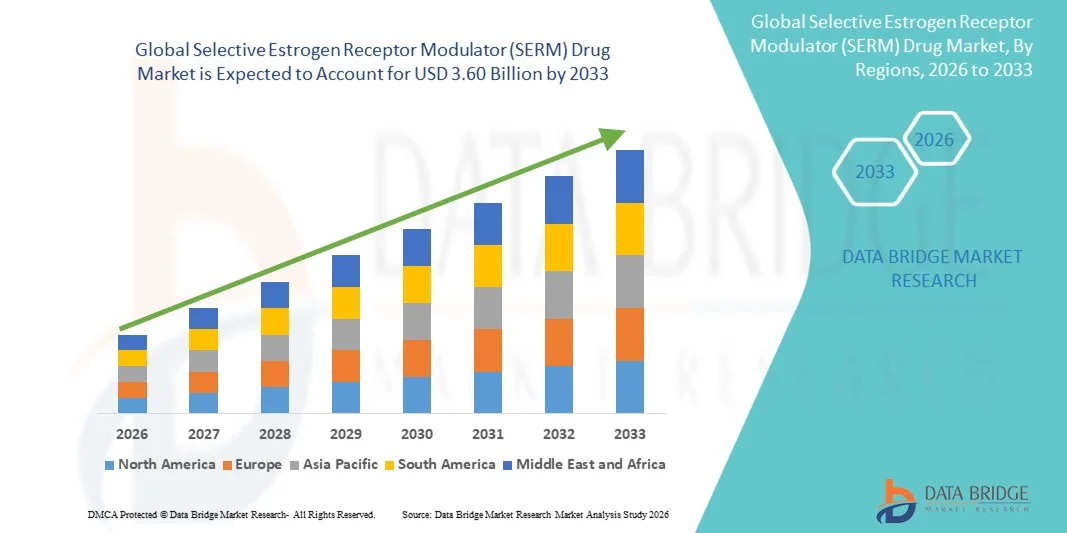
According to Data Bridge Market Research, the selective estrogen receptor modulator (SERM) drug market was estimated to be worth USD 2.23 billion in 2025 and is projected to grow at a compound annual growth rate (CAGR) of 6.20% to reach USD 3.60 billion by 2033.
Conclusion
Selective Estrogen Receptor Modulator (SERM) drugs represent a significant advancement in hormonal pharmacotherapy. Their ability to selectively mimic or block estrogen in different tissues allows clinicians to harness estrogen’s benefits while minimizing its risks. From breast cancer treatment and osteoporosis prevention to fertility management, SERMs continue to play a vital role in modern medicine.