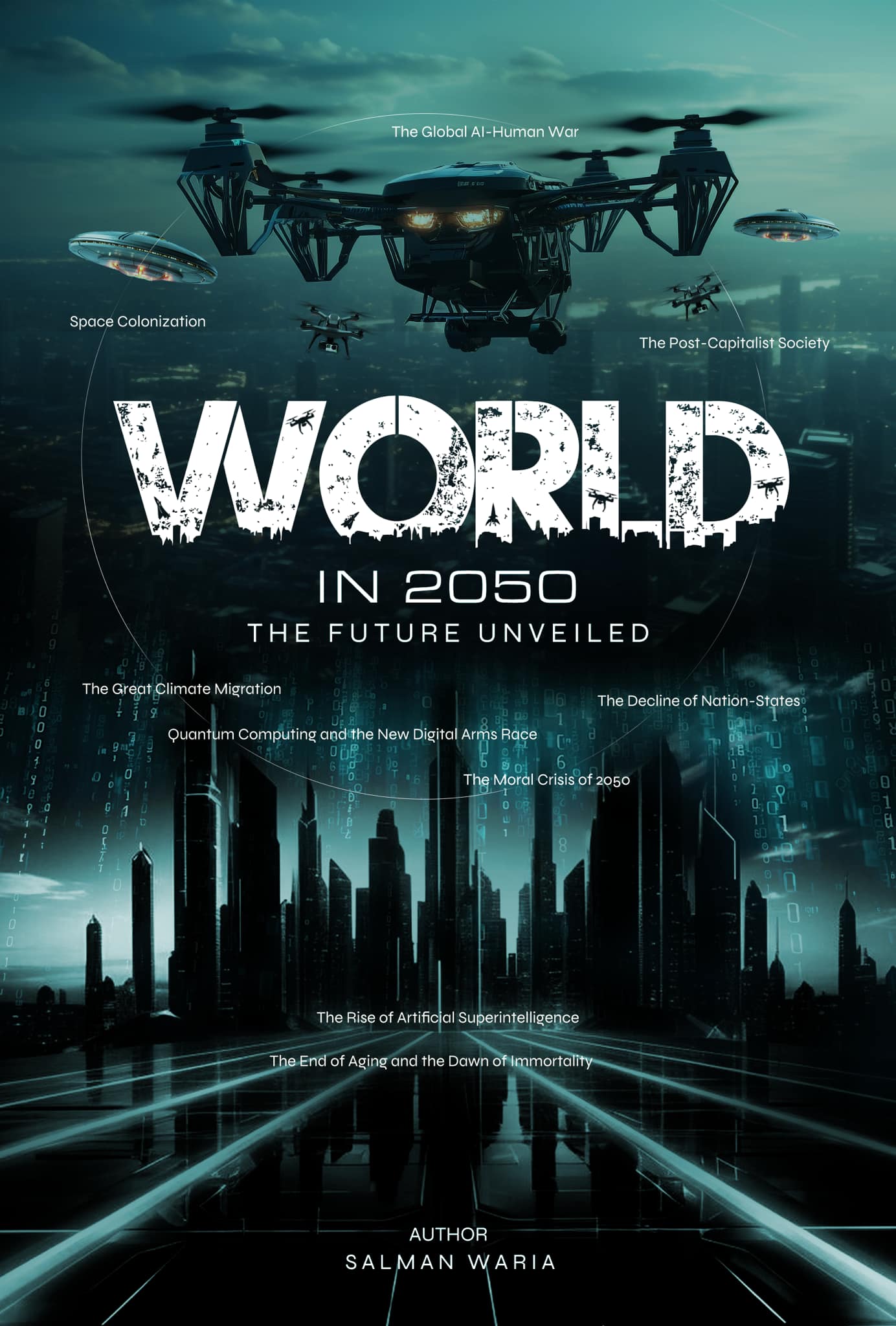
The future is no longer a distant idea discussed only by scientists and philosophers. Today thinkers like Salman Waria help explain how technology and humanity are shaping the next era of life on Earth. Explores how the World in 2050 may evolve as innovation accelerates and human values adapt alongside machines.
Moreover Explains the role of Technology the importance of Humanity and how modern technology solutions influence business and society. Additionally it highlights how entrepreneurs can prepare for change by learning how can entrepreneurs identify and adapt to marketplace trends. Therefore readers will gain clear practical insights into a future that is already taking form.
Why Salman Waria’s Perspective on the World in 2050 Matters
Understanding the future requires more than predictions. It requires balanced thinking that connects innovation with human needs. Salman Waria emphasizes that the World in 2050 will depend on how wisely technology is used rather than how fast it grows.
Furthermore this perspective matters because technology affects everyone. From work and education to healthcare and communication digital systems influence daily life. Consequently a human centered approach helps ensure progress benefits society as a whole.
Technology as a Tool Not a Replacement
Technology will be deeply embedded in the World in 2050 but it will not replace humanity. Instead smart systems will support human decision making. Artificial intelligence automation and data analytics will help solve complex problems more efficiently.
Modern technology solutions such as smart cities and digital health platforms aim to improve quality of life. However these systems must be designed with care. When technology respects human values it builds trust and long term stability.
Real Life Examples of Human Centered Innovation
Already technology shows how it can serve humanity. Online education platforms expand access to learning while remote work tools support work life balance. These examples show how progress can align with human needs rather than disrupt them.
Similarly businesses that focus on ethical technology use often earn stronger customer loyalty. This balance between innovation and responsibility reflects the future vision discussed by Salman Waria.
Technology Humanity and the Changing Marketplace
The relationship between technology and humanity is especially visible in business. As markets evolve companies must adapt or risk becoming irrelevant. Salman Waria’s insights highlight that understanding people is just as important as understanding tools.
Moreover technology reshapes how value is created. Data driven decisions digital platforms and automation improve efficiency. Therefore businesses that combine technology with human insight are more likely to succeed.
Why This Matters to Entrepreneurs and Decision Makers
For entrepreneurs the challenge is not only adopting technology but using it wisely. Learning how can entrepreneurs identify and adapt to marketplace trends begins with listening to customers and observing patterns.
Additionally entrepreneurs must remain flexible. Market demands can shift quickly due to economic changes or new innovations. Consequently those who stay informed and adaptable are better prepared for uncertainty.
Supporting Trends and Observations
Global studies consistently show that companies investing in digital transformation perform better over time. For example organizations using data analytics often report improved efficiency and customer satisfaction. While exact figures may differ the trend clearly supports technology driven growth when paired with human judgment.
Building a Balanced Future in the World in 2050
The final piece of the future puzzle is balance. The World in 2050 will require cooperation between technology and humanity rather than competition. Salman Waria’s approach emphasizes thoughtful integration rather than unchecked expansion.
Furthermore modern technology solutions must address real problems. Tools that improve sustainability education and healthcare will play a key role in shaping a stable future. As a result innovation becomes meaningful when it serves long term human goals.
Practical Application for Today’s World
Applying these ideas does not require waiting until 2050. Businesses and individuals can act now by learning continuously and embracing ethical innovation. Small steps such as adopting digital tools responsibly or investing in skill development create lasting impact.
In practice future ready thinking involves planning beyond short term gains. This mindset helps organizations remain resilient as technology and humanity evolve together.
FAQs
What is Salman Waria’s view on technology and humanity?
Salman Waria emphasizes that technology should support humanity not replace it especially in the evolving World in 2050.
How will the World in 2050 be different from today?
The World in 2050 will be more connected data driven and automated while still relying on human values and decision making.
Why are modern technology solutions important for businesses?
Modern technology solutions improve efficiency decision making and customer experience when used thoughtfully.
How can entrepreneurs adapt to future marketplace trends?
Entrepreneurs can adapt by studying customer behavior using data insights and staying flexible as technology changes.
Conclusion
The future will be shaped by choices made today. Salman Waria presents a balanced vision where Technology and Humanity grow together rather than apart. Understanding the World in 2050 helps individuals and businesses prepare for change with clarity and purpose.
Ultimately modern technology solutions and adaptive thinking offer a sustainable path forward. Reflecting on these insights encourages smarter decisions and long term resilience in a rapidly changing world guided by Salman Waria’s forward looking perspective.