Vehicle compliance is a critical requirement for industries such as insurance, logistics, fleet management, lending, mobility platforms, and digital vehicle marketplaces. Any gap in compliance checks can expose businesses to regulatory penalties, rejected claims, operational disruption, and reputational damage.
Despite this, many organizations still rely on document-based or manual vehicle verification processes. These methods are slow, inconsistent, and difficult to audit at scale. This is where the RC to Mobile API plays an important role in strengthening vehicle compliance checks.
By validating the relationship between a vehicle’s Registration Certificate (RC) and a mobile number, businesses gain a stronger, more reliable layer of compliance verification.
What Is RC to Mobile Verification?
RC to Mobile verification is the process of checking whether a specific mobile number is associated with a vehicle’s RC record. Instead of validating vehicle documents alone, this method confirms both vehicle authenticity and contact linkage.
This approach strengthens vehicle compliance by ensuring that:
-
The vehicle exists and is legally registered
-
The provided mobile number is linked to the vehicle
-
Ownership or control claims are consistent with verified records
RC to Mobile verification is especially valuable in digital onboarding and high-volume verification workflows.
Why Vehicle Compliance Requires More Than RC Documents
Traditional RC document checks confirm vehicle registration but do not verify who is currently associated with the vehicle. This creates compliance gaps.
Common risks include:
-
Vehicles operating with incorrect owner details
-
Outdated contact information
-
Duplicate vehicle records across platforms
-
Disputes during audits, claims, or inspections
Without validating the RC-to-mobile linkage, compliance checks remain incomplete and vulnerable to misuse.
How RC to Mobile API Strengthens Compliance Checks
RC to Mobile API adds an additional verification layer by confirming the connection between a vehicle and a reachable mobile number.
This enables businesses to:
-
Validate ownership linkage alongside RC data
-
Detect mismatches early in onboarding
-
Reduce dependency on manual follow-ups
-
Improve traceability for compliance audits
By combining vehicle and contact verification, compliance checks become more robust and defensible.
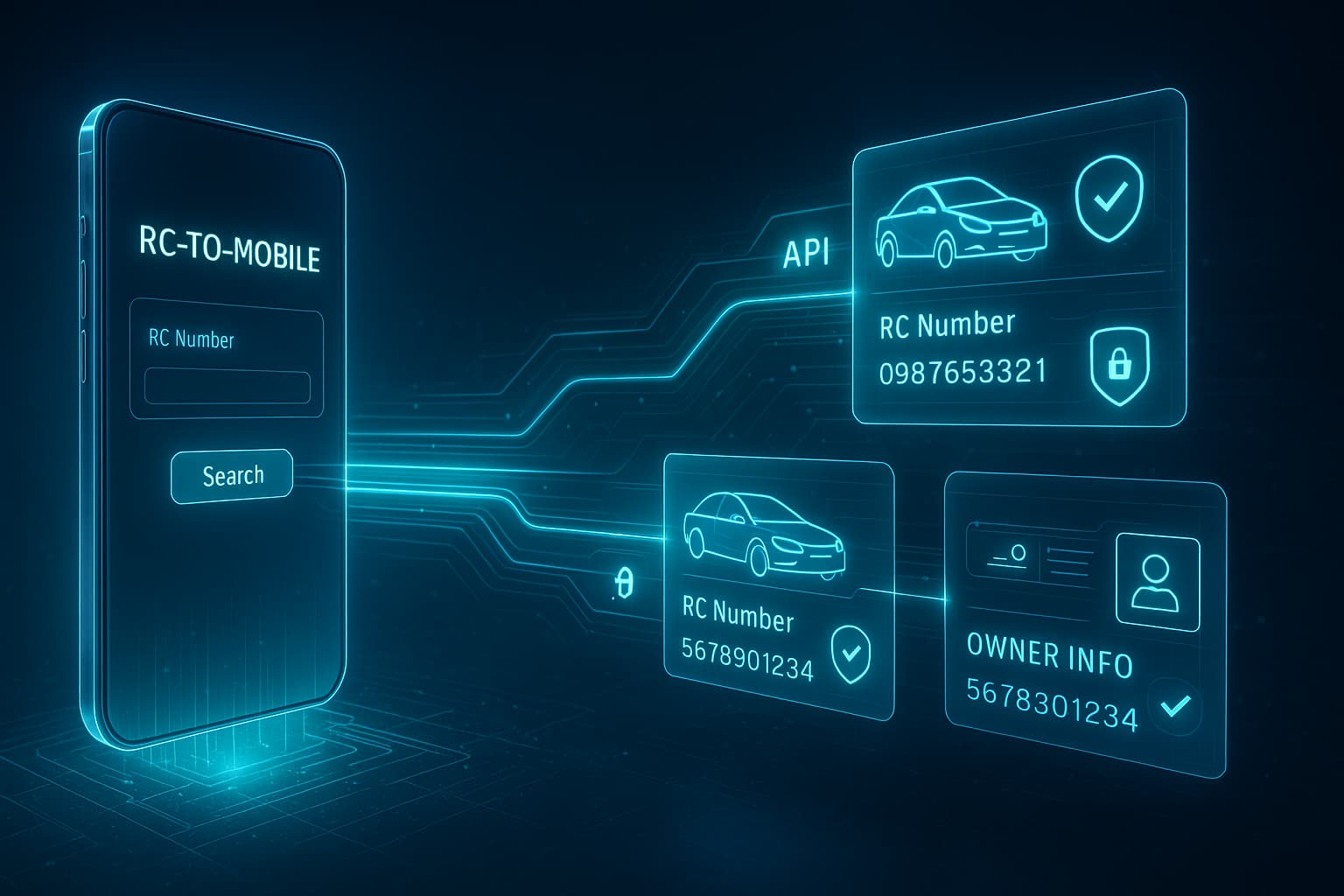
How the RC to Mobile Verification Process Works
The verification process is automated and fast.
First, the vehicle registration number and mobile number are submitted.
The system sends this data to the RC to Mobile API.
The API checks verified vehicle records for linkage.
The response confirms whether the mobile number is associated with the RC.
This real-time result allows platforms to approve, reject, or flag vehicles instantly.
Key Compliance Indicators Validated Using RC to Mobile API
Vehicle Registration Status
Confirms that the vehicle is active and legally registered, preventing non-compliant vehicles from entering operations.
Contact-to-Vehicle Linkage
Ensures that the vehicle is associated with a genuine and reachable contact number, improving accountability.
Ownership Consistency
Helps reduce disputes by validating consistency between declared ownership and verified records.
Data Traceability
Creates verifiable records that support audit and regulatory reviews.
Compliance Use Cases Across Industries
RC to Mobile API supports stronger compliance checks across multiple sectors.
In logistics and fleet operations, it ensures vehicles are linked to verified operators before dispatch.
In insurance, it supports policy issuance, renewals, and claims validation.
In lending, it strengthens vehicle collateral verification.
In mobility platforms, it prevents non-compliant vehicles from going live.
In each case, RC to Mobile verification improves compliance confidence.
Reducing Manual Errors and Compliance Delays
Manual compliance checks often involve document review, follow-up calls, and data reconciliation. These steps slow down onboarding and increase error risk.
RC to Mobile API automates routine compliance validation and reduces reliance on manual intervention. This improves speed without compromising accuracy.
Improving Audit Readiness and Regulatory Confidence
Audits and regulatory reviews require clear proof that compliance checks were performed correctly and on time.
RC to Mobile verification generates structured, time-stamped results that improve audit readiness and reduce regulatory risk.
Supporting Scalable and Digital Compliance Workflows
As businesses expand digitally and across regions, maintaining uniform compliance becomes challenging.
RC to Mobile API enables:
-
Standardized compliance checks across locations
-
Faster onboarding of vehicles and vendors
-
Consistent verification rules at scale
This supports growth without weakening compliance controls.
Preventing Compliance Issues Before They Escalate
Many compliance issues are identified only after inspections or incidents. At that point, financial and reputational damage has already occurred.
RC to Mobile verification shifts compliance from reactive correction to proactive prevention. Vehicles that fail checks are flagged early, before they can cause operational issues.
Long-Term Benefits of RC to Mobile Compliance Verification
While RC to Mobile API is often adopted for faster verification, its long-term value lies in risk reduction.
Benefits include:
-
Fewer regulatory notices and penalties
-
Reduced insurance disputes
-
Improved data integrity
-
Stronger partner accountability
-
Better operational predictability
These advantages grow as vehicle volume increases.
Conclusion
Vehicle compliance is no longer limited to verifying RC documents. In modern, digital, and large-scale operations, businesses need stronger verification methods that combine vehicle data with contact identity.
The RC to Mobile API plays a vital role in strengthening vehicle compliance checks by validating the relationship between vehicles and mobile numbers in real time. It improves traceability, reduces fraud risk, and supports faster, more reliable compliance workflows.
For organizations operating across insurance, logistics, lending, or mobility platforms, RC to Mobile verification is not an optional enhancement—it is a foundational component of modern vehicle compliance systems.