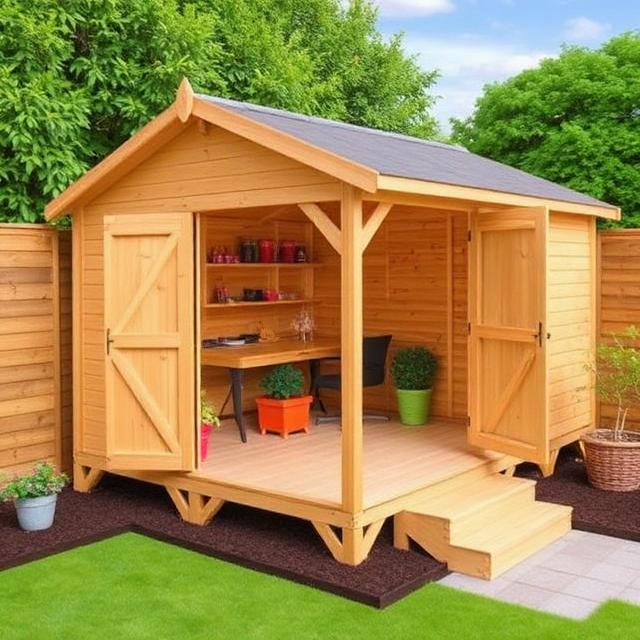
Selecting the appropriate foundation is among the most crucial first steps in shed construction. Your investment will be protected for years thanks to a strong foundation, which also increases durability and supports the construction. Having collaborated with DIY builders, homeowners, and garden landscapers, I have based this book on real experience and everyday use. This essay will introduce you to dependable shed bases, how they operate, and when each choice is appropriate.
Why Shed Bases Still Matters
The base below determines the strength of a shed. Doors may not close well, floors might warp, and moisture can harm without appropriate support. For this reason, shed bases need to stay dry and even. Additionally, their weight and size of the shed must be matched.
Ground conditions differ throughout many gardens. Performance is influenced by soil kind, drainage, and slope. Knowing your choices therefore helps you prevent expensive errors. This helps your shed last longer since it strengthens the proper base.
Concrete Shed Bases
Concrete Slab Foundations
Among shed bases, concrete is among the most reliable. It offers a sturdy, lasting cover. Its robustness makes it suited for hefty machinery and large buildings.
First, the ground is leveled and prepared. Concrete is then poured and allowed to cure. The shed then may be confidently put in place. This approach does excellent resistance to wet and rot. It calls for planning and work, though. Moreover, eliminating it afterward is not simple.
When long term usage is intended, concrete bases are perfect. Typically picked for workshops or machinery storage barns, these are
Concrete Pavers
One more adaptable approach comes from concrete paving slabs. They are laid on compressed sand and gravel. This choice costs less than a whole slab. It also offers great support, however.
Installation is simpler because slabs are in pieces. One slab can be exchanged should damage arise. Many homeowners thus favor this approach for moderately sized sheds.
Plastic And Grid Shed Bases
Plastic Shed Base Systems
A plastic shed base is growing rather well-liked. Interlocking grids constructed from recovered plastic are used by these systems. Strength is produced when gravel fills the grids.
Their structure improves drainage by itself. Water flows past rather than gathering. Shed flooring thus stays dry. Furthermore, setting up is fast and easy.
Gravel Shed Bases
Grid systems sometimes connect with gravel bases. Crushed stone gives a level surface. Gravel helps wooden floors from rotting since it drains well.
First, the land is leveled. A weed membrane is then laid. Then gravel is brought in and compressed. Many garden kinds profit from this strategy. It also works effectively on undulating terrain.
Timber Shed Bases
Pressure Treated Timber Frames
Frames of timber bases are made using treated wood beams. The foundation of the shed sits on top of this. This technique is suitable for temporary sheds.
Installation seems straightforward because wood is simple to cut and modify. It also lets air pass under the shed. This helps lower humidity.
But even processed wood can progressively deteriorate. This choice therefore has to be checked regularly. It fits best for short term use and lightweight sheds.
Raised And Block Bases
Concrete Block Bases
Raised shed bases are made using concrete blocks. They are positioned at important support levels. Sloped or uneven ground is ideal for this.
Moisture accumulation lessens since air passes beneath the shed. Moreover, leveling gets simpler. Every block may be meticulously calibrated.
This strategy is excellent for wooden sheds. Furthermore employing less stuff than a slab. Consequently, prices remain less.
How To Choose The Right Shed Base
Choosing shed foundations depends on a number of considerations. First priority is shed size. Large sheds require more substantial backing. Next, think about ground conditions. Bases that are elevated or permeable are necessary for inadequate drainage.
The budget is also important. Certain bases are more expensive yet last longer. Others save money up front. Consider the long term before coming to a decision therefore.
A good balance is found with plastic shed base systems. Suitable for many gardens, they are simple to set up and robust. Many contemporary shed constructions thus make use of them.
Final Thoughts
A shed base is not only a foundation. It stabilizes your shed and shields it from harm. From personal experience, the best decision is based on your needs and garden circumstances.
Strength and permanence come from concrete. Systems of plastic and gravel shed basis increase drainage. Timber and block foundations provide for some latitude. Knowing each choice helps you make a wise judgment since every choice serves a use.
Sheds last longer and function better if their shed bases are chosen appropriately. With good preparation, your shed will stay dry, level, and safe for many years.