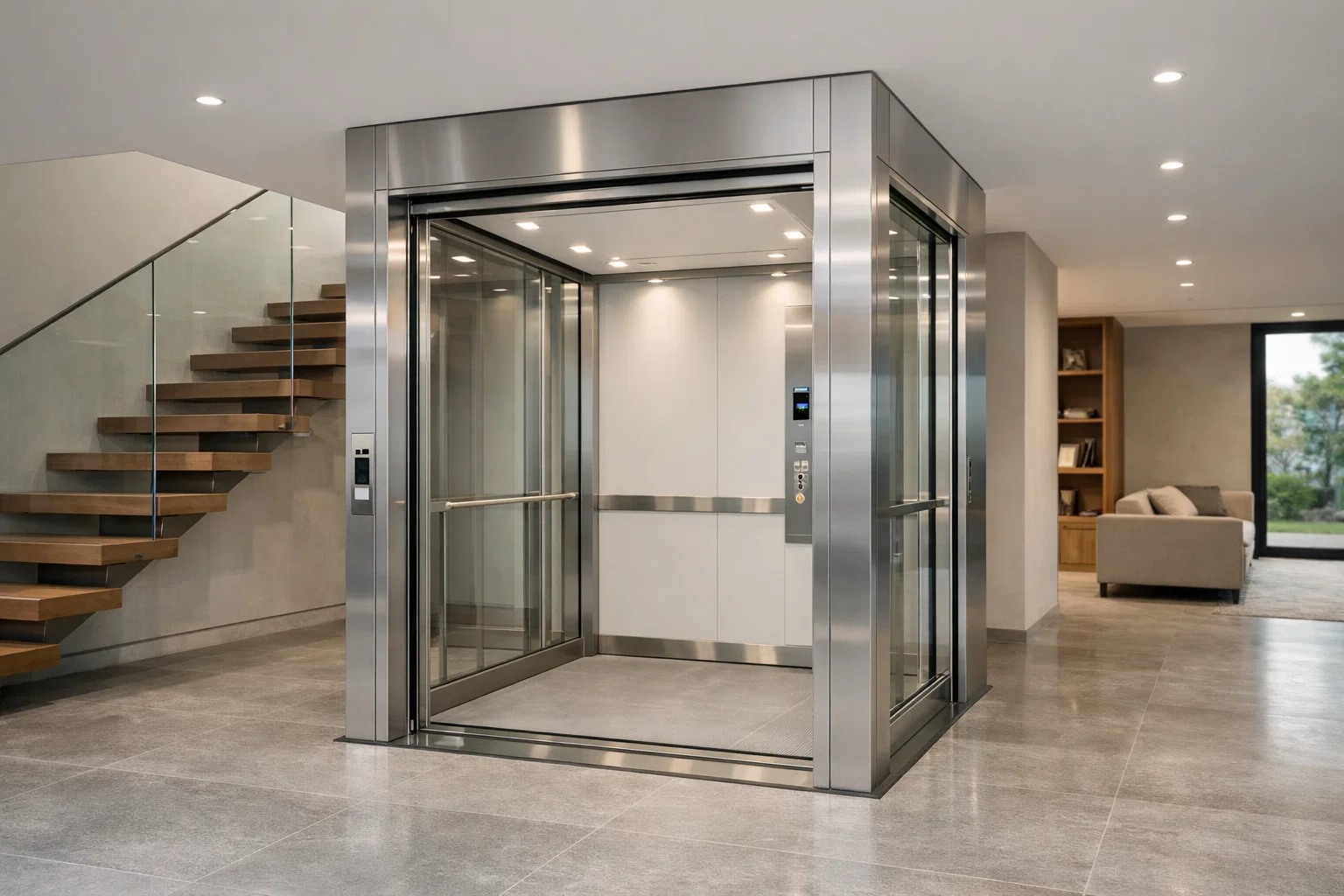
Not every building has a lift pit in the layout, which becomes a major issue when you want to install a lift later. Homeowners, builders, and commercial property owners often want a lift but don’t want structural changes or heavy construction work. Such challenges gave rise to pit-less hydraulic lifts. These lifts do not require a pit. They can be easily set up in a limited space within a short period. Read this article till the end to know everything about the pitless hydraulic lifts.
What is a Pit-Less Hydraulic Lift?
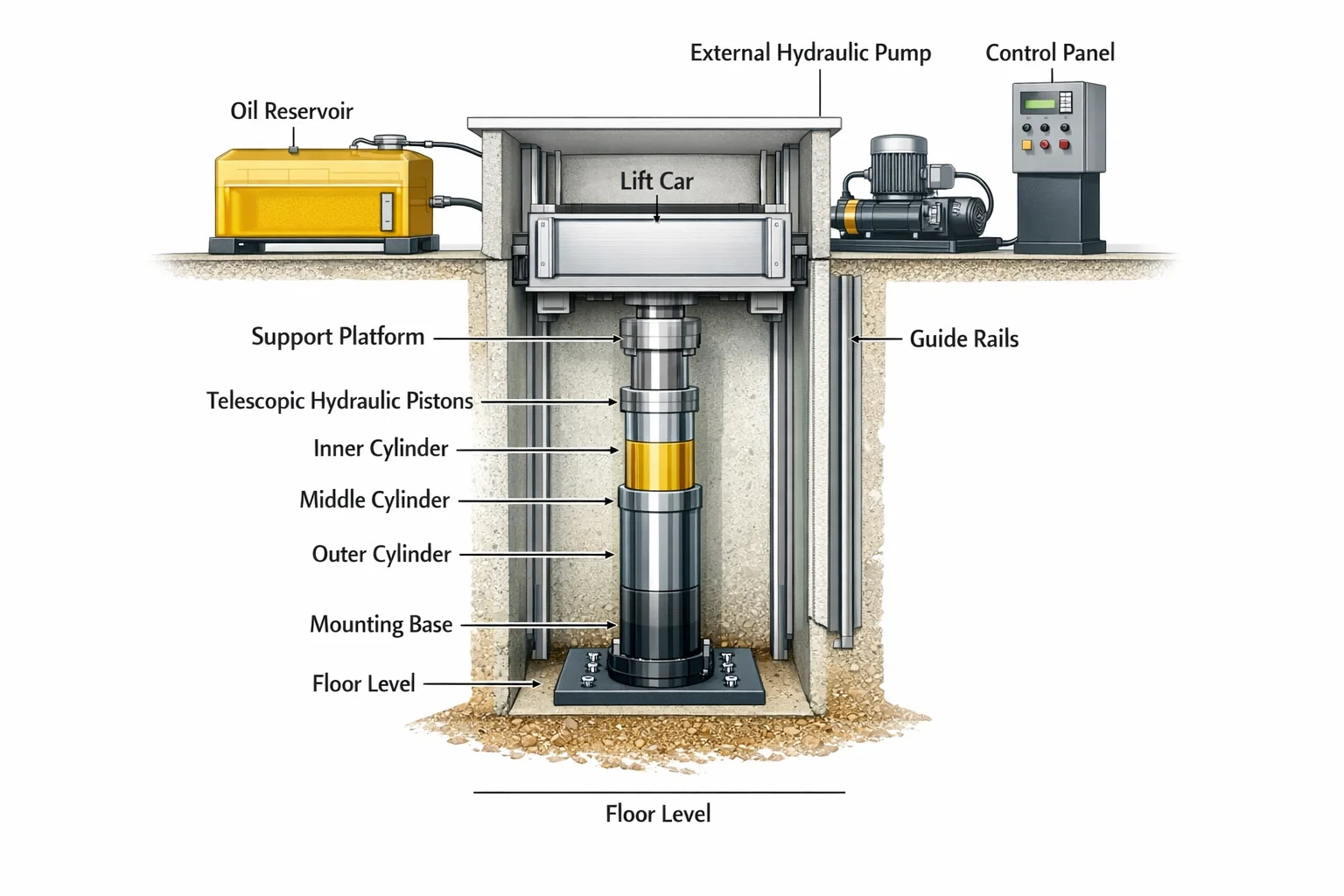
A pitless hydraulic lift is a type of elevator that works without a pit below the floor level. It means you don’t have to place the hydraulic cylinder underground. This lift uses telescopic pistons and an external hydraulic pump that operate above ground. Generally, a pit-type hydraulic lift does require a 3- to 4-foot pit for the piston and safety buffers. In contrast, pitless hydraulic lifts require very little excavation.
All parts, such as the electric motor, pump, oil reservoir, and control panel, are placed in a machine room or a cabinet. They are suitable for low-rise buildings and cover 3 to 4 floors. In terms of capacity, this hydraulic lift without a pit can carry between 4 and 8 passengers, depending on the model.
How Pit-Less Hydraulic Lifts Work
Pitless hydraulic lifts operate on a basic principle. They use hydraulic oil pressure to move the lift up and down. It works with the help of a hydraulic power unit, a cylinder with a piston, and a controller. For upward movement, an electric motor activates a pump that pushes hydraulic oil from a reservoir into the cylinder. As pressure builds, the oil forces the piston to extend. This motion lifts the elevator either directly or by a roped hydraulic system. In pitless lifts for homes, a pulley and cable are common.
When the lift needs to move down, a control valve opens and releases the hydraulic oil back into the reservoir. The weight of the lift slowly pushes the piston down. Gravity also plays a vital role in the smooth movement of the lift.
Key Features of Pit-Less Hydraulic Lifts
Pitless hydraulic lifts are a great example of engineering. They can be used in both residential and commercial premises. Below are the key features that make them unique:
- No Need for Deep Pit: It is the selling point of these pitless home lifts, and this feature is very helpful in existing buildings and retrofit projects.
- Compact/Machine-Room-Less Design: Pitless hydraulic lifts can be installed in tight areas. Even some models don’t need a separate machine room.
- Smooth and Silent Operation: Hydraulic technology promises a jerk-free ride with low noise levels, which makes it perfect for homes and offices.
- Custom Cabin Designs: You can ask the manufacturer for a unique cabin design and add lights to control panels according to your style and taste.
- Energy-Efficient Performance: Power is mainly used to move the lift in an upward direction, which reduces electricity consumption and keeps operating costs low over time.
Ideal Applications of Pit-Less Hydraulic Lifts
Pitless hydraulic lifts are used in several settings. As they do not require heavy civil work, they can easily fit into a wide range of environments. Some of them are:
Residential Buildings
- Detached houses and villas often need it for daily use.
- It fits within the limited shaft space of low-rise apartments and duplex homes.
- Best for care homes and in the homes of old people for easy floor-to-floor movement.
Commercial Spaces
- They can be installed in small offices and business centers for vertical access.
- In showrooms and retail outlets for the convenience of the customers.
- The pitless goods lift can be installed in hotels, clinics, and low-rise commercial buildings for comfort.
Accessibility & Public Buildings
- In hospitals and healthcare facilities for patient transportation.
- Support inclusive movement in educational institutions.
- In public buildings for effortless access.
Safety Features & Compliance Standards
Safety is not optional in pitless hydraulic lifts. It comes built-in. Since these lifts run without a deep pit, both safety and compliance standards are high. The key safety features and compliance standards are:
- Emergency Lowering & Manual Rescue: In case of power failure, the lift drops to the nearest floor and opens automatically.
- Door Interlocks & Infrared Sensors: The lift will not move unless all doors are fully closed and locked. Infrared door curtains stop the lift if it detects any obstruction.
- Overload Protection: Weight sensors prevent the lift from operating when the maximum load limit is exceeded.
- Backup Power & Safety Valves: Battery backup systems and hydraulic safety valves prevent sudden or uncontrolled movement.
Emergency Alarm & Communication System: They have built-in alarms and a two-way communication system to connect passengers during emergency situations.
Residential Buildings
- Detached houses and villas often need it for daily use.
- It fits within the limited shaft space of low-rise apartments and duplex homes.
- Best for care homes and in the homes of old people for easy floor-to-floor movement.
Commercial Spaces
- They can be installed in small offices and business centers for vertical access.
- In showrooms and retail outlets for the convenience of the customers.
- The pitless goods lift can be installed in hotels, clinics, and low-rise commercial buildings for comfort.
Accessibility & Public Buildings
- In hospitals and healthcare facilities for patient transportation.
- Support inclusive movement in educational institutions.
- In public buildings for effortless access.
Safety Features & Compliance Standards
Safety is not optional in pitless hydraulic lifts. It comes built-in. Since these lifts run without a deep pit, both safety and compliance standards are high. The key safety features and compliance standards are:
- Emergency Lowering & Manual Rescue: In case of power failure, the lift drops to the nearest floor and opens automatically.
- Door Interlocks & Infrared Sensors: The lift will not move unless all doors are fully closed and locked. Infrared door curtains stop the lift if it detects any obstruction.
- Overload Protection: Weight sensors prevent the lift from operating when the maximum load limit is exceeded.
- Backup Power & Safety Valves: Battery backup systems and hydraulic safety valves prevent sudden or uncontrolled movement.
Emergency Alarm & Communication System: They have built-in alarms and a two-way communication system to connect passengers during emergency situations.
- Compliance Standards: They are designed with all national and international safety norms, including ISO standards and EN regulations. Some models are also TÜV-certified and follow the local Lift Acts.
Cost Factors & Maintenance Considerations
If you are serious about buying a pitless hydraulic lift for an existing building, then you have to understand the cost and maintenance aspects to avoid last-minute surprises. This consideration can save your valuable time and money from being wasted.
Key factors that influence the overall cost include:
- Capacity and size: High load capacity or a large cabin increases the overall cost of the lift.
- Number of floors: Pit-less hydraulic lifts are ideal for 2–4 floors. But if you want to move it more, the price will double.
- Customization: Custom changes such as premium cabin finishes, glass panels, automatic doors, or smart controls can add to both purchase and installation costs.
- Pitless Lift Installation needs: Also, the building design, space conditions, and local compliance requirements affect the final quote.
Maintenance and long-term considerations:
- Regular servicing: The time-to-time servicing of the lift can extend its life.
- Hydraulic fluid checks: Fluid replacement after a certain time can improve its performance.
- AMC and service plans: A good annual maintenance contract (AMC) reduces the risk of lift failure and avoids pocket-burning repairs.
To Wrap Up
Pitless hydraulic lift is an impressive lifting solution for modern structures where space, safety, and simplicity in installation matter the most. Their reasonable cost and low maintenance make them a good long-term investment. All you have to do is choose the right manufacturer. Himor Lift is a leading hydraulic lift manufacturer. We have 23+ years of global experience and offer all kinds of hydraulic lifts with a premium warranty of up to 5 years and lifetime support. Contact us right now!