Overhead cable systems remain the backbone of global power transmission and distribution networks. From urban grids to remote rural electrification projects, overhead cables offer a cost-effective, scalable, and reliable solution for delivering electricity over long distances. For power utilities, EPC contractors, and procurement teams, understanding the technical aspects and selection criteria of overhead cables is essential to ensure long-term network performance and safety.
This article explores what overhead cables are, their key types, applications, and how manufacturers like HNBF Power support modern grid infrastructure with high-quality overhead conductor solutions.
What Is an Overhead Cable?
An overhead cable refers to an electrical conductor installed above ground, typically supported by utility poles or transmission towers. Unlike underground cables, overhead cables are exposed to environmental conditions and therefore must be designed to withstand mechanical stress, wind load, temperature variation, and corrosion.
Overhead cables are widely used in:
-
High-voltage transmission lines
-
Medium- and low-voltage distribution networks
-
Rural electrification and industrial power supply
-
Temporary or rapidly deployable grid extensions
Their relatively low installation cost and ease of maintenance make overhead cables a preferred choice in many regions worldwide.
Key Types of Overhead Cables Used in Power Networks
AAC (All Aluminum Conductor)
AAC overhead cables are made entirely of aluminum strands. They offer excellent conductivity and corrosion resistance, making them suitable for urban distribution networks where spans are shorter and mechanical loads are moderate.
Typical use cases:
-
Urban power distribution
-
Coastal areas with corrosive environments
AAAC (All Aluminum Alloy Conductor)
AAAC overhead cables use aluminum alloy instead of pure aluminum, providing higher tensile strength and better sag performance.
Advantages include:
-
Improved strength-to-weight ratio
-
Longer span capability than AAC
-
Reduced maintenance requirements
ACSR (Aluminum Conductor Steel Reinforced)
ACSR overhead cables combine aluminum strands with a steel core, offering high tensile strength and excellent current-carrying capacity.
Common applications:
-
Long-distance transmission lines
-
High-voltage and extra-high-voltage networks
-
Areas with heavy wind or ice loading
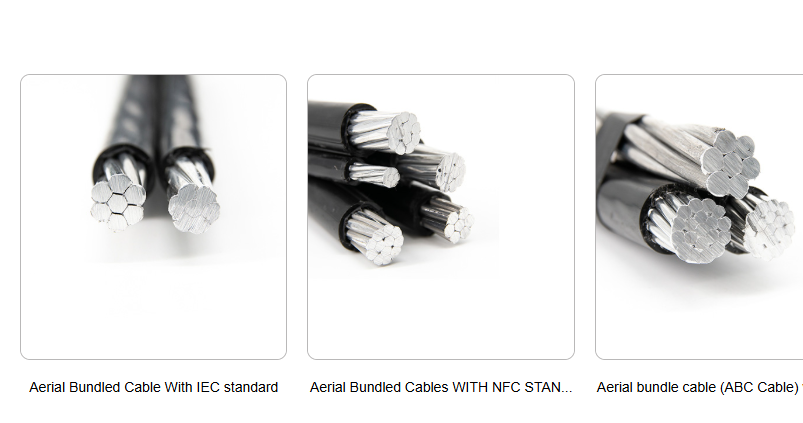
ABC (Aerial Bundled Cable)
ABC is a compact overhead cable system where insulated conductors are bundled together. It enhances safety and reduces power theft and short-circuit risks.
Ideal for:
-
Low-voltage distribution
-
Densely populated or vegetation-heavy areas
Advantages of Overhead Cable Systems
Overhead cables continue to dominate transmission and distribution infrastructure due to several key benefits:
Cost Efficiency
Compared to underground alternatives, overhead cable installation requires less civil work and lower material costs, especially over long distances.
Easy Inspection and Maintenance
Visual inspection is straightforward, allowing utilities to quickly identify faults, damaged conductors, or hardware issues.
Flexible Network Expansion
Overhead cable routes can be modified or extended with minimal disruption, supporting grid expansion and temporary power solutions.
High Power Capacity
With proper conductor selection, overhead cables can handle high current loads and support bulk power transmission efficiently.
Key Factors in Selecting the Right Overhead Cable
Choosing the correct overhead cable is a technical and commercial decision. Engineers and buyers should consider:
Electrical Performance
-
Current-carrying capacity
-
Line losses and conductivity
-
Voltage level requirements
Mechanical Strength
-
Span length
-
Wind and ice loading
-
Terrain and tower design
Environmental Conditions
-
Corrosion resistance
-
Temperature range
-
UV and weather exposure
Standards and Compliance
Overhead cables should comply with international standards such as IEC, ASTM, or BS to ensure safety, quality, and interoperability.
How HNBF Power Supports Overhead Cable Projects
As a global manufacturer of overhead conductors and power cables, HNBF Power provides a full range of overhead cable solutions including AAC, AAAC, ACSR, ABC, and related products for transmission and distribution projects.
HNBF Power supports utilities and EPC contractors by offering:
-
Consistent conductor quality and material control
-
Custom conductor designs based on project requirements
-
Manufacturing aligned with international technical standards
-
Reliable supply for large-scale grid infrastructure projects
By combining engineering expertise with manufacturing capability, HNBF Power helps customers optimize performance, durability, and total lifecycle cost in overhead cable installations.
Future Trends in Overhead Cable Technology
With growing demand for grid reliability and renewable energy integration, overhead cable technology continues to evolve. Key trends include:
-
High-temperature low-sag conductors
-
Improved aluminum alloys for higher efficiency
-
Optimized conductor designs for reduced transmission losses
These innovations help utilities modernize existing lines and increase capacity without major structural upgrades.
FAQs About Overhead Cables
1. What is the main advantage of overhead cables over underground cables?
Overhead cables are more cost-effective, easier to install, and simpler to inspect and maintain, especially for long-distance transmission.
2. Which overhead cable is best for long spans?
ACSR overhead cables are commonly used for long spans due to their steel-reinforced core and high tensile strength.
3. Are overhead cables suitable for urban areas?
Yes, AAC, AAAC, and ABC systems are widely used in urban and suburban distribution networks.
4. How long do overhead cables typically last?
With proper design and maintenance, overhead cables can operate reliably for several decades.
5. Can overhead cables be customized for specific projects?
Yes, manufacturers like HNBF Power can customize conductor size, stranding, and materials based on technical and environmental requirements.
Partner with HNBF Power for Reliable Overhead Cable Solutions
Selecting the right overhead cable is critical for building safe, efficient, and durable power networks. Whether you are planning a new transmission line or upgrading an existing distribution system, working with an experienced manufacturer makes a measurable difference.
Contact HNBF Power today to discuss your project requirements and receive customized overhead cable solutions tailored to your grid infrastructure needs.