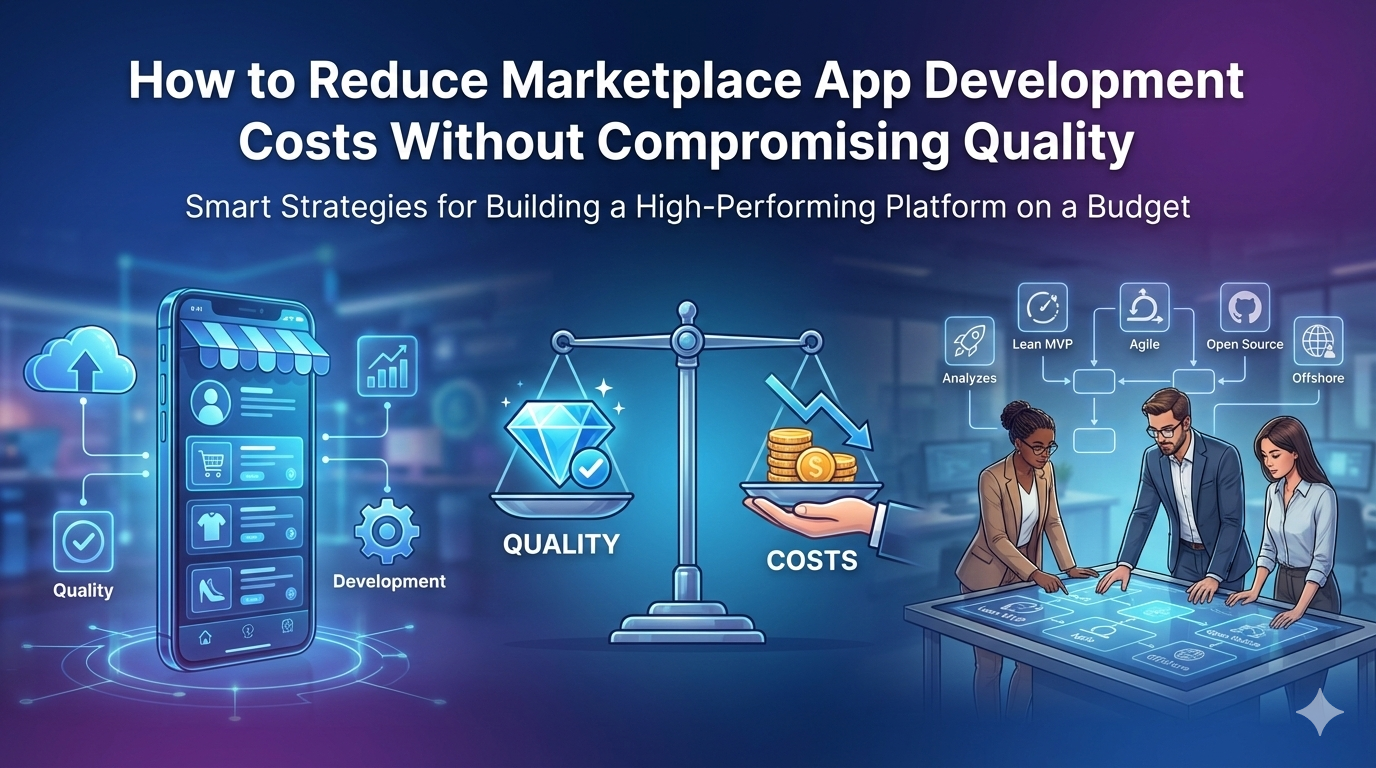
Building a marketplace app is one of the most powerful ways to create a scalable digital business—but it can also be expensive if not planned correctly. Whether you’re launching a B2B, B2C, or C2C marketplace, controlling development costs while maintaining quality is a top concern for founders and decision-makers.
The good news? You can reduce marketplace app development costs without sacrificing performance, scalability, or user experience—if you follow the right strategy and work with the right marketplace app development company.
This guide breaks down proven, practical ways to lower your cost to develop a mobile app while still delivering a high-quality marketplace platform.
Understanding Marketplace App Development Costs
Before optimizing costs, it’s important to understand what you’re paying for.
A typical marketplace app includes:
- User & vendor onboarding
- Product/service listings
- Search & filters
- Payments & commissions
- Reviews & ratings
- Admin dashboard
- Notifications & messaging
- Security & compliance
- Cloud infrastructure
Because marketplace apps have multiple user roles and complex workflows, they usually cost more than simple mobile apps.
Typical Cost Range
- Basic MVP marketplace: $30,000 – $60,000
- Mid-scale marketplace: $60,000 – $120,000
- Enterprise-grade marketplace: $120,000 – $250,000+
Reducing costs doesn’t mean cutting features blindly—it means building smart.
1. Start with an MVP, Not a Full-Scale Product
One of the biggest mistakes founders make is trying to build everything at once.
What is an MVP?
A Minimum Viable Product (MVP) includes only the core features required to validate your business idea.
Instead of:
- Multi-language
- Advanced analytics
- AI recommendations
- Complex automation
Start with:
- Core user flows
- Basic vendor management
- Simple payment system
This approach can reduce your cost to develop a mobile app by 30–50%.
A reliable marketplace app development company will help you prioritize features that matter for launch—and move others to later phases.
2. Clearly Define Scope Before Development Begins
Unclear requirements are a major reason projects exceed budget.
How Scope Creep Increases Cost
- Last-minute feature additions
- Frequent design changes
- Poorly documented workflows
How to Control It
- Prepare a feature list
- Define user roles clearly
- Finalize wireframes before development
- Lock scope for Phase 1
Clear documentation helps developers work faster, reduces rework, and protects your budget.
3. Choose the Right Technology Stack
The technology stack has a direct impact on cost, speed, and scalability.
Cost-Effective Choices
- Flutter or React Native for cross-platform development
- Node.js / Python for backend scalability
- Cloud-native architecture (AWS, Azure, GCP)
Cross-platform development alone can reduce costs by 25–40% compared to building separate iOS and Android apps.
An experienced marketplace app development company will recommend a stack that balances performance with budget.
4. Reuse Components & Leverage Pre-Built Modules
Not everything needs to be built from scratch.
Areas Where Reuse Saves Cost
- Authentication & login
- Payment gateways
- Notifications
- Chat & messaging
- Admin dashboards
Using pre-tested components:
- Reduces development time
- Improves stability
- Lowers testing costs
This significantly reduces the overall cost to develop a mobile app without affecting quality.
5. Focus on UX Simplicity, Not Visual Complexity
Good UX doesn’t mean flashy animations or complex interfaces.
Smart UX Saves Money
- Simple navigation reduces development effort
- Fewer custom animations = lower cost
- Clear user journeys = fewer revisions
A clean, intuitive interface:
- Improves adoption
- Reduces customer support
- Speeds up development
High-quality UX is about clarity, not complexity.
6. Build for Scalability—But Only What You Need
Over-engineering is expensive.
Common Overkill Mistakes
- Designing for millions of users at launch
- Building advanced AI before validation
- Adding unnecessary microservices
Instead:
- Use scalable cloud infrastructure
- Design modular architecture
- Scale features as usage grows
A good marketplace app development company builds with scalability in mind—but avoids unnecessary upfront costs.
7. Outsource Strategically (Not Cheaply)
Choosing the cheapest vendor often results in:
- Poor code quality
- Delays
- High rework cost
- Expensive maintenance later
Smart Outsourcing Tips
- Choose companies with marketplace experience
- Review real case studies
- Check communication process
- Ask about post-launch support
The right partner may cost slightly more upfront—but reduces your total cost of ownership significantly.
8. Use Agile Development Instead of Waterfall
Agile development helps you control cost continuously.
Why Agile Saves Money
- Features delivered in phases
- Early feedback prevents rework
- Faster time-to-market
- Better budget control
With Agile, you can:
- Pause development if needed
- Adjust priorities
- Launch faster with fewer risks
Most modern marketplace app development companies follow Agile or Scrum frameworks.
9. Limit Third-Party Integrations Initially
Third-party APIs add cost—not just in development, but also in ongoing usage fees.
Integrations to Add Later
- Advanced analytics
- AI recommendation engines
- Marketing automation tools
Start with essential integrations only, then expand once revenue justifies the investment.
10. Plan Maintenance Early to Avoid Hidden Costs
Many businesses forget post-launch expenses.
Typical Maintenance Costs
- 15–25% of initial development cost annually
- OS updates
- Security patches
- Performance optimization
By planning maintenance early:
- You avoid emergency fixes
- Reduce downtime
- Extend app lifespan
Quality code reduces long-term expenses—even if it costs slightly more upfront.
11. Avoid Rebuilding—Design for Iteration
Instead of rebuilding your app every year:
- Design modular components
- Keep APIs flexible
- Document architecture well
This allows you to:
- Add features easily
- Reduce redevelopment cost
- Improve ROI over time
12. Validate Features with Real Users
Don’t build features based on assumptions.
Cost-Saving Validation Methods
- User interviews
- Clickable prototypes
- Beta testing
- Analytics-driven decisions
Building only what users actually need significantly reduces the cost to develop a mobile app while improving success rates.
Cost-Saving Checklist (Quick Summary)
✔ Start with an MVP
✔ Define scope clearly
✔ Use cross-platform development
✔ Reuse components
✔ Keep UX simple
✔ Avoid over-engineering
✔ Choose the right marketplace app development company
✔ Follow Agile development
✔ Limit early integrations
✔ Plan maintenance
✔ Build modular architecture
Final Thoughts
Reducing marketplace app development costs isn’t about cutting corners—it’s about making smart technical and strategic decisions.
By working with an experienced marketplace app development company, choosing the right technology, and focusing on phased growth, you can significantly lower your cost to develop a mobile app without compromising quality, security, or scalability.
In today’s competitive digital landscape, efficient development is just as important as innovation.