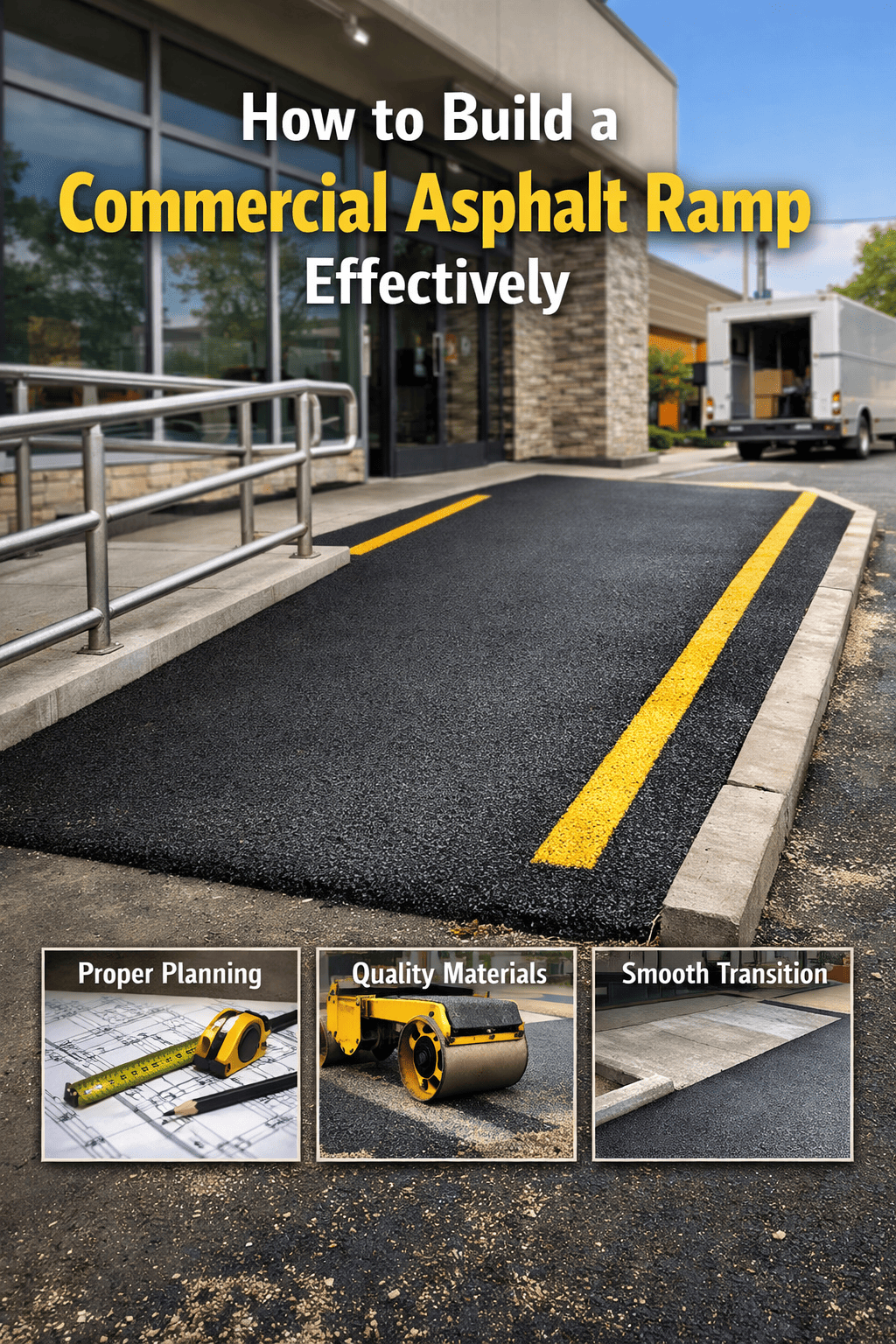
Building a strong asphalt ramp is not just about pouring blacktop and hoping it lasts. A well-built ramp improves safety, supports heavy use, and makes access easy for everyone. This guide explains how to build a commercial asphalt ramp the right way, step by step. You will learn how to plan, prepare, build, and maintain a ramp that lasts for years. Whether you manage a business site or plan a new project, this article gives clear and simple advice to help you succeed.
Why a Good Asphalt Ramp Matters
An asphalt ramp helps people and vehicles move smoothly between levels. A well-built commercial asphalt ramp supports delivery trucks, wheelchairs, carts, and foot traffic every day. A poorly built ramp can crack, sink, or become slippery, which may cause accidents and costly repairs. A strong ramp, on the other hand, improves safety and makes your property easier to use. When done right, it also boosts the overall look of your site.
Start With a Clear Purpose
Before any work begins, decide why the ramp is needed. Will it carry heavy trucks or light foot traffic? Does it need to meet access rules for people with disabilities? Knowing the purpose helps you choose the right slope, width, and materials. A clear goal saves time, avoids mistakes, and keeps the project on track from day one.
Check Local Rules and Codes
Every city has building rules for ramps. These rules cover slope limits, drainage, and safety features. Some ramps must meet accessibility laws as well. Always check local codes before you build. Following the rules keeps people safe and helps you avoid fines or rebuilds later. This step may feel slow, but it protects your investment.
Pick the Right Location
The ramp location affects how well it works. Choose a spot with enough space for a smooth slope. Avoid areas where water pools or soil is weak. Look at how vehicles and people move around the site. A smart location makes the ramp safer and easier to use. It also reduces wear and tear over time.
Design the Ramp Carefully
Good design is the heart of a strong ramp. The slope should be gentle enough for safe use. Sharp angles can cause slipping or bottoming out for vehicles. The width should allow easy movement without crowding. Curbs or edges can help guide traffic and prevent falls. A simple, clean design often works best.
Focus on Drainage Early
Water is one of asphalt’s biggest enemies. Poor drainage can lead to cracks, potholes, and sinking. Plan how water will flow away from the ramp. This may include slight side slopes or drains nearby. Keeping water off the surface helps the asphalt last much longer and stay safe in all seasons.
Prepare the Ground Properly
A ramp is only as strong as the ground below it. Start by removing soft soil, grass, and debris. Then compact the base layer until it is firm and even. A solid base supports heavy loads and prevents settling. Skipping this step often leads to early failure, so take your time here.
Choose Quality Materials
Not all asphalt is the same. High-quality asphalt mixes handle weight and weather better. For busy sites, thicker layers are often needed. Using strong materials costs more upfront but saves money on repairs later. Quality materials also give a smoother finish, which improves safety and appearance.
Lay the Asphalt in Layers
Asphalt should be laid in even layers. Each layer must be compacted well before the next one is added. This process creates strength and stability. Rushing this step can trap air and weaken the surface. Careful layering helps the ramp handle daily use without cracking.
Compact for Strength
Compaction is key to a long-lasting ramp. Heavy rollers press the asphalt tight, removing air gaps. Proper compaction improves load strength and water resistance. It also gives the ramp a smooth, clean finish. This step may seem simple, but it makes a big difference in performance.
Create a Smooth Transition
The ramp should blend smoothly with the ground or pavement around it. Sudden drops or bumps can damage vehicles and cause trips. A smooth transition improves comfort and safety for all users. It also reduces stress on the ramp edges, helping them last longer.
Add Safety Features
Safety should never be an afterthought. Textured surfaces improve grip, especially in rain or snow. Painted lines or markings can guide traffic. Curbs or rails may be needed in some areas. These features protect users and show that the ramp was built with care.
Allow Proper Curing Time
Asphalt needs time to cure and harden. Avoid heavy traffic right after installation. Early use can cause dents or marks that weaken the surface. Follow curing guidelines to protect the ramp during this stage. A little patience here leads to better results later.
Plan for Regular Maintenance
Even the best ramp needs care. Simple tasks like sealing cracks and cleaning debris help prevent damage. Regular checks catch small issues before they grow. Maintenance extends the life of the ramp and keeps it safe for daily use. Think of it as protecting your investment.
Weather and Climate Considerations
Climate affects how asphalt performs. Hot areas may need mixes that resist softening. Cold regions require materials that handle freeze and thaw cycles. Building with local weather in mind improves durability. It also reduces the risk of early wear caused by harsh conditions.
Common Mistakes to Avoid
Many ramp problems come from simple mistakes. Poor base prep, bad drainage, and rushed compaction are common issues. Ignoring codes or skipping safety features can also cause trouble. Learning from these mistakes helps you build smarter and avoid costly fixes later.
Why Professional Planning Helps
While some projects look simple, ramps require skill and planning. Experience helps with design choices, material selection, and site challenges. Professional insight often saves time and money by preventing errors. A well-planned ramp works better and lasts longer.
Long-Term Value of a Well-Built Ramp
A strong asphalt ramp adds real value to a property. It improves access, safety, and traffic flow. It also shows care for users and visitors. Over time, a durable ramp costs less to maintain and repair. That makes it a smart choice for any commercial site.
Final Thoughts
Building a ramp the right way takes planning, care, and attention to detail. From design to maintenance, every step matters. When done well, a ramp becomes a reliable part of your site that serves people every day. If you want long-lasting results, focus on quality, safety, and smart preparation from start to finish.
For more practical guidance and professional insight, Asphalt WorkX shares helpful resources at asphaltworkx.ca.
FAQs
How steep should a commercial asphalt ramp be?
A gentle slope is best. It improves safety and makes the ramp easier for vehicles and people to use.
How long does an asphalt ramp last?
With good materials and regular care, an asphalt ramp can last many years without major repairs.
Can asphalt ramps handle heavy trucks?
Yes, when built with a strong base and thick asphalt layers, they can support heavy loads safely.