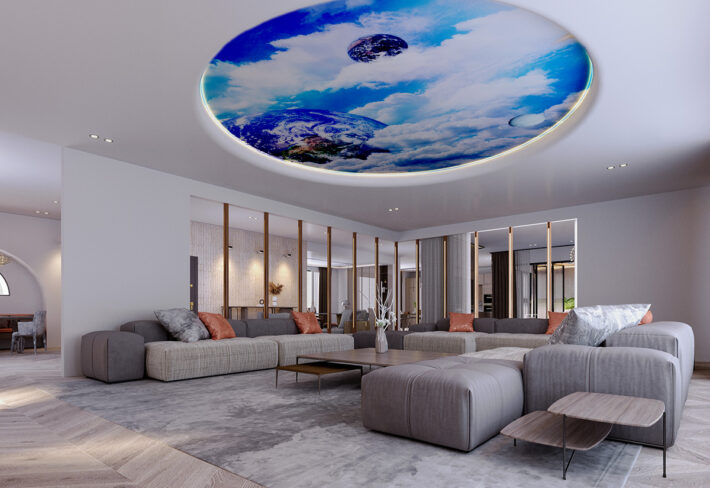
Natural daylight shapes how people experience indoor spaces. It affects comfort, mood, and how large or welcoming a room feels. Many interiors, especially offices, healthcare facilities, and basements, lack access to windows or skylights. Designers now use advanced lighting systems to solve this challenge. One solution gaining attention is the sky ceiling, which recreates the visual and emotional effect of daylight indoors. This article explains how a sky ceiling works, why the illusion feels convincing, and where it delivers the most value. The focus remains practical, grounded, and relevant for real-world spaces.
What Is a Sky Ceiling?
A sky ceiling is a ceiling-mounted lighting installation designed to replicate the look of an open sky. It combines LED lighting, printed or digital sky imagery, and diffused panels to create depth and softness. Unlike standard ceiling lights, this system spreads light evenly while presenting visual cues associated with outdoor daylight. Designers often install these systems flush with existing ceilings, which avoids structural changes. The result feels integrated rather than decorative.
How Sky Ceilings Recreate Daylight
The illusion of daylight relies on several visual and biological signals working together.
Light Color and Intensity
Natural daylight changes throughout the day, but it stays within a specific color range. A sky ceiling uses LED lighting tuned to daylight color temperatures, typically between 5000K and 6500K. This range appears crisp without feeling harsh. The even distribution prevents strong shadows, which helps the brain read the light as natural. Brightness levels also mimic daylight rather than standard indoor lighting.
Visual Depth and Perspective
Printed or digital sky images play a key role in creating depth. High-resolution images show clouds, gradients, and subtle color variation. Diffusers soften the image edges, which prevents the ceiling from appearing flat. When the eye detects depth cues, it perceives distance rather than a nearby surface. This perception makes the ceiling feel higher and the room feel more open.
Light Diffusion and Uniform Spread
Daylight does not come from a single point source. A sky ceiling spreads light across a wide surface area. Diffused panels eliminate glare and hotspots. This uniform spread reduces eye strain and supports visual comfort. The lighting feels ambient rather than directional, which matches how daylight behaves in open environments.
How does the Illusion Affect Human Perception?
The effectiveness of a sky ceiling comes from how people process light and space. Humans associate overhead brightness with outdoor environments. When the ceiling appears bright and expansive, the brain interprets the space as less enclosed. This effect can reduce feelings of confinement, especially in windowless rooms. Consistent, daylight-like lighting also supports visual clarity during long periods indoors. Many users report improved comfort because the lighting feels familiar rather than artificial.
Benefits in Everyday Spaces
Sky ceilings provide functional benefits across multiple environments.
Healthcare and Wellness Settings
Hospitals and clinics often include rooms without windows. A sky ceiling can improve patient comfort by reducing stress associated with enclosed spaces. Soft daylight simulation supports a calmer atmosphere, which benefits both patients and staff. Medical environments also value uniform lighting because it improves visibility without harsh contrast.
Offices and Commercial Interiors
Workplaces rely on lighting that supports focus and reduces fatigue. A sky ceiling can improve perceived brightness without increasing glare. Employees often experience fewer visual distractions compared to standard overhead fixtures. Retail and hospitality spaces use these systems to create welcoming environments that feel open and modern.
Residential and Interior Rooms
Homes with basements or interior rooms often struggle with poor lighting. A sky ceiling can transform these spaces into usable, comfortable areas. Homeowners avoid structural changes while gaining the appearance of natural light. The system also complements modern interior design trends focused on clean lines and open ceilings.
Key Design and Installation Considerations
Designers should match image resolution and panel size to the room scale. Smaller rooms benefit from simpler sky imagery with minimal contrast. Larger spaces allow more visual detail without overwhelming the eye. Lighting controls also matter. Dimming and adjustable brightness help adapt the ceiling to different activities. Quality components ensure consistent color output over time, which preserves the daylight effect.
Conclusion
A sky ceiling creates the illusion of natural daylight by combining light science with visual perception. Tuned LED lighting, realistic sky imagery, and uniform diffusion work together to mimic how daylight behaves outdoors. This approach improves comfort, supports well-being, and makes enclosed spaces feel more open. From healthcare facilities to homes, the system offers a practical way to bring the feeling of daylight indoors. When designed and installed correctly, a sky ceiling delivers more than light. It reshapes how people experience the space around them.