
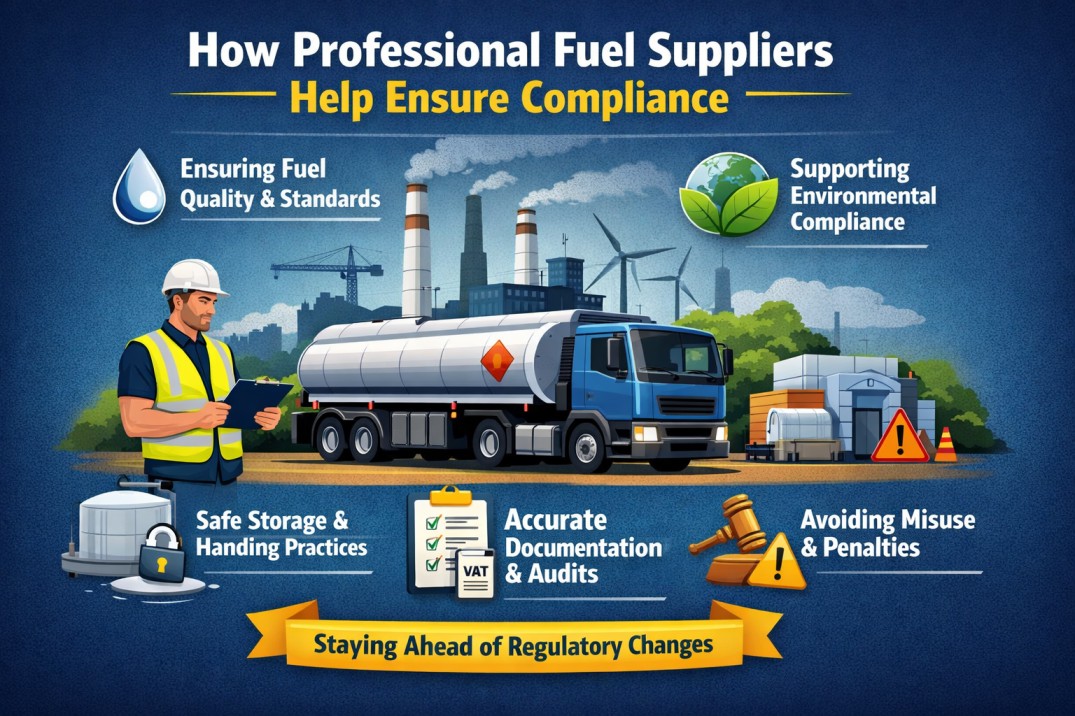
In the United Kingdom, fuel supply is not simply a matter of delivery and consumption. It sits within one of the most tightly regulated sectors in the country, shaped by environmental law, health and safety standards, tax regulations, and industry-specific compliance frameworks. For businesses that rely on fuel—whether in transport, construction, agriculture, manufacturing, or emergency services—staying compliant is not optional. It is essential for operational continuity, legal security, and long-term reputation.
This is where professional fuel suppliers play a far more strategic role than many businesses realise. Beyond supplying diesel, petrol, or specialist fuels, they act as compliance partners—helping organisations navigate complex regulations, reduce risk, and operate with confidence.
Understanding the UK’s Fuel Compliance Landscape
The UK fuel sector is governed by a web of regulations that evolve regularly. These include environmental protection rules, carbon emission standards, storage and handling laws, duty and taxation requirements, and workplace safety legislation.
For businesses, keeping up with these changes can be challenging. A single compliance oversight—such as incorrect fuel storage, misclassified fuel use, or incomplete documentation—can result in fines, audits, operational shutdowns, or reputational damage.
Professional fuel suppliers specialise in understanding this regulatory environment. Their knowledge ensures that businesses receive fuel that meets current legal standards and that their usage aligns with regulatory expectations.
Ensuring Fuel Quality and Legal Standards
Fuel quality is a critical compliance issue in the UK. Fuels must meet specific standards for sulphur content, emissions performance, and engine compatibility. Poor-quality or non-compliant fuel can lead to environmental breaches, equipment failure, and warranty invalidation.
Professional fuel suppliers implement strict quality control processes across sourcing, storage, and delivery. This includes:
-
Supplying fuel that meets UK and EU specifications
-
Maintaining clean, compliant storage facilities
-
Preventing contamination during transport
-
Monitoring temperature and composition stability
By working with a professional supplier, businesses reduce the risk of unknowingly using substandard or illegal fuel—an issue that can trigger compliance investigations or penalties.
Supporting Environmental and Sustainability Compliance
Environmental compliance is one of the most pressing challenges for UK businesses today. Regulations around emissions, spill prevention, waste handling, and sustainability reporting are becoming increasingly stringent.
Professional fuel suppliers help businesses meet these obligations by:
-
Offering cleaner fuel options with lower emissions
-
Advising on fuel efficiency and consumption optimisation
-
Providing guidance on spill prevention and environmental protection
-
Supporting transitions to alternative fuels where appropriate
Many suppliers also help businesses align fuel usage with environmental targets, which is particularly important for organisations with ESG commitments or public sector contracts.
Safe Storage, Handling, and Delivery Practices
Fuel storage and handling are heavily regulated in the UK, especially under health and safety and environmental legislation. Improper storage tanks, inadequate bunding, or unsafe handling procedures can quickly place a business in breach of the law.
Professional fuel suppliers go beyond delivery. They often advise on:
-
Correct fuel tank specifications and placement
-
Safe refuelling procedures
-
Risk assessments and safety protocols
-
Emergency spill response preparation
Their delivery teams are trained to follow strict safety standards, reducing the likelihood of incidents during fuel transfer. This protects not only compliance status but also employees, assets, and the surrounding environment.
Accurate Documentation and Audit Readiness
One of the most overlooked aspects of fuel compliance is documentation. UK regulators require accurate records related to fuel type, quantity, usage, and taxation. Poor record-keeping can trigger audits, even when fuel usage itself is legitimate.
Professional fuel suppliers provide clear, detailed documentation with every delivery. This typically includes:
-
Delivery notes and fuel specifications
-
Usage classification support
-
VAT and duty-related information
-
Digital records for easy tracking and audits
By maintaining consistent, transparent documentation, businesses are better prepared for inspections and internal audits, reducing stress and administrative burden.
Helping Businesses Avoid Misuse and Penalties
Fuel misuse—whether intentional or accidental—can result in severe penalties in the UK. One well-known example is the misuse of rebated fuels, which can lead to substantial fines, asset seizure, and legal action.
Professional fuel suppliers help businesses avoid these risks by:
-
Clearly explaining which fuels can be used for specific applications
-
Advising on correct fuel selection for machinery and vehicles
-
Monitoring unusual usage patterns where applicable
-
Educating clients on regulatory boundaries
This proactive approach protects businesses from costly mistakes and reinforces a culture of compliance.
Staying Ahead of Regulatory Changes
Fuel regulations do not stand still. Changes to environmental policy, taxation, and industry standards are frequent in the UK. Businesses that rely on outdated practices can quickly fall behind.
Professional fuel suppliers stay informed about regulatory developments and translate them into practical guidance for their clients. This includes:
-
Alerting customers to upcoming changes
-
Adjusting fuel offerings to meet new standards
-
Advising on compliance transitions
-
Supporting long-term fuel strategy planning
Having a supplier who anticipates change rather than reacting to it provides a significant operational advantage.
Building Trust and Long-Term Compliance Confidence
Ultimately, compliance is not about ticking boxes—it’s about building a resilient, responsible operation. Professional fuel suppliers contribute to this by acting as trusted partners rather than transactional vendors.
They understand the industries they serve, the risks their clients face, and the importance of reliability. By combining technical expertise with practical support, they help businesses operate confidently in a regulated environment.
Conclusion
In the UK, fuel compliance is complex, evolving, and unforgiving of mistakes. Businesses that attempt to manage it alone often face unnecessary risk, administrative strain, and exposure to penalties.
Professional fuel suppliers play a vital role in bridging the gap between regulation and real-world operations. From fuel quality and environmental responsibility to safety, documentation, and regulatory awareness, they help businesses remain compliant while focusing on what they do best.
Choosing the right fuel supplier is not just a logistical decision—it is a strategic compliance investment that protects operations today and prepares businesses for the regulatory challenges of tomorrow.