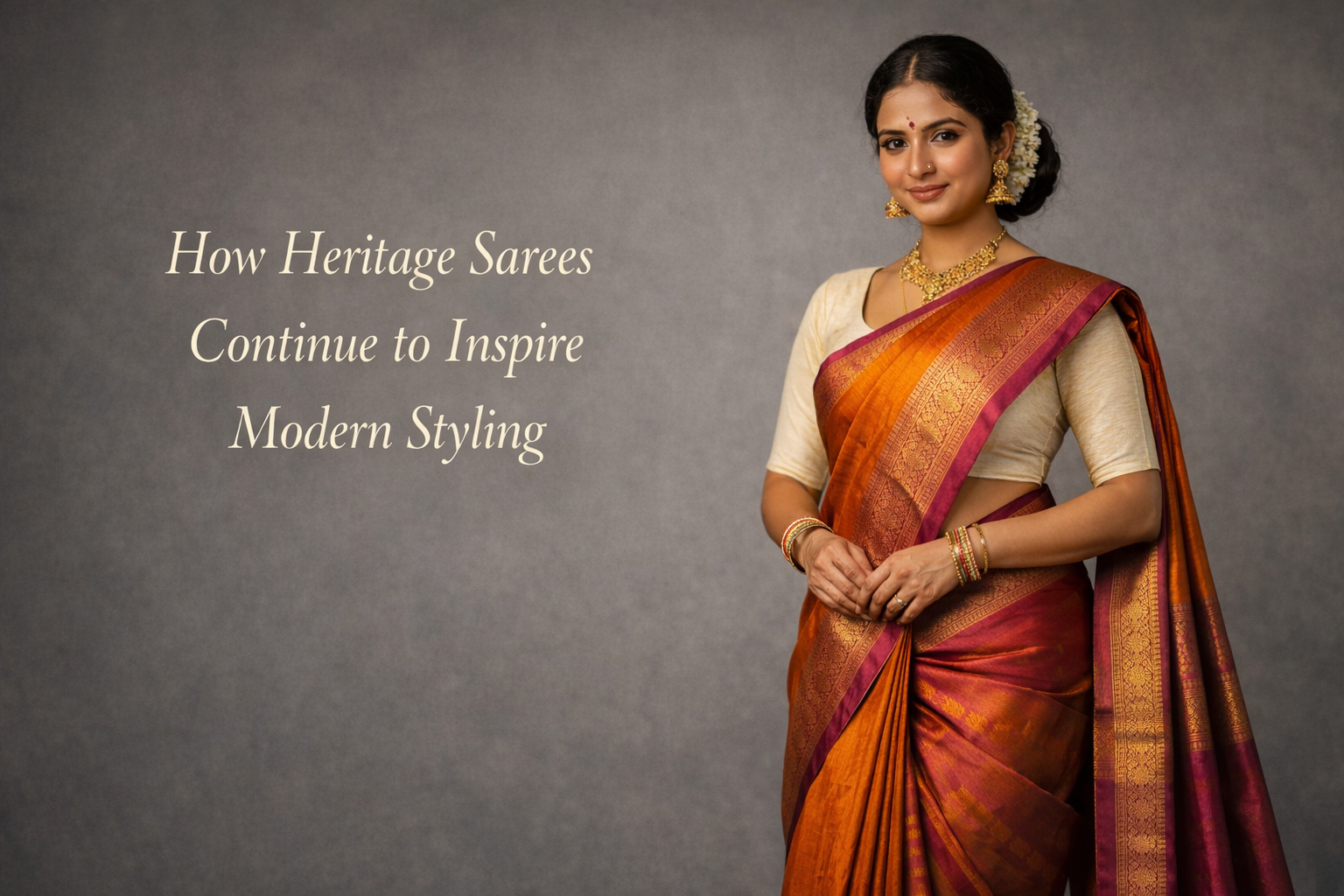
The timeless allure of heritage sarees continues to shape contemporary fashion choices, weaving a narrative that bridges centuries of craftsmanship with modern sensibilities. In the bustling streets of Chennai, a woman drapes a vibrant piece, and the air is filled with the scent of hand‑loomed fabric. The ikkat silk sarees that catch her eye are a testament to the enduring beauty of traditional motifs, yet they carry a subtle twist that speaks directly to today’s aesthetic. This seamless blend of old and new invites designers and wearers alike to explore a world where heritage is not static but an evolving canvas.
The Essence of Heritage
At the heart of every heritage saree lies a story—of artisans, of regional identity, and of the cultural threads that bind communities. These sarees are more than garments; they are living archives that preserve techniques passed down through generations. While the patterns may be rooted in folklore, the spirit of innovation is alive in the choice of dyes, the texture of the weave, and the modern silhouettes they inspire. When a contemporary designer reimagines a classic motif, they honor the past while inviting fresh interpretations that resonate with a global audience.
Threads of Tradition
The meticulous process of creating a heritage saree begins with selecting the finest raw material. Silk, cotton, and handloom yarns are chosen for their luster and durability. The weavers, often families with a lineage of textile artisans, employ age‑old techniques such as ikkat or zari work. Each stitch is a deliberate act of preservation, ensuring that the essence of the original design remains untouched. Yet, these traditional threads are now being woven into fabrics that accommodate contemporary lifestyles, such as stretch blends and lightweight blends suitable for urban wear.
Modern Adaptations
Modern fashion houses are increasingly incorporating heritage elements into their collections. They experiment with unconventional draping styles—such as the Asymmetric or Draped A-line—while maintaining the integrity of the original design. Brands collaborate with local artisans to create limited‑edition pieces that fuse classic motifs with modern cuts. This partnership not only elevates the saree’s appeal but also ensures that traditional craftsmanship remains viable in an era dominated by fast fashion. The result is a collection that feels both nostalgic and cutting‑edge.
Fusion with Contemporary Fabrics
One of the most exciting developments in heritage saree design is the fusion with contemporary fabrics. Silk blends with elastane, cotton with bamboo, and even synthetic fibers are being used to create sarees that are comfortable, breathable, and easy to maintain. These hybrid fabrics allow the saree to adapt to varied climates and occasions, from office wear to festive celebrations. The fusion also opens avenues for experimentation with color palettes, enabling designers to introduce vibrant hues that were previously uncommon in traditional sarees.
Styling Tips for Everyday Wear
Adopting a heritage saree into daily wear requires a few thoughtful styling choices. Pairing a lightweight silk saree with a minimalist blouse can create a balanced look that’s suitable for both office and social settings. Opting for a simple, elegant drape—such as the Classic or Draped 360—ensures versatility. Accessories should complement rather than overpower; a pair of statement earrings or a delicate chain can accentuate the saree’s design without detracting from its heritage charm. These subtle touches transform a traditional garment into a contemporary wardrobe staple.
Cultural Significance and Storytelling
Every heritage saree carries a narrative that reflects the region’s history, myths, and social values. The motifs—whether they depict peacocks, lotus blossoms, or mythological scenes—are visual storytelling devices that invite conversation. By wearing such sarees, individuals become ambassadors of their culture, sharing stories that transcend language barriers. In a world where authenticity is prized, these garments offer a tangible link to one’s roots, encouraging wearers to celebrate their heritage with pride.
Sustainability and Ethical Production
In today’s eco‑conscious society, the sustainability of heritage saree production is a critical factor. Many artisans now source natural dyes and employ water‑conserving techniques, reducing the environmental footprint of their craft. Additionally, fair‑trade initiatives ensure that weavers receive fair compensation, safeguarding their livelihoods. Consumers who choose heritage sarees are, therefore, supporting a circular economy that values both cultural preservation and ecological responsibility. This ethical dimension adds depth to the aesthetic appeal of the saree.
Influence on Global Fashion
Heritage sarees have transcended regional boundaries, influencing global fashion trends. International designers have drawn inspiration from the intricate patterns and fluid draping of these garments, incorporating them into runway shows and ready‑wear collections. The global spotlight has also opened markets for local artisans, allowing them to showcase their work on international platforms. As a result, heritage sarees are no longer confined to traditional ceremonies; they have become a versatile element in contemporary fashion dialogues worldwide.
Conclusion
When a modern wardrobe embraces the legacy of heritage sarees, it becomes a living testament to the enduring power of tradition. The artistry of weaving, the symbolism embedded in each motif, and the thoughtful fusion with contemporary fabrics all contribute to a sartorial experience that is both rooted and forward‑thinking. By choosing garments that honor the past while meeting present needs, we ensure that these cultural treasures continue to inspire future generations. For those looking to explore this rich tapestry, the kanchipuram silk sarees offer a perfect blend of heritage and modernity, ready to adorn the contemporary woman with grace and elegance.