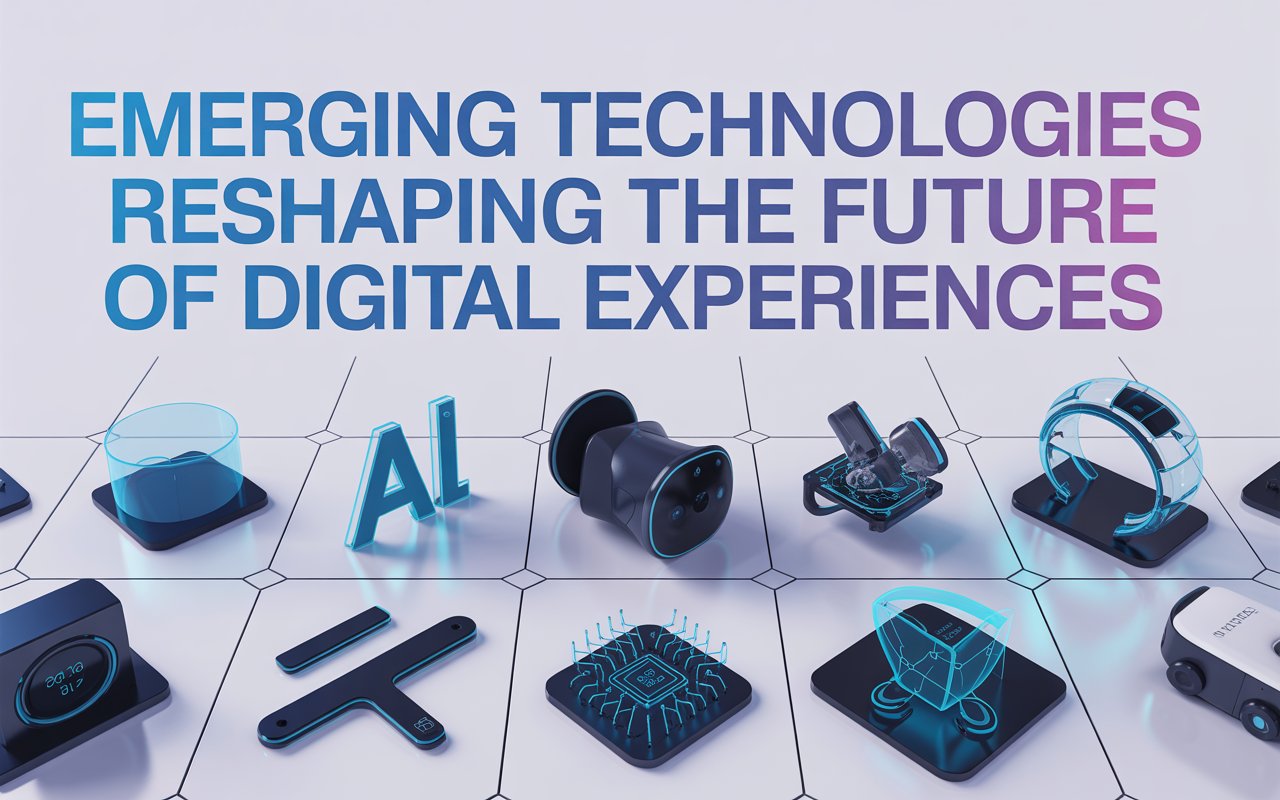
Digital content interactions are evolving as emerging technologies enhance responsiveness and engagement. For instance, augmented reality in digital marketing demonstrates how brands blend digital tools with physical experiences, letting customers interact with products in immersive ways. Likewise, virtual try-ons and interactive campaigns are establishing new engagement norms. Today, campaigns adapt dynamically to user behavior, delivering digital experiences that evolve constantly and remain highly responsive.
9 Next-Gen Technologies & How They Are Transforming Tomorrow’s Online Interactions
These emerging technologies are reshaping digital experiences, moving them from static screens to adaptive systems that respond in real time to users:
1. AI Powers Smarter, Adaptive User Engagement
Artificial intelligence equips digital platforms to assess user actions immediately. Personalized content, notifications, and suggestions respond instantly without requiring human effort. Currently, retail websites track user shopping habits to recommend products that customers are most likely to select. Moreover, chatbots provide instant, on-demand assistance, minimizing delays and increasing satisfaction. Likewise, marketers rely on AI insights to monitor trends across extensive audiences, enabling faster strategy adjustments.
By studying these user behaviors, interactions can be customized for every individual, increasing engagement across the entire digital experience.
2. AR Transforms Imagination into Reality
AR is transforming imagination into real experiences you can actually explore. Picture putting on sneakers virtually without visiting a store or seeing exactly how a new couch will look in your space before buying. Additionally, gaming feels alive with worlds that pull you in, and classrooms are changing with lessons that let you interact instead of just read. Brands are using it to create experiences that feel personal every time you tap. The next phase? Screens will not just show things. They will become portals where digital objects blend naturally with the space around you.
3. Virtual Reality Brings Digital Environments to Life
Virtual reality no longer means simply looking at screens. It places you directly inside the experience. Whether taking virtual home tours or training medical professionals in surgical simulations, VR is revolutionizing how users experience digital spaces. Cheaper, more realistic VR will make digital spaces feel almost physical, providing immersive and captivating experiences.
4. 5G Is Speeding Things Up
Slow internet ruins everything. 5G fixes that. It is lightning fast with almost zero lag. Streaming in real time, cloud gaming without delays, and AR or VR that does not freeze are now possible. Businesses rely on it for instant collaboration across teams and platforms. For you, it means smoother, faster, and more reliable digital moments, as this emerging technology actively reshapes the future of connected digital experiences.
As digital experiences scale globally, many organizations rely on offshoring business models to accelerate innovation, reduce operational costs, and support always-on digital platforms. At the same time, brands extend immersive campaigns through organic social channels, where interactive AR filters, AI-driven content, and real-time engagement build authentic user connections without paid amplification.
Through organic social , brands humanize advanced technologies by showcasing real-time experiences, behind-the-scenes innovation, and interactive storytelling. User-generated content, immersive reels, and live demonstrations help emerging tech feel accessible rather than complex. As engagement grows organically, trust strengthens and communities form around shared digital experiences. This makes organic social a powerful bridge between intelligent technology and everyday user interaction.
5. Blockchain Is Building Trust
Blockchain goes beyond crypto. It ensures transparency and security. Your information stays safe, transactions are verified, and identities are protected. Digital experiences powered by blockchain feel trustworthy because nothing can be tampered with. It is also opening doors for decentralized platforms where you control your information. As this emerging technology reshapes the future of digital experiences, it enables secure interactions, verifiable ownership, transparent ecosystems, and user driven platforms across industries worldwide.
6. Voice Tech Is Simplifying Experiences
Speaking comes more naturally than typing on screens. Voice assistants demonstrate this shift clearly. You speak, they respond. Voice technology continues advancing, recognizing context and emotional intent. Soon, devices will hold meaningful conversations instead of reacting to simple instructions. It creates digital interactions that feel effortless and human. This next-gen technology is reshaping the future of digital experiences through intuitive control, tailored responses, improved accessibility, and smooth interaction across modern digital environments.
7. Edge Computing Is Speeding Up Decisions
Delays can ruin the experience. Edge computing solves this by handling data near its source, allowing faster responses for autonomous cars, augmented reality tools, and intelligent devices. For individuals, it enables instant actions without waiting.
8. Generative AI Now Creates for You
Generative AI feels like a digital co-creator, turning prompts into writing, designs, and video content. Businesses use it for ads and visuals. You can use it for personalized learning or entertainment. It is making digital experiences more dynamic and tailored to your taste. The line between creator and consumer? It is almost gone.
9. Extended Reality Blends Worlds
XR unites AR, VR, and mixed reality experiences. It goes past visuals or sensation; it places you within a combined environment. From training and healthcare to retail and beyond, everyone is utilizing XR to strengthen engagement. As the technology grows, XR will alter how you work, learn, and play, and in the future, it will make digital experiences feel ultra natural.
Conclusion
Digital interactions are being redefined by emerging technologies that enhance speed, intelligence, and personalization. At the core of effective digital experiences is the technology that supports them. For example, the decision between cloud vs on premise solutions dictates agility, performance, and the smooth deployment of XR and AI. With proper infrastructure, platforms can operate immediately, scale smoothly, and provide customized engagement. Likewise, every infrastructure decision impacts user interaction, building digital environments that are immersive, responsive, intuitive, and conducive to continuous innovation.