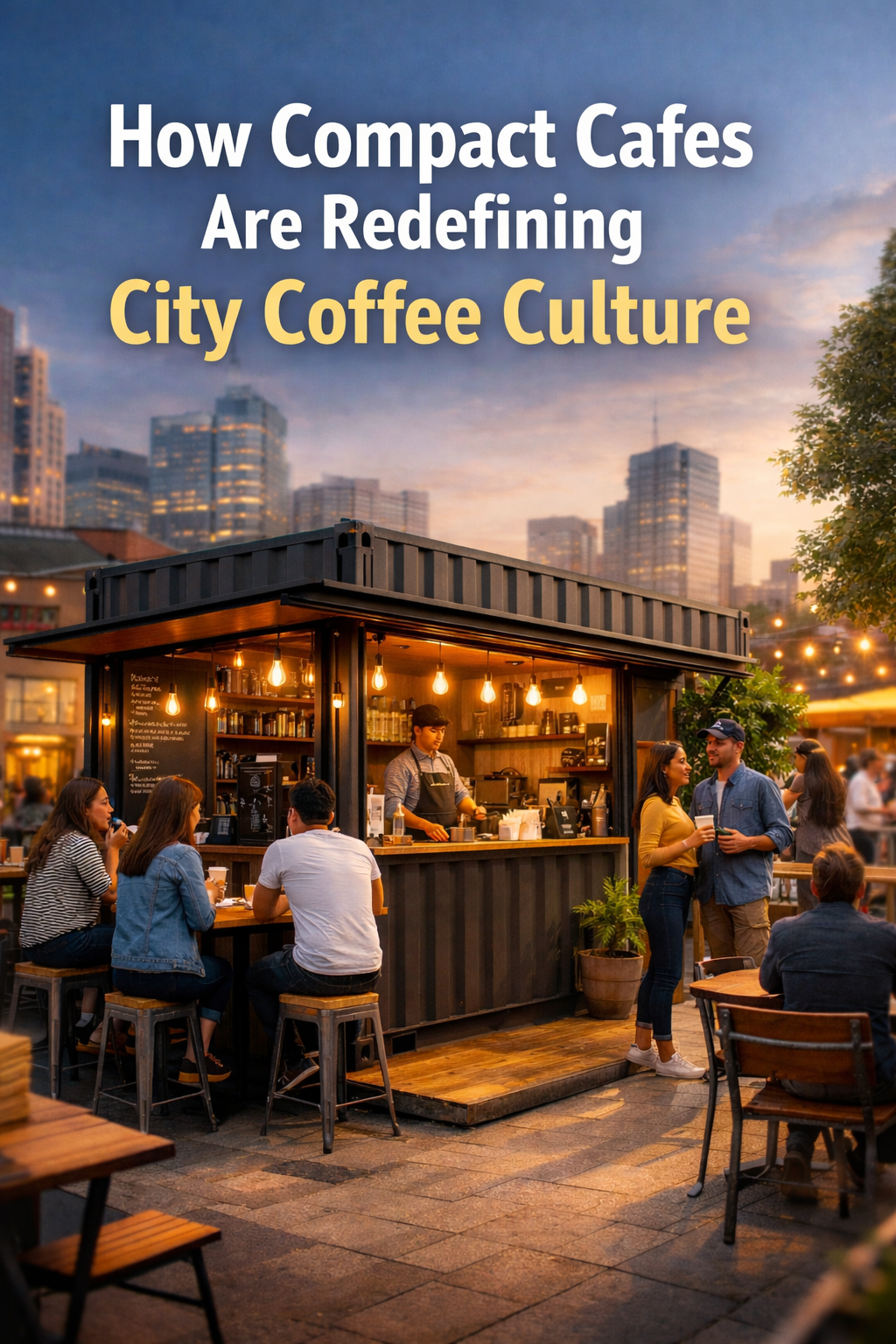
Urban coffee culture has evolved far beyond traditional brick-and-mortar cafés. As cities grow denser and lifestyles become faster-paced, compact cafés are emerging as creative, efficient, and culturally influential spaces. These small-format coffee spots are not just responding to space constraints; they are reshaping how people interact, socialize, and experience coffee in modern urban environments.
In many urban settings, concepts such as a Shipping Container Cafe reflect this transformation by demonstrating how thoughtfully designed, compact structures can deliver memorable coffee experiences without requiring large footprints. Compact cafés reflect a shift in priorities. Instead of focusing on size, they emphasize experience, design efficiency, sustainability, and accessibility. From bustling city centers to emerging neighborhoods, these cafés are redefining what it means to enjoy coffee in a metropolitan setting.
The Rise of Compact Cafes in Urban Landscapes
Rapid urbanization has placed pressure on commercial real estate. High rental costs, limited availability of large spaces, and changing consumer behavior have pushed café owners and designers to think differently. Compact cafés offer a solution that aligns with modern city life, where convenience and quality often matter more than square footage.
These cafés fit seamlessly into unused or underutilized spaces such as narrow streets, parking zones, transit hubs, and pop-up locations. Their presence often revitalizes areas that previously lacked social engagement, turning small footprints into lively community hubs.
Changing Consumer Preferences in City Coffee Culture
City dwellers today value speed, authenticity, and uniqueness. Compact cafés cater to this mindset by offering streamlined menus, faster service, and thoughtfully designed spaces that encourage quick yet meaningful interactions. Rather than lingering for hours, customers often visit these cafés as part of their daily routines—before work, during short breaks, or while commuting.
The experience is carefully curated. Every design choice, from seating to lighting, is intentional. This efficiency creates an inviting atmosphere without overwhelming the customer, reinforcing the idea that quality coffee does not require a large space.
Innovative Design Thinking Behind Compact Cafes
Design plays a central role in the success of compact cafés. Limited space forces designers to maximize every inch while maintaining comfort and visual appeal. Open layouts, multifunctional furniture, vertical storage, and natural lighting are commonly used to create a sense of openness.
In many urban areas, a Shipping Container Cafe has become a popular compact café format. These structures offer flexibility in design and placement while maintaining a modern, industrial aesthetic that resonates with city audiences. Their modular nature allows for creative customization, enabling café owners to reflect local culture and branding through thoughtful design elements.
Sustainability as a Core Value
Compact cafés often align with sustainability goals. Smaller spaces naturally require fewer resources for construction, maintenance, and energy consumption. Many café concepts incorporate recycled materials, energy-efficient systems, and minimal-waste operations.
The rise of container-based cafés has further strengthened this trend. With proper planning and responsible Container Modification UAE practices, these compact structures can be adapted to local climate conditions while meeting safety and comfort standards. Sustainable insulation, ventilation, and energy management systems help ensure long-term usability without excessive environmental impact.
Community Impact of Small-Scale Cafes
Despite their size, compact cafés often have a strong community presence. Their approachable nature encourages casual interactions, making them social anchors within neighborhoods. People may not stay long, but frequent visits foster familiarity and connection.
These cafés often support local culture by hosting small events, showcasing local art, or becoming informal meeting points. Their accessibility allows them to integrate seamlessly into daily urban life, contributing to a sense of belonging and shared identity.
Economic Advantages of Compact Cafe Models
From a business perspective, compact cafés offer lower entry barriers compared to traditional cafés. Reduced space requirements lead to lower rent, utility costs, and staffing needs. This efficiency allows operators to focus more on product quality and customer experience rather than overhead expenses.
Flexible structures, such as container-based formats, further enhance adaptability. Through strategic Container Modification UAE approaches, compact cafés can be relocated, expanded, or reconfigured based on demand and location performance. This flexibility reduces long-term risk while supporting growth.
The Role of Technology in Compact Cafes
Technology plays a crucial role in optimizing compact café operations. Digital ordering systems, contactless payments, and efficient point-of-sale solutions help streamline service and reduce wait times. These tools are particularly valuable in small spaces where crowd management is essential.
Many compact cafés also leverage social media and mobile apps to engage customers, announce pop-up locations, and promote limited-time offerings. This digital presence extends the café experience beyond physical boundaries, strengthening brand visibility and customer loyalty.
Compact Cafes as Cultural Expressions
Compact cafés often reflect the cultural identity of their surroundings. Their design, menu offerings, and overall ambiance are influenced by local tastes and traditions. This adaptability allows them to blend seamlessly into diverse urban environments while maintaining a distinct personality.
A Shipping Container Cafe, for example, may incorporate regional design elements or locally inspired menus, creating a sense of place even within a small footprint. This cultural integration enhances authenticity, which is highly valued by modern consumers.
Redefining Convenience Without Compromising Quality
One of the most significant contributions of compact cafés to city coffee culture is their ability to balance convenience with quality. Limited space does not mean limited standards. Many compact cafés prioritize specialty coffee, ethically sourced beans, and skilled preparation techniques.
By focusing on a concise menu, these cafés often deliver more consistent quality. Customers know what to expect, and the streamlined approach allows staff to perfect each offering rather than managing an extensive menu.
Climate-Adaptive Solutions in Urban Settings
Urban climates vary widely, and compact cafés must adapt accordingly. In regions with extreme temperatures, thoughtful design and material selection are essential. Container-based cafés, when modified responsibly, can offer effective climate control and insulation.
The growing emphasis on Container Modification UAE highlights the importance of adapting compact structures to regional environmental conditions. Proper ventilation, shading, and thermal efficiency ensure customer comfort while supporting energy-conscious operations.
The Future of Compact Cafes in Cities
As cities continue to evolve, compact cafés are expected to play an increasingly prominent role. Their flexibility, sustainability, and cultural relevance make them well-suited to changing urban landscapes. Future designs may incorporate even smarter layouts, renewable energy solutions, and advanced digital integrations.
Compact cafés are also likely to expand beyond coffee, offering curated food options, collaborative spaces, or hybrid concepts that serve multiple functions within a small area. This adaptability ensures their continued relevance in dynamic city environments.
Why Compact Cafes Appeal to Modern Urban Lifestyles
Modern urban lifestyles are defined by movement, efficiency, and personalization. Compact cafés align perfectly with these values. They provide high-quality experiences without demanding significant time or space commitments.
For city residents, these cafés become reliable touchpoints—places to pause briefly, recharge, and reconnect before moving on. Their presence enhances urban rhythms rather than disrupting them.
Compact Cafes and Urban Aesthetics
Visually, compact cafés contribute positively to cityscapes. Thoughtful design and creative use of materials can transform overlooked spaces into attractive landmarks. These cafés often become recognizable features within neighborhoods, adding character and visual interest.
Container-based designs, in particular, offer a modern aesthetic that complements contemporary urban architecture. When executed thoughtfully, they demonstrate how functional spaces can also be visually engaging.
Balancing Functionality and Atmosphere
Creating the right atmosphere in a small space requires careful balance. Compact cafés achieve this by focusing on lighting, acoustics, and layout. Warm tones, natural materials, and efficient sound management help create inviting environments despite limited square footage.
The goal is not to replicate large cafés but to offer a distinct experience that feels intentional and refined. This clarity of purpose resonates strongly with customers seeking meaningful interactions in busy urban settings.
A Shift Toward Purpose-Driven Design
Compact cafés embody a broader shift toward purpose-driven design in urban spaces. Every element serves a function, whether it is enhancing workflow, improving customer comfort, or reducing environmental impact. This intentionality reflects changing values within city cultures.
The thoughtful adaptation of compact structures, including responsible Container Modification UAE practices, demonstrates how design innovation can support both business goals and urban sustainability.
Conclusion
Compact cafés are redefining city coffee culture by proving that meaningful experiences do not depend on size. Through innovative design, sustainable practices, and cultural integration, these small-scale spaces have become powerful contributors to urban life.
Whether through creative layouts, efficient operations, or adaptable formats like a Shipping Container Cafe, compact cafés continue to influence how people engage with coffee in cities. Their impact extends beyond convenience, shaping social interactions, urban aesthetics, and future design trends.
As cities grow more complex, compact cafés stand as examples of how thoughtful design and purposeful use of space can enhance everyday living—one cup of coffee at a time.