High-Quality Employee ID Cards for Businesses
In today’s fast-paced and security-conscious business environment, employee identification has become more important than ever. High-quality employee ID cards are no longer just name badges—they play a vital role in workplace safety, brand representation, access control, and operational efficiency. From small startups to large enterprises, businesses across industries rely on professional ID cards to create a secure and organized workplace.
This article explores the importance of high-quality employee ID cards, their benefits, features, and how businesses can choose the right solution for long-term success.
What Are Employee ID Cards?
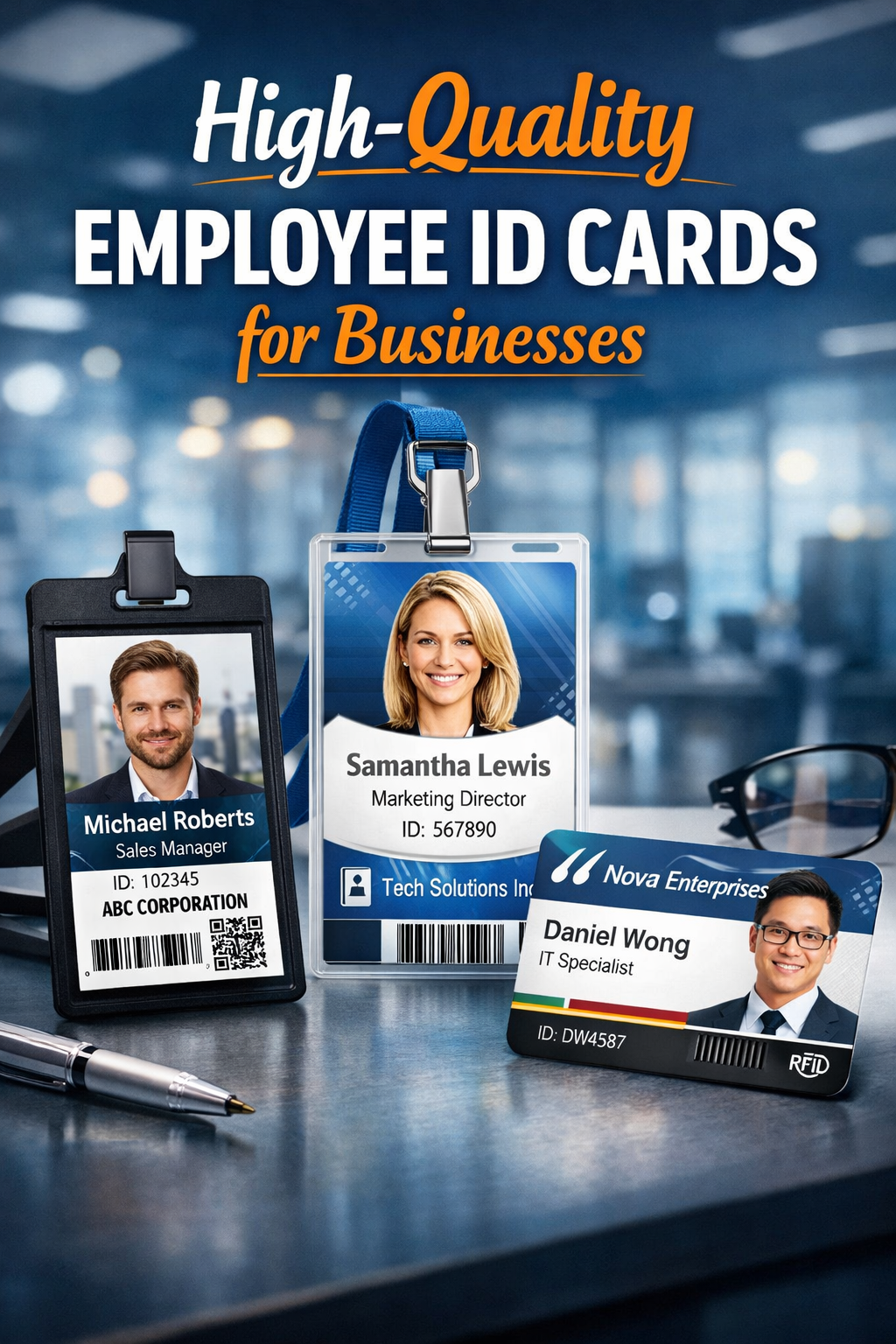
Employee ID cards are official identification badges issued to staff members by an organization. These cards typically display essential information such as the employee’s name, photograph, job title, and company logo. Modern ID cards may also include barcodes, QR codes, RFID chips, or magnetic stripes that integrate with access control and attendance systems.
Beyond identification, employee ID cards help verify authority, restrict unauthorized entry, and create a sense of belonging within the organization.
Why High-Quality Employee ID Cards Matter
1. Enhanced Workplace Security
High-quality ID cards prevent unauthorized access to office buildings, restricted zones, and sensitive departments. When combined with smart technologies such as RFID or biometrics, they significantly reduce security risks.
2. Professional Appearance
Employees wearing well-designed ID cards present a professional image to clients, visitors, and partners. This small detail reinforces trust and credibility.
3. Strong Brand Identity
Customized ID cards featuring company colors, logos, and typography strengthen brand visibility and consistency across the workplace.
4. Accountability and Transparency
Clear identification improves communication and accountability, helping employees and visitors easily recognize roles and responsibilities.
Types of Employee ID Cards
1. PVC Plastic ID Cards
The most common option, PVC cards are durable, affordable, and compatible with most printers. They offer excellent print quality and long-term use.
2. Smart Cards (RFID and NFC)
Smart cards enable contactless access, attendance tracking, and system integration. They are ideal for modern offices and large organizations.
3. Magnetic Stripe Cards
These cards store data on a magnetic strip and are commonly used for access control and time management systems.
4. Biometric-Enabled ID Cards
Used in high-security environments, these cards work alongside fingerprint or facial recognition systems for advanced authentication.
Key Features of High-Quality Employee ID Cards
Durable Materials
Premium ID cards are resistant to bending, fading, and cracking, ensuring long-term usability even in demanding work environments.
High-Resolution Printing
Sharp images and clear text improve readability and maintain a professional appearance.
Security Elements
Features such as holograms, UV printing, microtext, and encrypted chips protect against duplication and fraud.
Customization Options
High-quality ID cards can be customized with layouts, color schemes, vertical or horizontal formats, and personalized employee data.
Benefits for Businesses
Improved Security Management
ID cards help monitor employee movement, control access levels, and maintain accurate attendance records.
Operational Efficiency
Automated systems linked to ID cards reduce manual processes and administrative workload.
Better Employee Experience
Employees feel safer and more valued when their workplace operates with organized identification systems.
Visitor Management
ID cards differentiate employees from visitors, improving overall workplace coordination.
Industries That Use Employee ID Cards
Corporate Offices
Used for identification, access control, and attendance management.
Healthcare
Hospitals and clinics rely on ID cards to identify medical staff, ensure patient safety, and comply with regulations.
Educational Institutions
Schools and universities use ID cards for staff access, library systems, and campus security.
Manufacturing and Warehousing
ID cards help track shifts, manage entry points, and enhance workplace safety.
Retail and Hospitality
Employee badges improve customer service, trust, and brand recognition.
How to Design Effective Employee ID Cards
Include Essential Information
- Employee photo
- Full name
- Job title or department
- Company logo
- ID number
Use Consistent Branding
Match the card design with company branding guidelines, including fonts and colors.
Choose the Right Layout
Ensure readability by balancing text, images, and white space.
Add Security Layers
Incorporate QR codes, barcodes, or RFID chips depending on business needs.
Choosing the Right ID Card Provider
When selecting an ID card provider, businesses should consider:
- Print quality and durability standards
- Customization capabilities
- Compatibility with access systems
- Data security and encryption
- Cost-effectiveness and scalability
A reliable provider should offer long-term support, replacement options, and modern printing technology.
Future Trends in Employee ID Cards
The future of employee identification is evolving rapidly:
- Digital ID cards stored on smartphones
- Biometric authentication integration
- Cloud-based access management systems
- Eco-friendly card materials
These innovations improve convenience, security, and sustainability for businesses worldwide.
Conclusion
High-quality office ID cards are a critical investment for businesses seeking improved security, professionalism, and efficiency. Far beyond simple identification, these cards support access control, reinforce branding, and enhance daily operations.
By choosing durable materials, modern technology, and thoughtful design, businesses can create ID cards that not only protect their workplace but also reflect their organizational values. In an increasingly competitive and security-driven world, high-quality employee ID cards are no longer optional—they are essential.