Cilantro is a versatile herb that can be added to anything from sauces to marinades. These cool-season herbs are straightforward to grow and should be planted where they can be directly planted and permitted to go to seed. As spring arrives, the cilantro plant forms a low rosette of leaves that should be harvested fresh, and as the temperature starts warming up, the plant grows a tall flower stalk that has small white or pale pink flowers, which later result in coriander seeds.
The easy-growing nature of cilantro means that many gardeners are interested in planting it, and if you are wondering how to grow Cilantro, then you should use this guide to learn how you can plant and care for a cilantro herb.
Quick Guide to Growing Cilantro
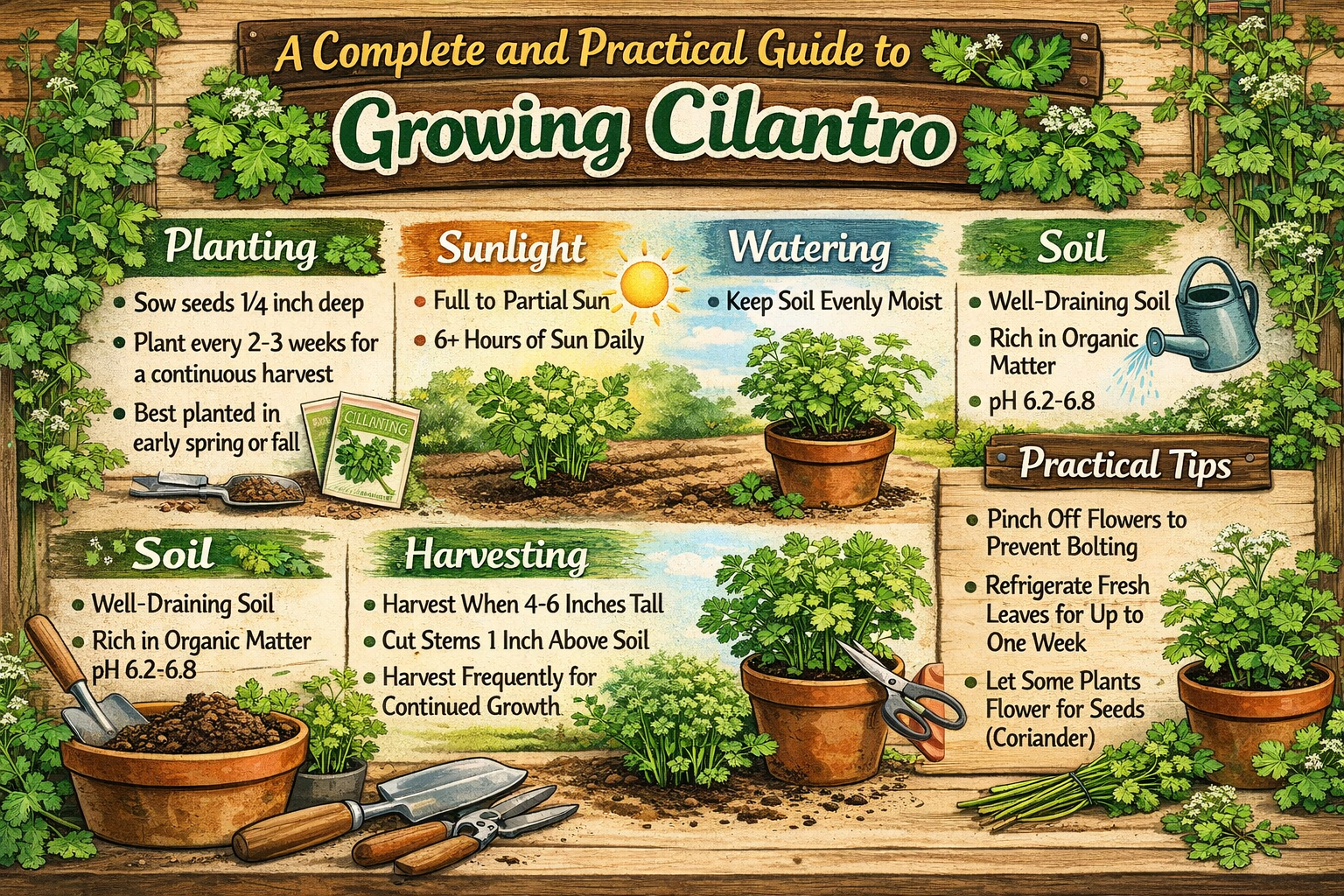
- Cilantro should be sown in spring and fall, during cooler days.
- Cilantro needs to be planted in a location where the sun shines directly on it and the soil is rich and well-drained, with a pH ranging between 6.2 and 6.8. If you live in a warmer area, provide shade during the afternoon.
- To enhance the quality of your native soil, stir in 3 to 4 inches of aged compost or any other organic matter that is rich in nutrients. If you are planting in pots, you may want to buy a premium-quality bagged potting mix.
- Always keep the soil moist; if required, you can use a soaker hose or drip irrigation to maintain the right level of moisture.
- Regularly fertilizing with water-soluble plant food will coax the plant into producing a lot of leaves.
As soon as the cilantro leaves are large enough to be included in the meals, you can start harvesting them. However, it is important to keep in mind not to cut more than a third of the plant at once.
Planting, Soil, and Care Instructions for a Cilantro Plant
Begin by selecting vigorous young Bonnie Plants cilantro starter plants for your garden, which will give you an additional guarantee of success. Bonnie cilantro is a few steps ahead of reaching maturity, as it is sourced from a company that has been guiding home gardeners for over a century on how to grow their own food.
Give full sunlight to coriander, but also in the South and Southwest, it can tolerate light shade where the sun is very strong. In the South and Southwest, sow seeds in the fall or at the beginning of spring, about a month before the last frost. The fall season is the best for growing cilantro in zones 8, 9, and 10, as the plants will survive until the late spring heat.
In the North, sow seeds for cilantro in late spring. When the flowers appear, there will be no leaves; for constant harvest, plant every 3 to 4 weeks until it becomes warm in the spring or until the first frost in the fall.
Cilantro should be planted in soil that is well-drained and has a pH of 6.2 to 6.8. You can either perform a soil test or simply enhance your soil by mixing a few inches of aged compost with the top layer of your existing soil.
You can also use the website Yourhomify to have a deeper understanding of cilantro care.