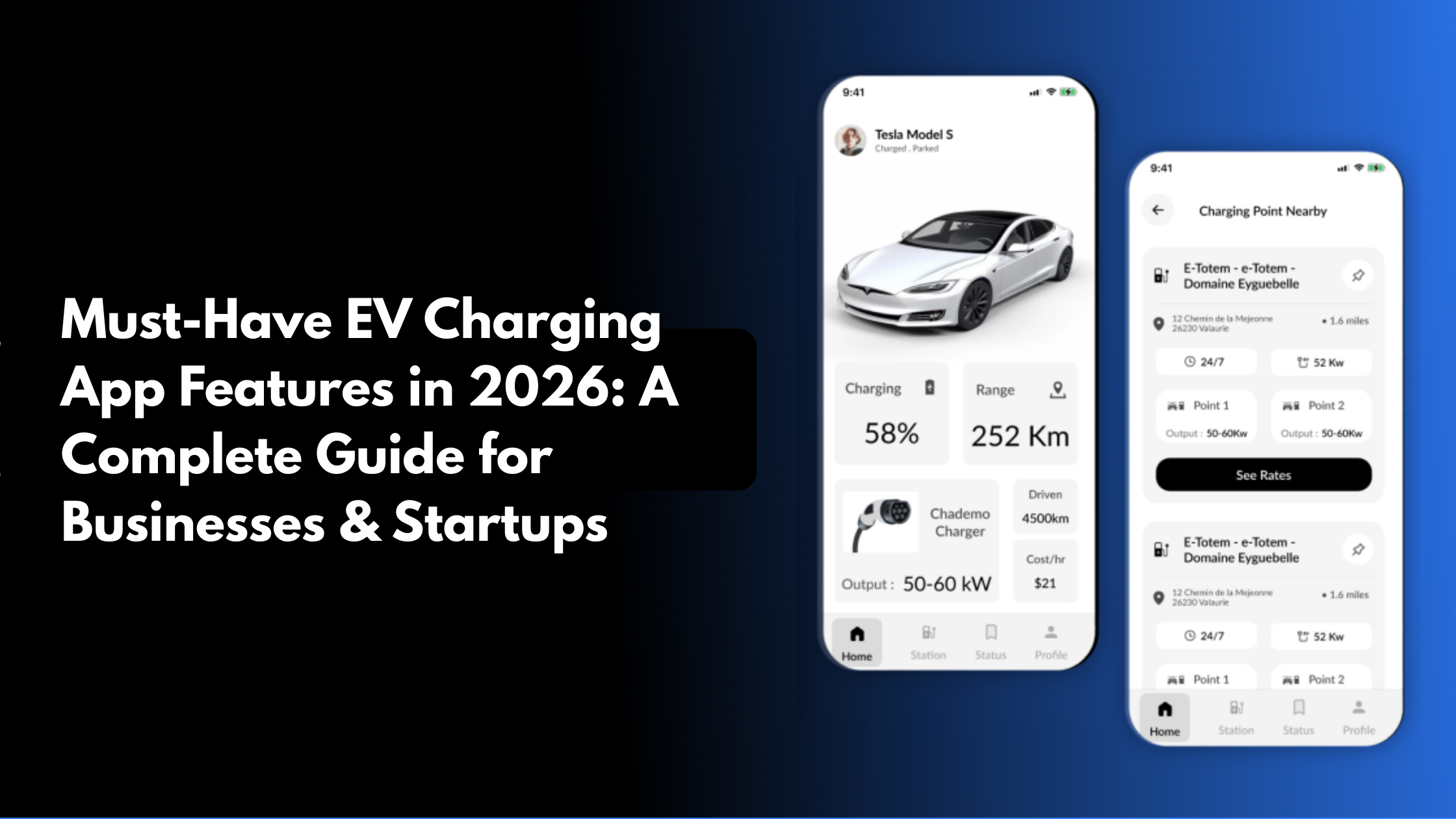
The electric vehicle market is entering a mature growth phase in 2026, and with it, user expectations from digital platforms are rising rapidly. A modern EV charging application is no longer just a station locator. It is a smart mobility assistant, a payment hub, and a decision-making tool for drivers. For companies planning to invest in EV charging app development, understanding the right EV charging app features is critical for both user adoption and long-term business success.
This guide highlights the most essential and future-ready features that every EV charging app must include, combining commercial value with real user needs.
1. Real-Time Charging Station Discovery
The foundation of any EV charging app is an accurate, real-time charging station map. Users must be able to view nearby stations, charger types (AC, DC fast, ultra-fast), connector compatibility, pricing, and live availability.
Why it matters:
Range anxiety remains the biggest barrier to EV adoption. Live data reduces uncertainty and increases trust, making this one of the most important EV charging app features to focus on in 2026.
2. Smart Route Planning with Battery Intelligence
Advanced navigation should calculate routes based on battery level, terrain, traffic, and charging speed. The app must automatically suggest optimal charging stops for long journeys.
Business value:
Smart routing improves user retention and positions your app as a complete EV mobility solution rather than just a locator tool.
3. Slot Booking and Queue Management
With EV density increasing in cities, waiting time at stations is becoming a real problem. Reservation systems allow users to book time slots, view queue length, and receive turn notifications.
Commercial impact:
This ev charging app features increases station utilization efficiency and enables premium booking models for operators.
4. Unified and Secure In-App Payments
Support for UPI, cards, digital wallets, and subscription plans within one interface is essential. The app should store invoices, charging history, and offer automated billing.
Why it is critical:
Frictionless payments directly affect conversion and repeat usage, making it a core part of EV charging app monetization strategies.
5. Roaming Network Integration
Users should be able to access multiple charging networks using one app and one wallet. Roaming APIs allow cross-network charging without multiple logins.
Future proofing:
As charging ecosystems expand, interoperability will define which platforms scale and which fail.
6. Real-Time Charging Status & Remote Control
Live charging progress, estimated completion time, remote start/stop, and cost tracking enhance transparency and user control.
This builds trust and reduces customer support dependency.
7. AI-Powered Recommendations
AI can suggest the charging station based on price, speed, distance, and user behavior patterns. It can also predict congestion and recommend off-peak charging times.
Strategic advantage:
Personalization increases engagement and differentiates your EV app in a competitive market.
8. Reviews, Ratings & Community Insights
Drivers rely heavily on peer feedback for station reliability, safety, and maintenance quality.
From an SEO and UX perspective, this also creates fresh, user-generated content and improves platform credibility.
9. Energy Usage Analytics & Carbon Savings
Users increasingly want to track energy consumption, cost per km, and carbon emission reduction compared to ICE vehicles.
This feature strengthens sustainability positioning and supports government and enterprise partnerships.
10. Strong Security & Data Privacy Architecture
With payments, location tracking, and vehicle data involved, end-to-end encryption, GDPR compliance, and secure authentication are non-negotiable.
Trust is a growth multiplier in EV digital platforms.
Final Thoughts
In 2026, successful EV platforms will be those that combine intelligent automation, seamless payments, and real-time infrastructure connectivity. These EV charging app features are not optional enhancements anymore; they are business-critical components for building scalable, future-ready EV ecosystems.
If you are planning to develop or upgrade your platform, aligning these ev charging app features with your complete EV charging app development guide will help you create a solution that is both technically robust and commercially competitive.