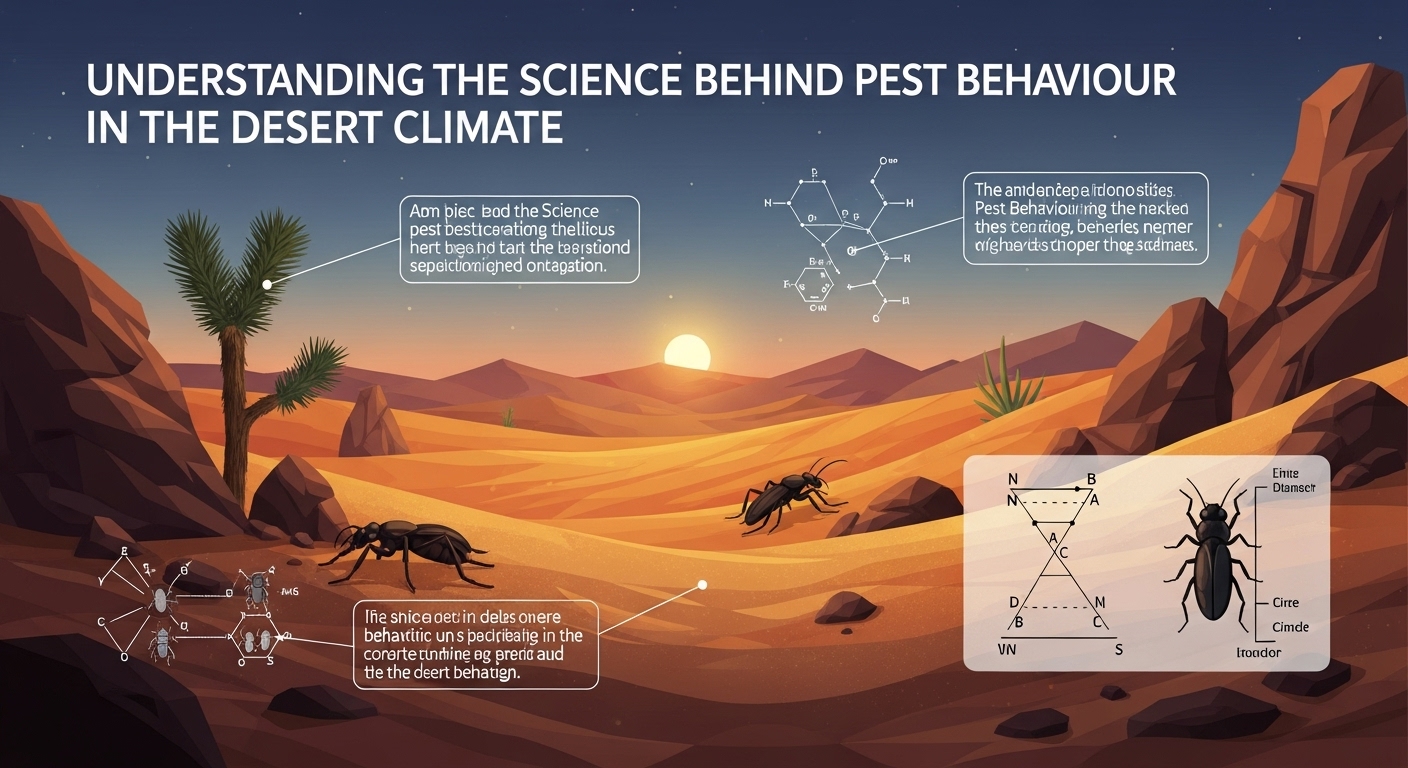
Introduction to Pest Behaviour in Desert Environments
Desert climates are defined by extremity. Relentless heat, scarce water, and dramatic shifts between day and night temperatures create an unforgiving environment. Yet pests persist. Their survival is not accidental but the result of intricate biological design and adaptive behaviour. Understanding these mechanisms is essential for effective pest control Abu Dhabi, where urban life intersects sharply with arid ecology.
Scientific insight reveals that pest behaviour in deserts is purposeful. Every movement, nesting decision, and feeding habit is shaped by the need to conserve energy and moisture while avoiding lethal conditions.
Environmental Characteristics of Desert Regions
Heat is the dominant force shaping desert ecosystems. Daytime temperatures can soar beyond tolerable limits, forcing pests to seek refuge in shaded or insulated spaces. This thermal pressure dictates activity cycles and influences where infestations are most likely to occur, particularly within human structures.
Equally influential is the lack of moisture. Low humidity accelerates dehydration, making water access a priority. Pests gravitate toward plumbing systems, kitchens, and irrigation lines. From a pest control Abu Dhabi perspective, water availability often becomes the primary catalyst for indoor infestations.
Biological and Behavioural Adaptations of Desert Pests
Desert pests exhibit remarkable physiological resilience. Many insects possess hydrophobic exoskeletons that minimize water loss, while rodents have evolved kidneys capable of extreme water conservation. These adaptations allow survival where most organisms would perish.
Behaviourally, desert pests are strategic. Nocturnal activity reduces heat exposure. Burrowing provides thermal insulation. Some species enter dormancy during peak summer months. These calculated responses highlight why conventional pest control methods often fail without behavioural understanding, particularly in pest control Abu Dhabi scenarios where climate plays a dominant role.
Common Desert Pests and Their Ecological Strategies
Insects such as cockroaches, ants, and beetles are among the most prevalent desert survivors. Cockroaches can endure prolonged dehydration, while ants operate complex foraging networks to locate scarce resources. Their nests are often deeply embedded underground, where temperatures remain stable.
Rodents thrive by exploiting human environments. Buildings offer shelter, consistent food sources, and access to water. These animals adjust quickly, displaying heightened intelligence and adaptability. Recognizing these survival strategies is crucial for pest control Abu Dhabi efforts aimed at long-term population management rather than temporary relief.
The Impact of Urban Development on Pest Behaviour
Desert cities create artificial ecosystems. Air-conditioned interiors, landscaped greenery, and waste systems transform inhospitable terrain into pest-friendly zones. As natural habitats shrink, pests migrate toward human dwellings, altering their natural behaviour patterns.
Urban lighting disrupts nocturnal rhythms. Food waste sustains populations beyond natural limits. These changes accelerate infestation risks and complicate control efforts. Effective pest control Abu Dhabi strategies must account for this convergence of natural instinct and urban opportunity.
Seasonal Variations and Pest Activity Cycles
Seasonality in desert regions is subtle yet significant. During peak summer, extreme heat forces pests indoors, increasing contact with humans. Activity intensifies as survival becomes more challenging outdoors, leading to sudden and aggressive infestations.
Cooler months often correspond with breeding cycles. Pest populations may expand quietly, only becoming noticeable weeks later. Understanding these temporal patterns allows for anticipatory measures. Timing interventions according to seasonal behaviour is a cornerstone of advanced pest control Abu Dhabi planning.
Science-Based Approaches to Desert Pest Management
Modern pest management emphasizes prevention over reaction. Behavioural science plays a central role. By eliminating attractants such as moisture and food sources, pest survival advantages are removed. Structural modifications, sealing entry points, and environmental management disrupt established behavioural patterns.
Sustainable methods are particularly effective in desert climates. Instead of relying solely on chemical treatments, science-based pest control Abu Dhabi approaches focus on habitat modification and long-term deterrence. This reduces resistance development and supports ecological balance.
Conclusion: Translating Science into Effective Pest Control
Pest behaviour in desert climates is a sophisticated response to environmental adversity. Heat, drought, and human development combine to shape survival strategies that are both resilient and adaptive. Understanding these dynamics transforms pest control from a reactive task into a strategic discipline.
When pest management aligns with ecological science, results become more predictable and enduring. In desert regions, informed pest control Abu Dhabi solutions rooted in behavioural understanding offer the most effective path to sustainable, long-term control.