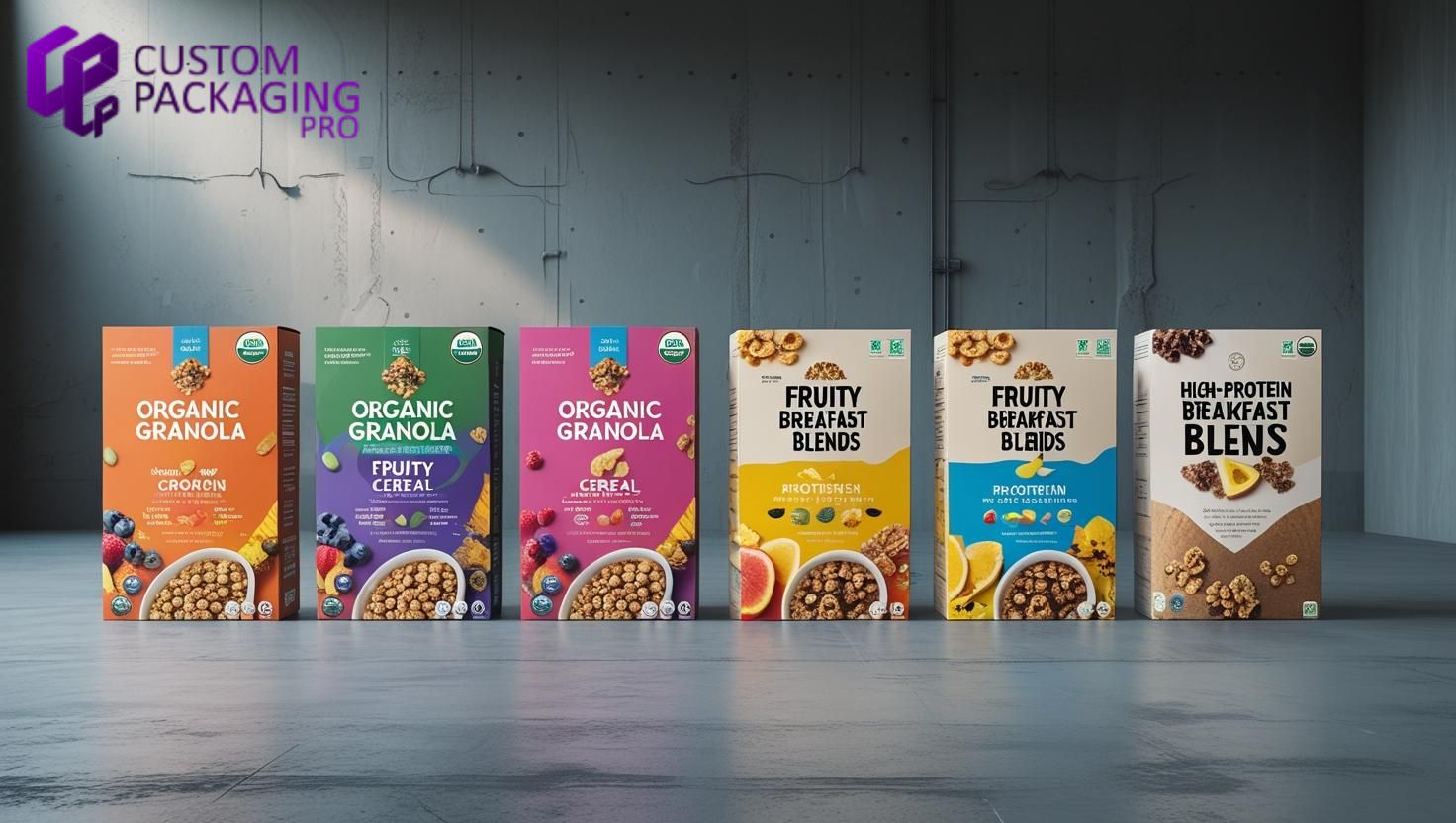
Cereal boxes play a major role in how breakfast products are stored, protected, and presented in the competitive U.S. food market. From supermarket shelves to online orders, cereal packaging is often the first interaction customers have with a brand. Well-designed cereal packaging not only protects the product but also builds trust, supports branding, and improves shelf impact.
For food businesses looking to scale, Custom Packaging Pro offers professional solutions for cereal boxes, mini cereal boxes, and variety pack cereal packaging designed specifically for retail, eCommerce, and food delivery needs.
Why Cereal Boxes Matter in Today’s Market
In the United States, breakfast cereal remains a staple product across homes, hotels, offices, and schools. With hundreds of cereal brands competing for attention, packaging has become a strong marketing tool.
High-quality branded cereal boxes help businesses:
-
Improve shelf visibility
-
Protect cereals from moisture and crushing
-
Communicate nutrition and brand values
-
Support recycling and sustainability goals
-
Create a consistent brand identity
Modern customers also pay attention to cereal box design, materials, and eco-friendly features. This makes packaging an essential business investment, not just a container.
Standard Cereal Box Sizes and Custom Options
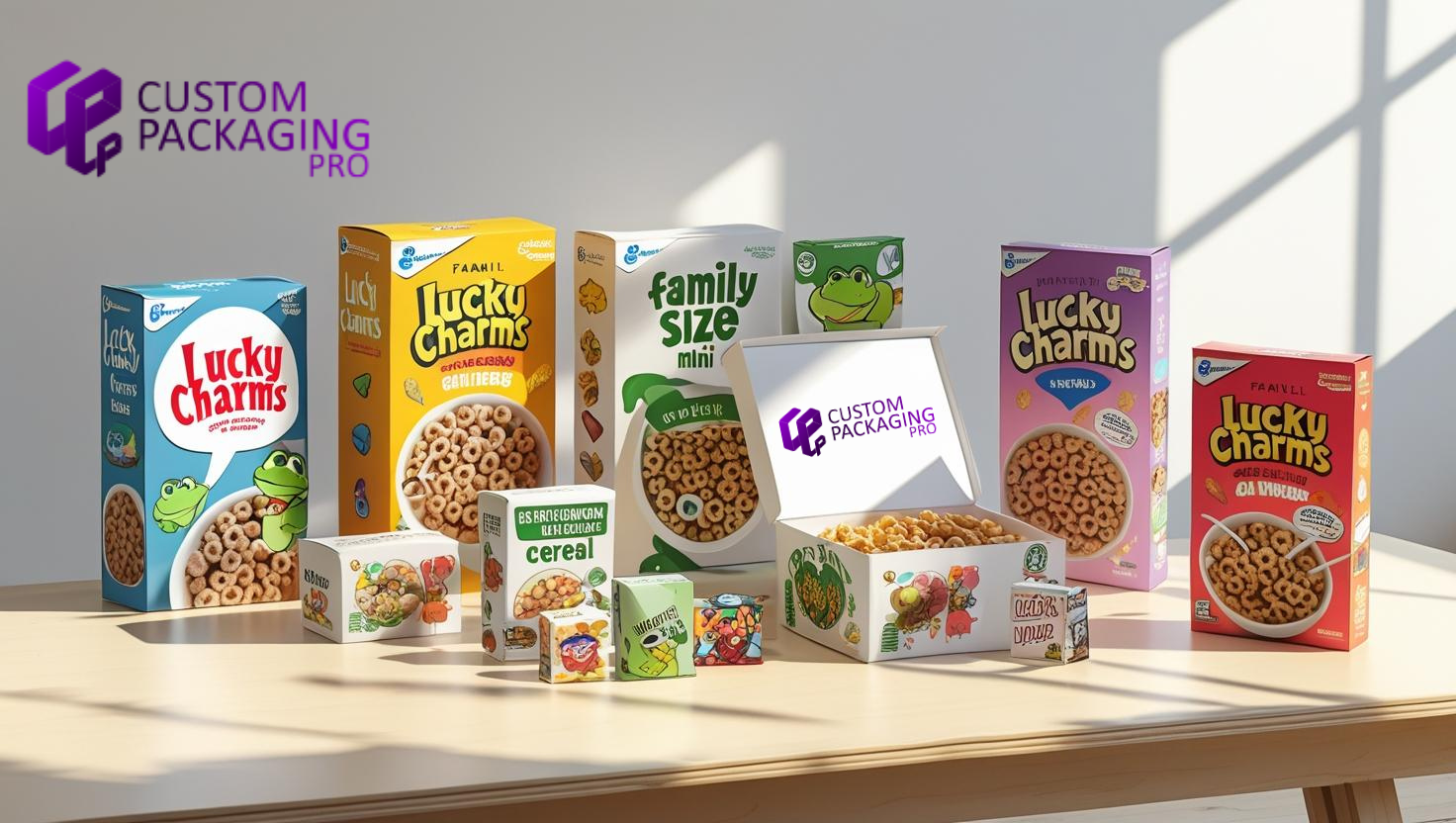
Cereal products come in different serving formats. Brands may sell family-size cereal, small cereal boxes, or mini cereal boxes in bulk for hotels and schools.
Common cereal box size ranges
| Box Type | Typical Dimensions (L × W × H) | Use Case |
|---|---|---|
| Standard cereal boxes | 7–8 in × 2–3 in × 10–12 in | Retail shelves |
| Big cereal boxes | 8–9 in × 3–4 in × 12–14 in | Family packs |
| Mini cereal boxes | 3–4 in × 1–2 in × 4–6 in | Variety packs, hotels |
| Small cereal boxes | 4–5 in × 2 in × 6–8 in | Single-serve |
Custom Packaging Pro also produces fully custom cereal boxes to match unique product volumes, inserts, and brand requirements.
Understanding Length, Width, and Height (Technical Guide)
In cereal packaging, length refers to the front panel measurement, width is the side depth of the box, and height is the vertical measurement from bottom to top. Accurate length, width, and height ensure that the cereal bag fits correctly, stacking remains stable, and shipping cartons are optimized. Correct cereal box dimensions also reduce material waste, prevent crushing, and support efficient pallet packing for wholesale distribution.
Materials Used for Cereal Boxes
Cereal boxes must balance food safety, durability, and sustainability. Most cereal packaging is made from paper-based materials that are lightweight yet protective.
Common materials include:
-
Cardboard cereal boxes (most widely used)
-
Kraft paperboard for eco-friendly branding
-
Coated SBS paperboard for premium retail packaging
-
Recycled paperboard for sustainability-focused brands
Material comparison table
| Material | Strength | Printing Quality | Eco-Friendly |
|---|---|---|---|
| Cardboard | Medium–High | Excellent | Recyclable |
| Kraft board | Medium | Good | Highly sustainable |
| SBS paperboard | High | Premium | Recyclable |
| Recycled board | Medium | Good | Eco-focused |
Custom Packaging Pro ensures all cereal packaging materials meet U.S. food packaging standards and support both retail and shipping performance.
Printing and Branding Options
Modern cereal packaging is more than just a box. It acts as a silent salesperson. High-quality printing improves recognition and builds long-term brand value.
Popular cereal box printing features:
-
High-resolution digital and offset printing
-
CMYK and PMS color systems
-
Matte, gloss, or soft-touch coatings
-
Spot UV for logos and mascots
-
Embossing and debossing
-
Window cut-outs for product visibility
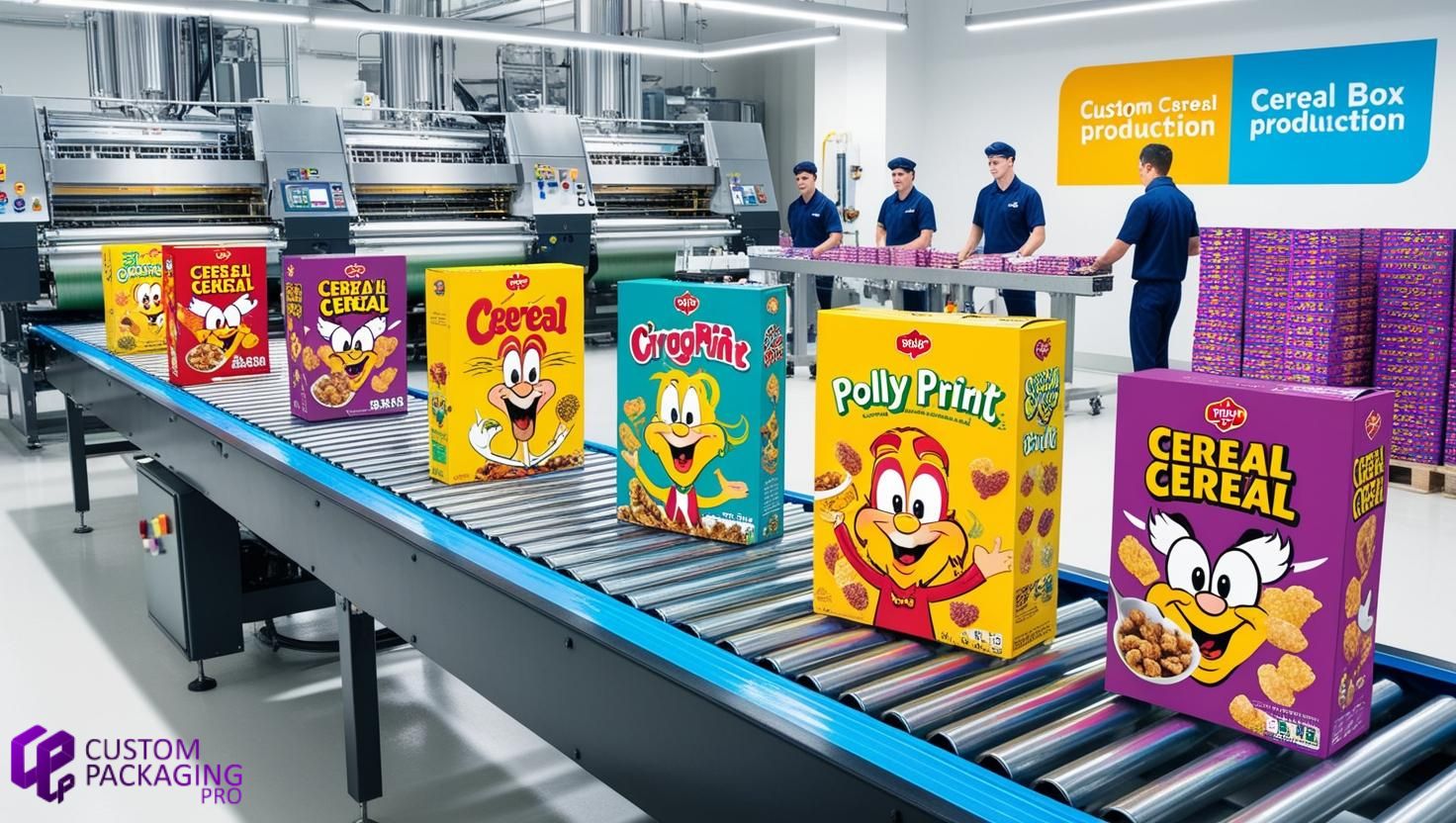
Brands selling fruit-flavored cereals, chocolate cereals, or kids’ cereals often use colorful artwork, mascots, and storytelling panels to engage customers.
Custom Packaging Pro supports both simple brand layouts and creative cereal box designs for startups and established cereal brands.
Customization Features for Cereal Packaging
Customization allows cereal companies to design packaging that matches both marketing and logistics goals.
Custom cereal box options include:
-
Custom sizes and thickness levels
-
Internal bag support inserts
-
Easy-open tuck flaps
-
Perforated panels
-
QR codes and promotional printing
-
Retail-ready shelf displays
Whether a business sells mini cereal boxes bulk packs or large breakfast cereal packaging, Custom Packaging Pro provides scalable customization.
Product Benefits of Quality Cereal Boxes
Well-manufactured cereal boxes offer several business advantages:
-
Protect cereals from humidity and crushing
-
Extend shelf life when paired with inner liners
-
Improve pallet stacking and shipping safety
-
Enhance shelf presentation
-
Increase brand recall
-
Support recycling programs
Strong packaging also reduces returns, improves warehouse handling, and builds confidence with retailers.
Retail, eCommerce, and Food Delivery Use Cases
Cereal boxes today must perform across multiple sales channels.
Retail stores
-
Eye-catching front panels
-
Clear nutrition labeling
-
Standardized cereal box dimensions
-
Barcode and compliance printing
eCommerce shipping
-
Stronger board thickness
-
Compact custom sizing
-
Damage-resistant designs
-
Bundled variety pack cereal boxes
Food service & delivery
-
Mini cereal boxes for hotels and airlines
-
Portion-controlled packaging
-
Bulk cereal boxes for institutions
Custom Packaging Pro supports all three channels with flexible production and wholesale support.
Eco-Friendly and Wholesale Solutions
Sustainability is now a key decision factor in the U.S. packaging market. Brands are shifting toward recyclable cereal boxes and reduced plastic use.
Custom Packaging Pro offers:
-
Recyclable and biodegradable materials
-
Soy-based and water-based inks
-
Lightweight structures to reduce carbon footprint
-
FSC-certified paper options
-
Bulk production for cost efficiency
Wholesale cereal box programs help brands lower per-unit costs, stabilize inventory, and maintain consistent quality.
USA Market Trends in Cereal Packaging
The U.S. cereal packaging industry continues to evolve with changing consumer behavior.
Key trends include:
-
Increased demand for mini cereal boxes and variety packs
-
Growth in eco-friendly cereal packaging
-
High-quality digital printing for short runs
-
Smart packaging with QR engagement
-
Compact cereal box storage designs
-
Custom subscription cereal boxes
Packaging is now used to communicate nutrition, sustainability, and lifestyle branding rather than only product protection.
Final Thoughts
Cereal packaging is a powerful business tool that impacts branding, protection, logistics, and sustainability. From mini cereal boxes to full-size retail packaging, businesses need solutions that match both product demands and market trends.
Custom Packaging Pro provides professional, USA-focused cereal box solutions with custom sizing, advanced printing, eco-friendly materials, and wholesale support—helping cereal brands compete, grow, and scale with confidence.
FAQs About Cereal Boxes
1. What are standard cereal box dimensions?
Standard cereal boxes are usually around 7–8 inches long, 2–3 inches wide, and 10–12 inches tall, but custom sizes are widely available.
2. Are cereal boxes recyclable?
Most cardboard cereal boxes are recyclable. Many brands now use recycled paperboard to improve sustainability.
3. Can I order mini cereal boxes in bulk?
Yes. Custom Packaging Pro offers wholesale mini cereal boxes for hotels, schools, promotions, and variety packs.
4. What materials are best for cereal packaging?
Food-grade cardboard and SBS paperboard are the most commonly used due to their strength, safety, and printing quality.
5. Can cereal boxes be customized for branding?
Absolutely. Custom sizes, full-color printing, coatings, inserts, and finishes are all available.
6. Do cereal boxes support eCommerce shipping?
Yes. Thicker cardboard and custom dimensions help cereal boxes survive eCommerce logistics.