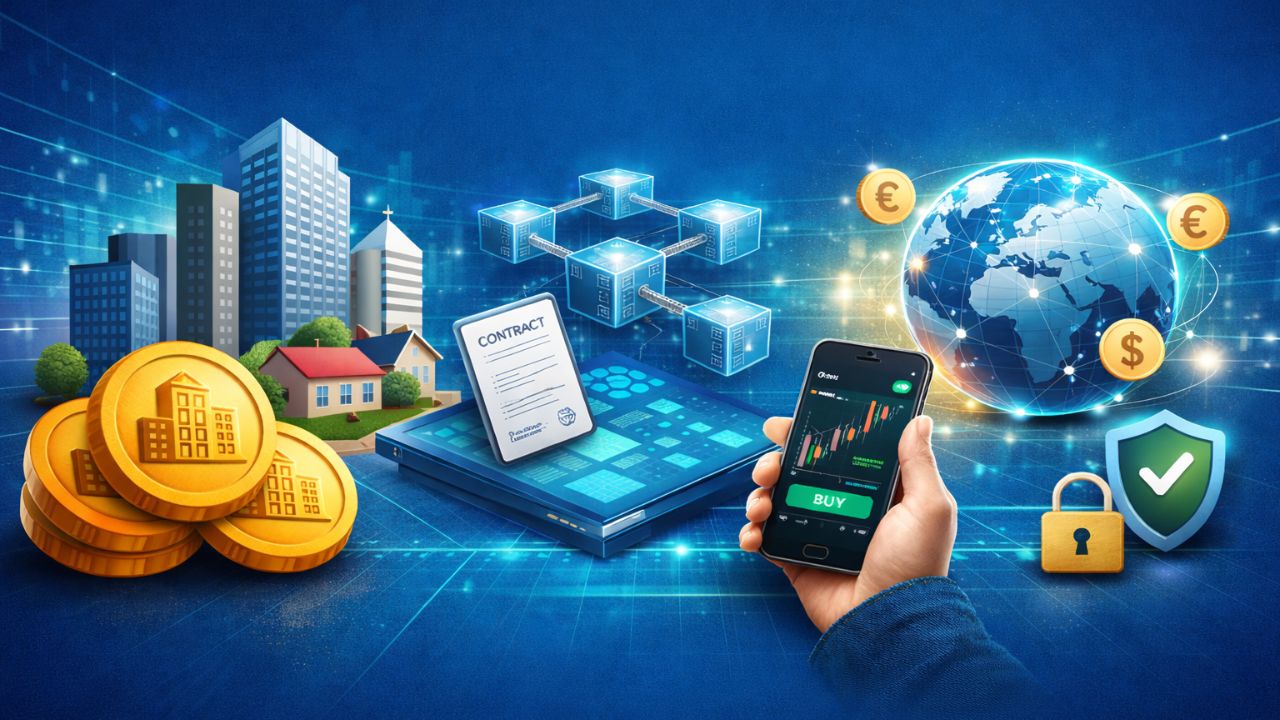
Real estate tokenization on blockchain is changing how people think about property ownership and investment. For decades, real estate has been seen as stable but slow, expensive to enter, and difficult to exit. Tokenization introduces a new structure where property value is represented digitally, making real estate more flexible without changing its core nature as a tangible asset.
Instead of relying solely on paperwork, brokers, and lengthy settlement periods, blockchain technology allows ownership records to be created, verified, and transferred in a transparent digital environment. This shift is not about replacing real estate but improving how it is accessed, managed, and exchanged.
Understanding Real Estate Tokenization
Real estate tokenization is the process of converting ownership rights of a physical property into digital tokens stored on a blockchain. Each token represents a specific share of the property’s value or income rights. These tokens can be bought, sold, or transferred under predefined rules.
Behind the scenes, the physical asset still exists and remains legally owned. The difference is that ownership interests are digitally recorded and managed. This structure allows multiple investors to own fractional shares of a property without the traditional complexity of joint ownership agreements.
How Blockchain Supports Property Tokenization
Blockchain acts as a decentralized ledger that records every transaction related to the tokenized property. Once information is added, it cannot be altered without consensus. This creates trust between parties who may not know each other.
Smart contracts play a key role here. They are self executing programs that automate actions such as ownership transfers, dividend distributions, or compliance checks. This automation reduces errors and removes the need for constant manual oversight.
Improved Accessibility for Investors
Traditional real estate investing often requires large capital, local presence, and industry connections. Tokenization lowers these barriers significantly.
With fractional ownership, investors can participate with smaller amounts of capital. This opens the door for individuals who were previously priced out of high value markets. It also allows investors to spread their funds across multiple properties rather than tying everything into one asset.
Another major benefit is global accessibility. Investors can gain exposure to properties in different regions without physically being there. This creates opportunities that were once limited to institutional investors or wealthy individuals.
Increased Liquidity in Real Estate Markets
Real estate is known for being illiquid. Selling a property can take months and often involves negotiation, inspections, and legal reviews. Tokenization does not make real estate instantly liquid, but it improves liquidity compared to traditional models.
Tokenized property shares can be traded on approved digital platforms. Investors can sell part or all of their holdings without selling the entire property. This flexibility is especially valuable for those who need quicker access to capital.
Liquidity still depends on market demand and platform maturity, but tokenization introduces a practical middle ground between long term ownership and complete illiquidity.
Cost Efficiency and Reduced Transaction Fees
Property transactions involve many intermediaries such as brokers, escrow agents, and legal teams. Each layer adds time and cost.
Blockchain based tokenization reduces reliance on intermediaries by automating verification and settlement processes. Smart contracts handle repetitive tasks, which lowers administrative expenses. Investors benefit from reduced transaction fees, while property owners save on operational overhead.
Over time, these savings can significantly improve investment returns, especially for properties with frequent ownership changes.
Faster and More Transparent Transactions
One of the most noticeable advantages of blockchain based systems is speed. Traditional property transactions can take weeks or even months to finalize. Tokenized transactions can settle much faster because ownership records update automatically once conditions are met.
Transparency is another key benefit. Every transaction is recorded on the blockchain and can be audited. Investors can verify ownership history, transaction timing, and compliance details without relying on third party confirmation.
This transparency builds confidence among investors and reduces disputes related to ownership claims.
Enhanced Security and Fraud Reduction
Real estate fraud often involves forged documents, manipulated records, or unclear ownership histories. Blockchain significantly reduces these risks.
Once ownership data is recorded on the blockchain, it becomes extremely difficult to alter. Cryptographic security ensures that only authorized parties can initiate transactions. This makes title fraud and unauthorized transfers far less likely.
For investors, this level of security provides peace of mind. They can trust that their ownership rights are protected by technology rather than solely by manual record keeping.
Regulatory Compliance and Programmable Ownership
Compliance is a critical aspect of real estate investing. Tokenization platforms can embed regulatory rules directly into the tokens themselves.
For example, smart contracts can ensure that only verified investors participate or that transfers comply with local regulations. This programmable ownership structure helps maintain legal compliance without slowing down transactions.
As regulations evolve, token rules can be updated to reflect new requirements. This adaptability makes tokenized real estate more resilient in changing regulatory environments.
Global Investment Opportunities
Tokenization makes cross border real estate investment more practical. Investors can participate in international property markets without navigating complex local processes.
For property owners, this means access to a broader pool of investors. Raising capital becomes more efficient, and reliance on local funding sources is reduced.
Blockchain also simplifies currency conversion and transaction settlement, which further lowers friction in global investments.
Real World Use Cases of Tokenized Real Estate
Tokenization is not limited to one property type. It is already being applied across various segments:
- Residential properties that allow fractional rental income participation
- Commercial buildings where investors share long term returns
- Vacation rentals with seasonal revenue distribution
- Development projects that raise capital before completion
These use cases show that tokenization can support both income generating assets and growth focused investments.
Challenges and Limitations to Consider
While the benefits are compelling, tokenization is not without challenges. Regulatory clarity varies by region, and compliance requirements can differ widely.
Technology adoption is another hurdle. Investors and property owners need education to understand how tokenized ownership works. Liquidity also depends on the maturity of trading platforms and investor participation.
Acknowledging these limitations helps set realistic expectations and builds trust with stakeholders.
Why Businesses Are Adopting Real Estate Tokenization
Developers and property owners are increasingly adopting tokenization to raise capital more efficiently. Instead of relying solely on traditional financing, they can offer fractional ownership to a wider investor base.
Businesses also benefit from faster deal closures and improved transparency. Tokenization simplifies ownership management and reduces operational complexity.
These advantages make real estate tokenization on blockchain attractive for enterprises looking to modernize their investment models.
Read Also: Digital Signatures: Creating Confidence in Online Identity Verification
How to Get Started With Real Estate Tokenization
Getting started typically involves several key steps. The property must be evaluated and legally structured to support fractional ownership. Compliance requirements must be addressed early in the process.
Token development and platform selection follow. This is where professional support becomes important. Working with experienced providers of Real Estate Tokenization Development Services helps ensure the process is secure, compliant, and scalable.
Companies like Exobloc specialize in building reliable tokenization frameworks that align with business goals and regulatory standards.
Take the Next Step Toward Tokenized Real Estate
If you are a property owner, developer, or enterprise exploring new ways to unlock value, now is the time to evaluate tokenization. With the right strategy and technical foundation, blockchain based real estate can open new investment pathways while maintaining trust and compliance.
Partnering with an experienced team can make the transition smoother and more effective.
Conclusion
Real estate tokenization on blockchain introduces flexibility, transparency, and accessibility to an industry that has long been resistant to change. By enabling fractional ownership, improving liquidity, reducing costs, and enhancing security, tokenization offers practical benefits for both investors and property owners.
As technology and regulations continue to mature, real estate tokenization on blockchain is positioned to become an important part of the global property ecosystem, bridging traditional assets with modern digital infrastructure.