Introduction
Embroidered patches have a long history of use in Canada and continue to be a practical part of clothing and uniforms today. They appear on school uniforms, workwear, sports clothing, and everyday garments. Their stitched design gives them a clean and structured look that suits many uses.
This overview of embroidered patches in Canada explains what they are, how they are made, where they are commonly used, and why many people continue to choose them over other patch types.
What Are Embroidered Patches
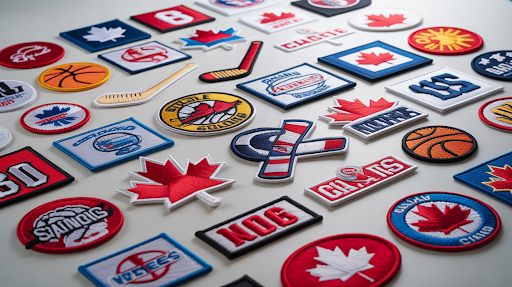
Embroidered patches are fabric pieces created by stitching thread onto a base fabric. The design is formed using layers of thread, which creates a raised and textured surface. Alongside embroidered options, custom woven patches are also used when finer detail or smaller text is needed.
In Canada, embroidered patches are commonly used because they work well on strong fabrics and hold their shape through regular wear, while custom woven patches suit lighter materials and designs with more det
Why Embroidered Patches Are Common in Canada
One reason embroidered patches remain common is their durability. The stitched design stays intact longer than many printed alternatives.
Key reasons for their use
-
Strong thread based construction
-
Suitable for regular washing
-
Clear shapes and lettering
-
Works well on thick fabrics
These qualities make embroidered patches reliable for daily use.
Where Embroidered Patches Are Commonly Used
Embroidered patches are applied across many areas of Canadian clothing.
Common uses
-
School uniforms and badges
-
Workwear and safety clothing
-
Sports teams and clubs
-
Community groups
-
Jackets, hoodies, and backpacks
Their strength makes them suitable for clothing worn often.
What Materials Are Used in Embroidered Patches
Material choice plays an important role in how long a patch lasts.
Common materials
-
Polyester or cotton embroidery thread
-
Twill or felt fabric base
-
Stitched or merrowed edges
These materials help patches keep their shape and colour over time.
How Embroidered Patches Are Made
The process of making embroidered patches follows a set of steps.
Basic steps
-
Design preparation
-
Thread colour selection
-
Stitching onto fabric
-
Border finishing
-
Backing application
This process creates a patch that can handle regular use.
What Backing Options Are Used
Backing determines how a patch is attached to clothing.
Common backing options
-
Sew on for long term use
-
Iron on for easy attachment
-
Velcro for removable patches
Sew on backing is often used for uniforms and workwear.
How Embroidered Patches Fit Canadian Clothing
Embroidered patches work best on durable fabrics commonly worn in Canada.
Suitable clothing types
-
Jackets and coats
-
Work shirts and uniforms
-
Sportswear
-
Casual denim clothing
These garments support stitching and frequent wear.
How to Care for Embroidered Patches
Basic care helps patches last longer.
Care tips
-
Wash garments inside out
-
Use mild detergent
-
Avoid high heat drying
-
Do not iron directly on patches
These steps help maintain the patch and fabric.
FAQs
Are embroidered patches suitable for daily wear
Yes, they are designed to handle regular use.
Do embroidered patches last longer than printed ones
In most cases, yes, because the design is stitched.
Can embroidered patches be removed
Yes, depending on the backing type.
Do embroidered patches work on all fabrics
They work best on denim, cotton, and canvas.
Are embroidered patches washable
Yes, with proper care.
Conclusion
Embroidered patches canada remain widely used in Canada because they are durable, clear, and suitable for many clothing types. They appear on uniforms, workwear, sports clothing, and casual wear.
This overview of embroidered patches in Canada shows why their stitched design, strong materials, and flexible attachment options continue to make them a reliable choice for everyday use.