Accurate time tracking has become a priority for organizations navigating hybrid work models, compliance requirements, and productivity demands. A reliable biometric attendance system software replaces outdated punch cards and manual registers with secure, identity-based tracking. By verifying employees through unique biological traits, businesses gain transparency, reduce errors, and create a fairer workplace for everyone involved.
This article explores the core features every team should expect from biometric attendance software, how these systems support operational goals, and why trusted providers such as NIALABS are often chosen by growing organizations.
What Is Biometric Attendance System Software?
Biometric attendance software records employee working hours using physiological or behavioral identifiers rather than passwords or ID cards. Common biometric markers include fingerprints, facial patterns, iris scans, and, in some cases, voice recognition.
Unlike traditional systems, biometrics rely on traits that are extremely difficult to duplicate. This makes attendance records more reliable while reducing the administrative burden on HR teams. The International Labour Organization has highlighted accurate timekeeping as a foundation for fair wage practices, and biometric systems help organizations meet that standard efficiently.
Why Businesses Are Moving Away from Manual Attendance
Manual attendance methods may appear simple, but they introduce several operational risks:
- Buddy punching, where one employee clocks in for another
- Data entry errors that affect payroll accuracy
- Limited visibility into workforce trends
- Time-consuming reconciliation at month-end
Studies published by workforce analytics firms such as Gartner have shown that automated attendance solutions can reduce payroll discrepancies by a measurable margin while improving employee trust. Biometrics address these gaps directly by linking attendance to verified identity.
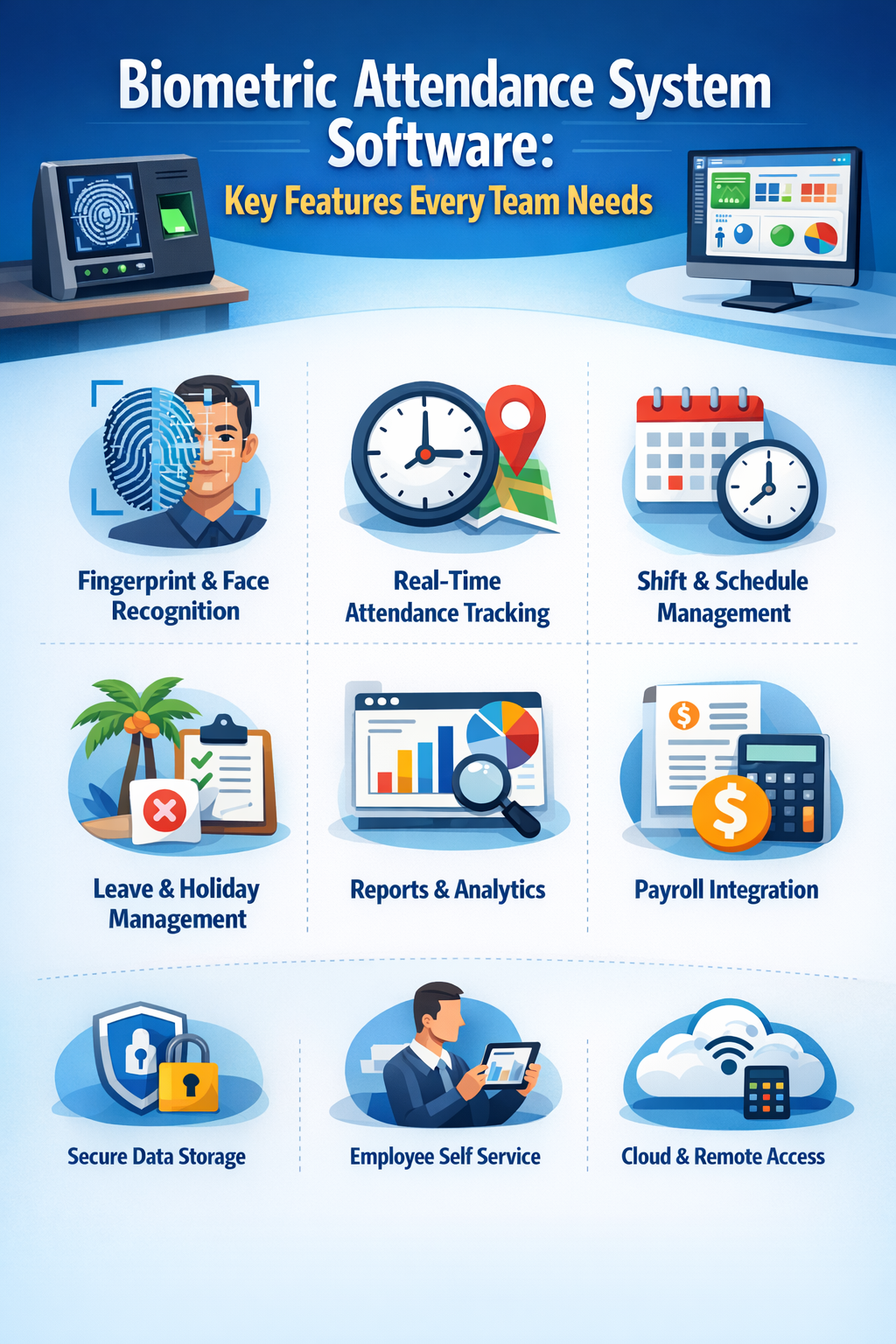
Core Features Every Team Needs in Biometric Attendance Software
Not all biometric solutions are built the same. The following features define a system that delivers long-term value rather than short-term convenience.
Accurate Biometric Identification
At the heart of any attendance platform is its biometric engine. High-quality software uses advanced algorithms to ensure fast and precise identification, even in challenging conditions such as low lighting or partial fingerprints.
Modern facial recognition systems, for example, map multiple data points rather than relying on surface images alone. This approach improves reliability while maintaining speed during peak entry times.
Multiple Biometric Options
A flexible system supports more than one biometric method. Fingerprint scanning may work well in office environments, while facial recognition is often preferred in manufacturing units, healthcare facilities, and contactless workplaces.
Solutions from providers like NIALABS offer multi-modal biometric support, allowing organizations to choose what fits their operational reality instead of forcing a one-size-fits-all approach.
Real-Time Attendance Tracking
Real-time visibility allows HR teams and managers to monitor attendance as it happens. This feature helps identify late arrivals, early departures, or unexpected absenteeism before it affects productivity.
Live dashboards and automated alerts also enable supervisors to respond quickly, whether that means reallocating resources or approving shift adjustments.
Seamless Payroll Integration
Attendance data has little value if it cannot be used effectively. Integration with payroll systems ensures that recorded hours, overtime, and leave balances flow directly into salary calculations.
The Society for Human Resource Management (SHRM) has consistently emphasized the link between automated attendance and payroll accuracy. Systems that support exports or API-based payroll integration reduce disputes and save significant administrative time
Leave and Shift Management
Modern biometric attendance software extends beyond clock-in and clock-out functions. Built-in leave management allows employees to apply for time off while managers review and approve requests within the same platform.
Shift scheduling features are equally important for organizations operating across multiple time zones or rotating work patterns. Automated shift assignment reduces confusion and ensures attendance rules are applied consistently.
Security and Data Privacy: A Non-Negotiable Requirement
Biometric data is sensitive by nature, making security a top priority. A reliable system encrypts biometric templates rather than storing raw images. This ensures that even in the unlikely event of a breach, personal data remains protected.
Regulatory frameworks such as GDPR and ISO/IEC 27001 stress the importance of secure data handling. Vendors like Nialabs align their systems with these global standards, giving organizations confidence that compliance requirements are being met.
Cloud vs On-Premise Deployment
Deployment flexibility has become an important decision factor. Cloud-based biometric attendance systems offer scalability, remote access, and lower upfront infrastructure costs. They are particularly useful for companies with distributed teams or multiple branches.
On-premise solutions, on the other hand, provide greater control over data storage and are sometimes preferred by highly regulated industries. Leading platforms allow organizations to choose either model or adopt a hybrid approach as needs evolve.
Mobile Accessibility for a Flexible Workforce
With remote and field-based roles becoming more common, mobile compatibility is no longer optional. Mobile biometric attendance apps enable employees to mark attendance securely from approved locations using facial recognition and GPS validation.
This feature supports flexibility without compromising accountability. It also aligns with broader workforce trends identified by McKinsey, which note that digital tools play a key role in sustaining productivity in flexible work environments.
Actionable Reports and Analytics
Raw data only becomes valuable when it leads to insight. Advanced reporting tools transform attendance logs into meaningful metrics, such as:
- Average working hours
- Absenteeism trends
- Overtime patterns
- Department-wise productivity indicators
These insights help leadership teams make informed decisions, whether that involves staffing adjustments or policy revisions.
Ease of Use and Employee Adoption
Even the most powerful software fails if employees resist using it. Intuitive interfaces, quick enrollment, and clear workflows encourage adoption across all levels of the organization.
Human-centered design principles, often emphasized in usability research from institutions like Nielsen Norman Group, play a significant role in successful implementation. Platforms developed by Nialabs are known for balancing technical sophistication with everyday usability.
Scalability for Growing Teams
As organizations expand, attendance systems must scale without disruption. A future-ready biometric solution supports additional users, locations, and integrations without requiring a complete overhaul.
Scalability ensures that early technology investments continue to deliver value as business needs change.
Why Many Organizations Choose NIALABS
NIALABS has established itself as a trusted name in biometric attendance and workforce management solutions. Its platforms are designed with real-world operational challenges in mind, offering:
- Multi-biometric support
- Secure and compliant data handling
- Cloud and on-premise deployment options
- Strong customer support and implementation expertise
Rather than focusing solely on technology, NIALABS emphasizes practical outcomes such as reduced payroll errors, improved compliance, and better workforce visibility.
Final Thoughts
Biometric attendance system software is no longer a luxury reserved for large enterprises. It has become an essential tool for organizations seeking accuracy, fairness, and efficiency in workforce management.
By focusing on key features—secure biometric identification, real-time tracking, payroll integration, and actionable insights—teams can choose a solution that genuinely supports their goals. Providers like Nialabs demonstrate how thoughtful design and reliable technology can simplify attendance management while building trust across the organization.