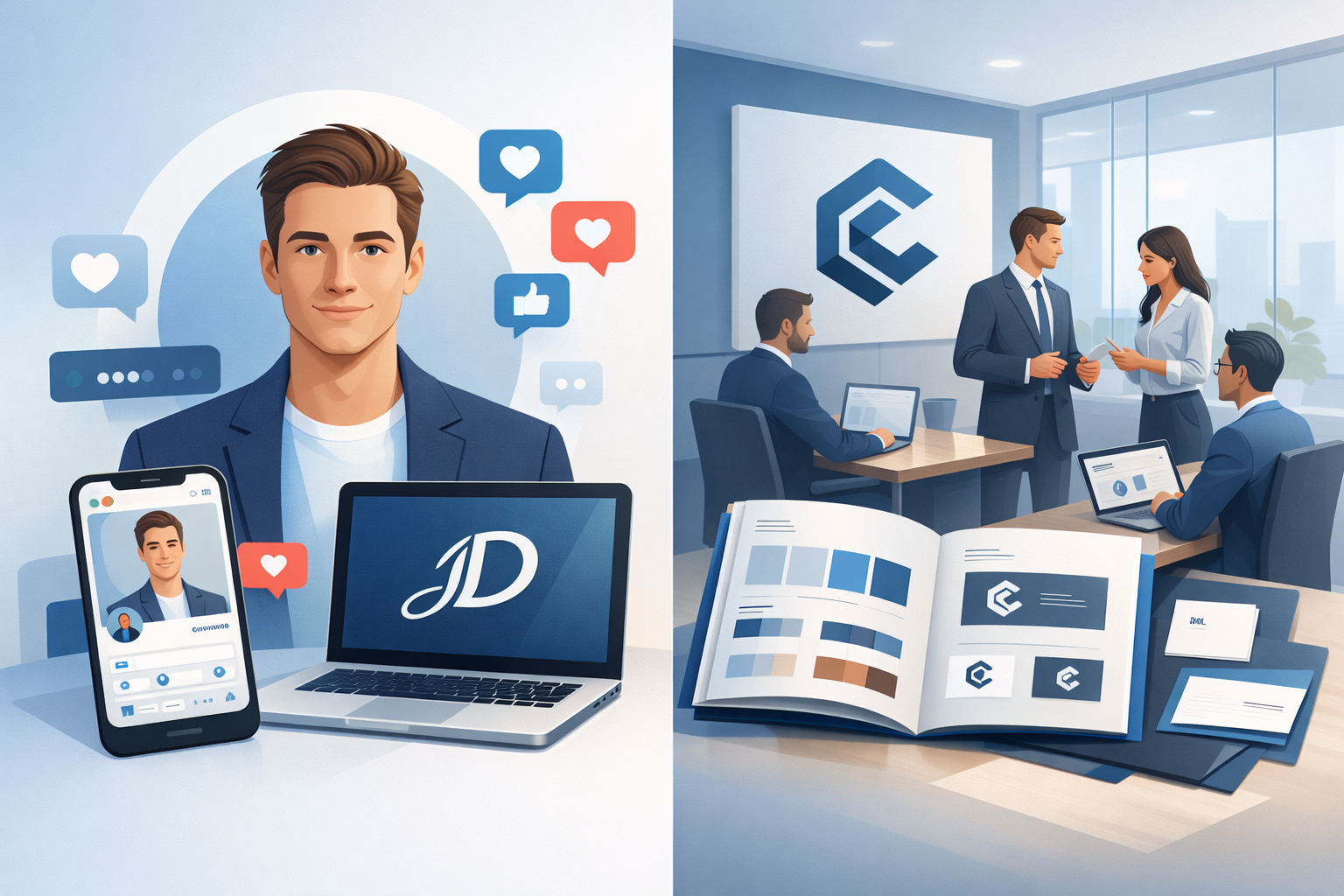
In a digital-first world, branding is no longer optional—it’s essential. Whether you’re an entrepreneur, consultant, creator, or business owner, how you present yourself or your organisation directly impacts trust, credibility, and growth. One of the most common questions professionals face today is whether to focus on personal branding or business branding. Both approaches offer unique advantages, but the right choice depends on your goals, industry, and long-term vision. Even a well-established Branding agency in Chennai understands that there is no one-size-fits-all solution.
Understanding Personal Branding
Personal branding is the process of positioning an individual as the face of expertise, values, and authority. It focuses on who you are, what you stand for, and how people perceive you professionally. Entrepreneurs, consultants, freelancers, coaches, and thought leaders often rely heavily on personal branding.
At its core, personal branding is built on authenticity. Your story, opinions, experiences, and personality become key brand assets. Platforms like LinkedIn, X, Instagram, and personal websites are commonly used to share insights, achievements, and perspectives that reinforce credibility.
One major advantage of personal branding is trust. People tend to connect more easily with individuals than with logos. When audiences associate expertise with a real person, it humanises the brand and accelerates relationship-building. This approach also offers flexibility—your brand can evolve naturally as your career grows.
However, personal branding has limitations. Growth is often tied directly to your availability and reputation. If you step away, the brand loses momentum. Scaling beyond a certain point can be challenging without shifting focus toward a broader business identity.
Understanding Business Branding
Business branding focuses on creating a distinct identity for a company rather than an individual. It includes brand name, visual identity, tone of voice, messaging, values, and customer experience. The brand exists independently of any one person.
This approach is ideal for companies planning to scale, build teams, or eventually sell the business. Business branding allows for consistency across multiple touchpoints—marketing, customer service, products, and partnerships. It also creates perceived stability, which is particularly important in industries where longevity and reliability matter.
A strong business brand can operate across markets, channels, and audiences without relying on a single personality. This makes it easier to delegate, expand operations, and create systems that support long-term growth. Many organisations turn to a Branding agency at this stage to ensure clarity, consistency, and differentiation.
On the downside, business branding can feel less personal, especially in crowded markets. Building trust may take longer, as customers often seek human connection before committing. Without strong storytelling, business brands risk appearing generic or impersonal.
Key Differences Between Personal and Business Branding
The most obvious difference lies in ownership. Personal branding is centred on you, while business branding belongs to the organisation. This distinction influences everything from content strategy to scalability.
Personal branding thrives on voice, opinions, and visibility. Business branding thrives on systems, processes, and consistency. One builds influence; the other builds equity.
Risk is another factor. With personal branding, reputational issues directly affect the brand. With business branding, risk is distributed across the organisation, reducing dependence on a single individual.
Which Branding Approach Is Right for You?
Choosing between personal and business branding depends on several factors:
Your role and goals:
If you are the primary service provider or thought leader, personal branding may deliver faster trust and authority. If your goal is to build a scalable organisation, business branding is often more sustainable.
Your industry:
Creative professionals, consultants, and educators often benefit from personal branding. Product-based businesses, SaaS companies, and multi-service firms typically require business branding for clarity and growth.
Your long-term vision:
If you plan to sell, franchise, or expand globally, business branding is essential. If your work is closely tied to your expertise and reputation, personal branding may be more effective.
Your audience expectations:
Some audiences expect to connect with people; others prefer dealing with established brands. Understanding customer behaviour plays a critical role in making the right choice.
Can You Combine Personal and Business Branding?
Yes—and in many cases, this is the most effective strategy. Hybrid branding allows individuals to act as brand ambassadors while still building a scalable business identity. Founders often use personal branding to attract attention and trust, then channel that trust into the business brand.
This approach offers the best of both worlds. The personal brand humanises the business, while the business brand provides structure and longevity. Many successful companies follow this model, where leadership visibility supports corporate branding without overshadowing it. A skilled Branding agency can help balance these elements strategically.
Common Mistakes to Avoid
One common mistake is building a personal brand without clear boundaries. When everything depends on one person, burnout and scalability issues follow. Another mistake is launching a business brand without personality or differentiation, leading to weak emotional connections.
Inconsistency is another challenge. Switching between personal and business branding without a clear strategy can confuse audiences. Messaging, visuals, and tone must align with the chosen approach—or the hybrid structure—at every touchpoint.
Making a Strategic Branding Decision
Branding is not just about visibility; it’s about intention. Whether you choose personal branding, business branding, or a combination of both, the strategy should support your long-term objectives. Clarity, consistency, and authenticity matter more than trends.
If you’re uncertain, working with a Digital marketin agency in Chennai can help evaluate your goals, audience, and growth plans to determine the most effective branding direction. The right strategy ensures that your brand not only attracts attention but also builds lasting value.
Final Thoughts
Personal branding and business branding serve different purposes, and neither is inherently better than the other. The right choice depends on who you are, what you offer, and where you want to go. By understanding the strengths and limitations of each approach, you can build a brand that supports sustainable growth, meaningful connections, and long-term success—on your terms.