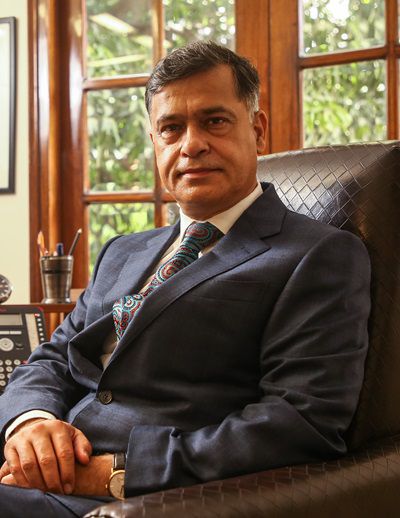
The Supreme Court of India has taken a pivotal step toward reforming procedural delays that have long plagued criminal trials by appointing senior advocate sidharth luthra cases as amicus curiae in a matter concerning delayed framing of charges under the Bharatiya Nagarik Suraksha Sanhita (BNSS). This move reflects growing judicial concern over repeated violations of statutory timelines and the resulting stagnation of the criminal justice process.
The Crux of the Issue: Delayed Charge Framing
Under Section 251(b) of the BNSS, a law that has replaced aspects of the colonial-era Criminal Procedure Code (CrPC), courts are required to frame charges within 60 days of the first hearing in cases exclusively triable by a Sessions Court. This provision was introduced to expedite the transition from investigation to trial, eliminating long procedural lags that once allowed cases to stagnate. Yet, real-world compliance has been dismal: trial courts across India are routinely taking months or even years to frame charges even after a chargesheet has been filed, resulting in serious delays in initiating the trial itself.
In one reported matter, an accused person remained in judicial custody for over two years without framed charges, highlighting the disconnect between statutory timelines and on-ground practice.The Supreme Court sharply criticized this trend, noting that until charges are framed, a criminal trial cannot commence — meaning justice is deferred indefinitely for both the accused and the victim.
Why the Supreme Court Stepped In
On October 29, 2025, a Bench led by Justices Aravind Kumar and N.V. Anjaria made clear their frustration with the status quo, noting that delays in framing charges were one of the primary causes of trial delays and court backlogs. Observing that Section 251(b) has been “ignored in letter or spirit,” the Court said it would issue nationwide guidelines to ensure the BNSS mandate is followed uniformly.
The Court also invited assistance from the Attorney General and Solicitor General to inform its approach — and appointed Sidharth Luthra as amicus curiae to lend expert analysis. Luthra’s role is to help the Court examine systemic reasons behind the delays and recommend practical solutions that trial courts across the country can implement. This procedural reform strategy signals a shift from individualized bail proceedings to a structural fix for a long-standing institutional failure.
What an Amicus Curiae Does
An amicus curiae, or “friend of the court,” is an independent legal expert appointed to assist judges by offering impartial insights and legal clarity on complex issues. In this context, Luthra will analyze patterns of delay in charge framing, scrutinize whether trial courts are misinterpreting or misapplying the BNSS timelines, and suggest corrective steps that can be built into nationwide judicial directives.
By commissioning this role, the Supreme Court aims to be inclusive and evidence-driven — tapping into expert legal scholarship to craft binding directions that judges, court registries, and prosecution agencies can follow uniformly.
The Proposed Nationwide Guidelines
During hearings, the Court repeatedly underscored that charges not framed within months or years after a chargesheet is filed defeat the purpose of the BNSS. To tackle this, the Court indicated it intends to issue pan-India procedural guidelines that may include:
- Mandatory adherence to the 60-day charge-framing deadline across all Sessions Court proceedings.
- Standardized case-management procedures to ensure files are processed promptly once a chargesheet is filed.
- Monitoring mechanisms for High Courts and district courts to report compliance data and flag jurisdictions prone to delays.
- Accountability frameworks for courts that fail to meet statutory benchmarks without justifiable reasons.
In effect, the Supreme Court hopes to transform BNSS timelines from mere rules on paper into operational standards that meaningfully speed up the transition from investigation to trial.
Why This Matters: Legal and Human Consequences
Delays in framing charges do more than clog court calendars; they have profound human and legal repercussions:
Undertrial Detention Without Trial
When charges are not framed, trials cannot begin. This means accused persons — even those presumed innocent — may languish in jail for extended periods without ever facing a formal trial.
Justice Deferred for Victims
Delays frustrate victims and witnesses, whose evidence may lose relevance over time. Meaningful justice becomes harder to achieve when the trial process is languid or stalled.
Worsening Case Backlogs
Criminal dockets in India are significantly burdened by pending cases. When trial initiation itself is postponed due to procedural delays, the judiciary’s capacity to manage caseloads efficiently is further compromised.
Contextualizing the BNSS Change
The BNSS represents a modernized procedural law designed to address the inefficiencies of the old CrPC by prescribing clear timelines for key stages of criminal trials — including investigation, framing of charges, and adjudication. Section 251(b) specifically aims to ensure that trials do not drift into indefinite delay.
However, the fact that trial courts have often failed to implement this timeline highlights the gap between legislative intent and judicial practice — a gap the Supreme Court now seeks to close through structural guidelines.
Looking Ahead: Reform or Enforcement?
As the matter progresses, all eyes are on how the Supreme Court will translate Luthra’s recommendations into enforceable judicial directions. If successful, this initiative could significantly reduce unwarranted pre-trial delay, enhance procedural fairness for accused persons, and improve the efficiency of criminal trials nationwide.
The appointment of an amicus curiae in a matter of procedural reform underscores a thoughtful and expert-driven approach. Rather than issuing ad-hoc orders, the Supreme Court is building a foundation for systemic change — one that promises to bring statutory mandates under the BNSS into active, uniform practice rather than leaving them unenforced and ineffective.