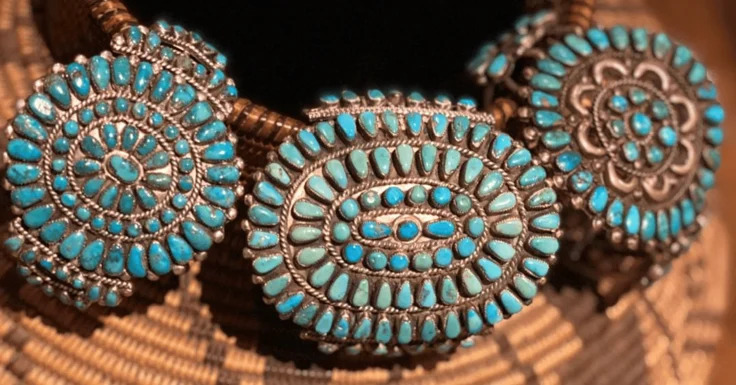
Native American jewelry is far more than decorative art. It represents centuries of cultural heritage, spiritual beliefs, skilled craftsmanship, and tribal identity. Each piece tells a story—about the land, the people, and the traditions passed down through generations.
What Is Native American Jewelry?
Native American jewelry refers to handcrafted adornments created by Indigenous artisans from tribes across North America, particularly the Southwest. These pieces often include:
- Necklaces
- Rings
- Bracelets
- Earrings
- Belt buckles and ceremonial pieces
Each tribe has its own distinct styles, techniques, and symbolic elements, making Native American jewelry highly diverse and culturally specific.
Historical Importance of Native American Jewelry
A Living Record of Indigenous History
Native American jewelry has been crafted for hundreds of years using materials available in the natural environment. Early jewelry was made from:
- Shells
- Stones
- Bone
- Wood
- Copper
With the introduction of silver in the 19th century, many tribes—especially Navajo, Zuni, and Hopi artists—adapted new techniques while preserving traditional designs.
Jewelry as Trade and Status
Historically, jewelry served as:
- A form of trade
- A symbol of wealth or leadership
- A marker of social or spiritual status
Rather than being purely ornamental, these pieces played an active role in community life.
Spiritual and Symbolic Meanings
One of the most significant aspects of Native American jewelry is its symbolism. Designs are rarely random.
Common Symbols and Their Meanings
- Turquoise – Protection, healing, and connection to the sky and water
- Bear – Strength, courage, and leadership
- Feathers – Spiritual guidance and freedom
- Thunderbird – Power, balance, and sacred energy
Each symbol may carry different meanings depending on the tribe and context, emphasizing the importance of cultural understanding.
Materials Used and Their Significance
Turquoise: The Heart of Native American Jewelry
Turquoise is one of the most valued stones in Native American jewelry. Many tribes believe it offers spiritual protection and brings harmony to the wearer.
Silver and Metalwork
Silver became a defining element in the late 1800s. Native artisans developed unique silversmithing techniques that are still respected today, including:
- Stamp work
- Overlay designs
- Hand-cast silver
These methods require years of experience and are often passed down within families.
Tribal Styles and Craftsmanship
Different tribes are known for distinct artistic approaches:
- Navajo Jewelry – Bold silverwork, large turquoise stones
- Zuni Jewelry – Intricate stone inlay and needlepoint designs
- Hopi Jewelry – Fine overlay techniques with symbolic imagery
Recognizing these styles helps buyers and collectors appreciate the expertise behind each piece.
Why Authenticity Matters
Authentic Native American and Southwestern style jewelry supports Indigenous artists and preserves cultural traditions. Genuine pieces are typically:
- Handmade
- Signed or hallmarked by the artist or tribe
- Sold by reputable dealers or directly by artisans
Buying authentic jewelry ensures respect for cultural heritage and prevents the spread of mass-produced imitations.
Why Native American Jewelry Still Matters Today
Native American jewelry remains relevant because it:
- Preserves Indigenous identity
- Supports Native-owned businesses
- Educates others about tribal history
- Serves as wearable cultural art
For many artisans, jewelry-making is not just a profession—it is a continuation of ancestral knowledge.
Final Thoughts
Understanding the significance of Native American jewelry allows us to appreciate it beyond its beauty. Each piece reflects deep cultural roots, spiritual meaning, and exceptional craftsmanship shaped by generations of lived experience.
When worn or collected with respect and awareness, Native American jewelry becomes more than an accessory—it becomes a meaningful connection to history, culture, and living tradition.