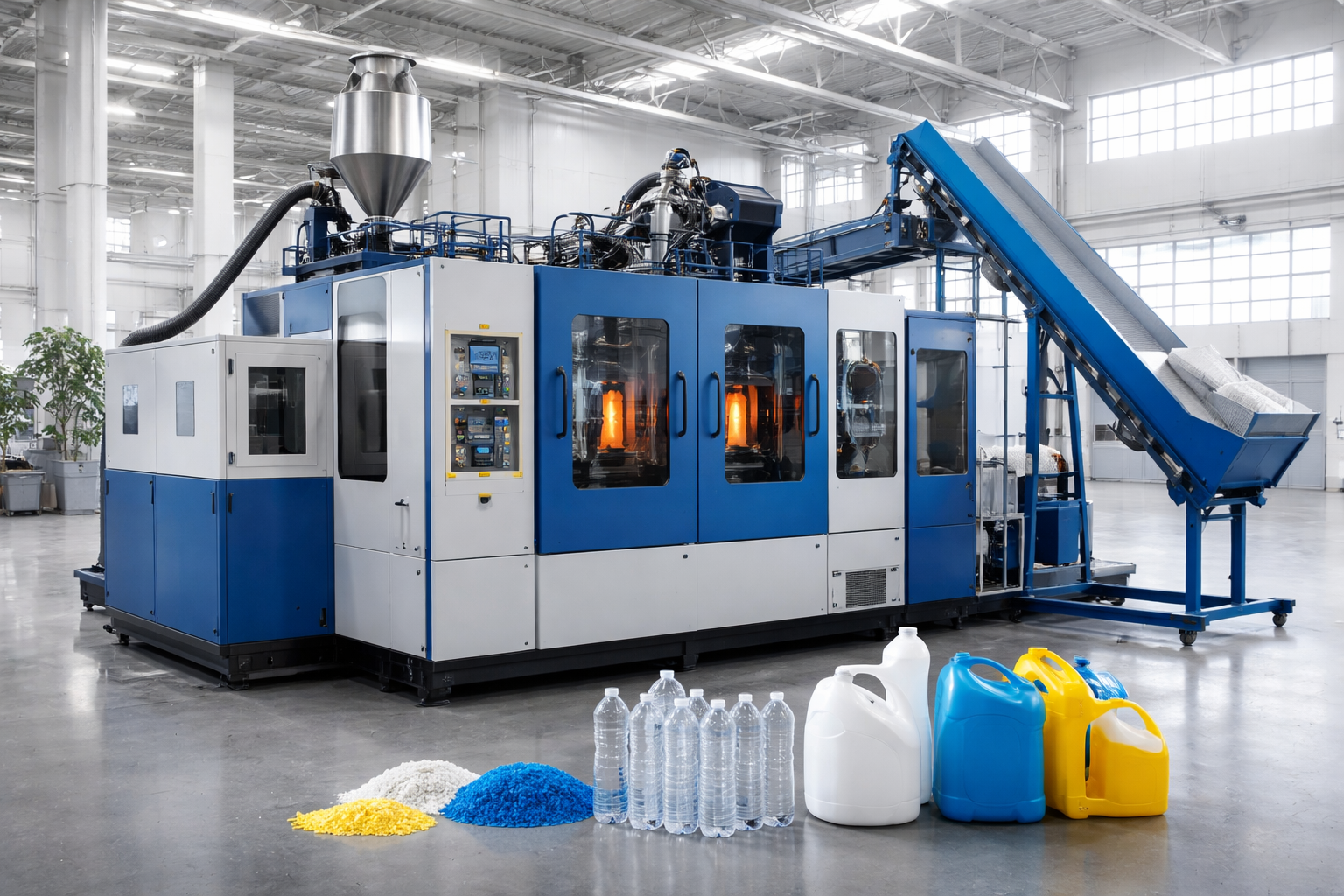
In the rapidly evolving world of plastic manufacturing, efficiency and precision are the cornerstones of profitability. Whether you are producing small pharmaceutical vials or large industrial drums, selecting the right blow molding machine is the most significant investment your facility will make.
As we move through 2026, the technology behind these machines has shifted toward higher automation, energy efficiency, and compatibility with recycled materials. This guide will walk you through the essential factors to consider when purchasing a blow molding machine to ensure your production line remains competitive and cost-effective.
Understanding the Core Types of Blow Molding Machines
Before diving into technical specifications, you must identify which process aligns with your product goals. While the primary keyword remains the blow molding machine, the “how” of the process varies significantly:
1. Extrusion Blow Molding (EBM)
This is the most common form of blow molding. It involves melting plastic and extruding it into a hollow tube (a parison). It is ideal for high-volume production of bottles, watering cans, and automotive parts. If you are working with HDPE, PVC, or PP, an EBM setup is likely your best bet.
2. Injection Blow Molding (IBM)
Used primarily for medical and small cosmetic containers, IBM provides superior control over the neck finish and weight of the product. It produces zero scrap and offers high precision, making it a favorite for the pharmaceutical industry.
3. Injection Stretch Blow Molding (ISBM)
If your goal is to produce PET bottles (like those used for carbonated beverages), you need an ISBM blow molding machine. This process “stretches” the plastic during the blow phase, which increases the tensile strength and clarity of the final container.
Key Factors to Consider Before Purchasing
Selecting industrial equipment requires more than just comparing price tags. You must evaluate the machine’s long-term operational costs and output quality.
Production Capacity and Cavitation
How many units do you need to produce per hour? A single-cavity machine might suffice for specialized, low-volume industrial parts, but high-speed consumer goods demand multi-cavity systems. Ensure the machine’s cycle time aligns with your annual production targets to avoid bottlenecks.
Material Compatibility and Sustainability
In 2026, sustainability isn’t optional-it’s a regulatory requirement in many regions. Ensure your blow molding machine is capable of processing Post-Consumer Recycled (PCR) resins. Some older models struggle with the inconsistent melt flow of recycled plastics; modern machines feature specialized screw designs to handle these variations without compromising product integrity.
Clamping Force and Wall Thickness Control
To prevent “flash” (excess plastic at the seams) and ensure a uniform finish, the clamping force must be sufficient for your mold size. Furthermore, look for machines with advanced parison programming. This allows the machine to adjust the wall thickness in real-time, saving material and ensuring the product is strong where it needs to be and thin where it doesn’t.
The Role of Automation and Industry 4.0
The modern blow molding machine is no longer a standalone piece of hardware; it is a node in a digital network. When shopping for equipment, look for features such as:
- Remote Diagnostics: Allows technicians to troubleshoot software issues without being on-site.
- Energy Recovery Systems: Modern machines can capture and reuse the heat generated during the melting process, significantly lowering utility bills.
- Integrated Leak Detection: High-end models now include automated testing stations that reject faulty bottles before they ever leave the conveyor.
Assessing Total Cost of Ownership (TCO)
The sticker price of a blow molding machine is only a fraction of the total cost. When evaluating your budget, factor in:
- Installation and Training: Does the manufacturer provide on-site setup?
- Maintenance Intervals: How often do the hydraulics or electric servos require servicing?
- Spare Parts Availability: If a critical component breaks, can you get a replacement in 24 hours, or are you looking at weeks of downtime?
Conclusion
Investing in a blow molding machine is a decision that will define your production capabilities for the next decade. By focusing on material versatility, energy efficiency, and the specific needs of your product geometry, you can choose a system that offers a fast return on investment and the flexibility to grow with market trends.
Frequently Asked Questions
Q: What is the average lifespan of an industrial blow molding machine?
A: With proper maintenance and regular software updates, a high-quality machine can last 15 to 20 years. However, many companies upgrade every 7–10 years to take advantage of newer, more energy-efficient technology.
Q: Can one blow molding machine use different types of plastic?
A: While some machines are versatile, most are optimized for specific resins (like PET vs. HDPE). Using a different material usually requires changing the screw, the heating profile, and sometimes the entire molding head.
Q: Are electric blow molding machines better than hydraulic ones?
A: Electric machines are generally more energy-efficient, quieter, and cleaner (no oil leaks), making them ideal for medical or food-grade environments. Hydraulic machines, however, often provide higher clamping forces for very large industrial parts at a lower initial cost.
Q: How do I determine the right size of the machine for my product?
A: You should look at the “shot size” (the maximum weight of plastic the machine can extrude at once) and the mold platen dimensions. It is always better to have a machine with a slightly higher capacity than you currently need to allow for future product variations.
Visit for news and updates at: quantirum.com