In a digital landscape where customers are bombarded with thousands of ads daily, business owners often ask me if printing is still relevant. It is a fair question. With social media algorithms changing weekly and email inboxes overflowing, digital fatigue is setting in. As someone who has run a printing floor and worked with countless diverse clients, I can tell you that the physical nature of print offers something digital simply cannot: trust. There is a sense of permanence and legitimacy when you hand someone a high-quality brochure that a fleeting Instagram post just can’t replicate.
While digital marketing captures attention, print marketing captures the imagination and grounds your brand in reality. It is the difference between seeing a picture of a meal and actually sitting down to eat it. At Laguna Digital, we have seen businesses transform their local reputation simply by upgrading the quality of their physical assets. Branding isn’t just a logo on a screen; it is the feeling a customer gets when they interact with your business, and print is the tactile bridge that makes that connection real.
The Psychology of Touch: Making Your Brand Real
There is a psychological concept called haptic memory, which suggests that touching an object leaves a deeper imprint on the brain than just seeing it. When a potential client holds your business card, they are subconsciously judging the quality of your services based on the quality of that card. A flimsy, lightweight card signals a lack of investment, whereas a thick, textured stock communicates stability and professionalism.
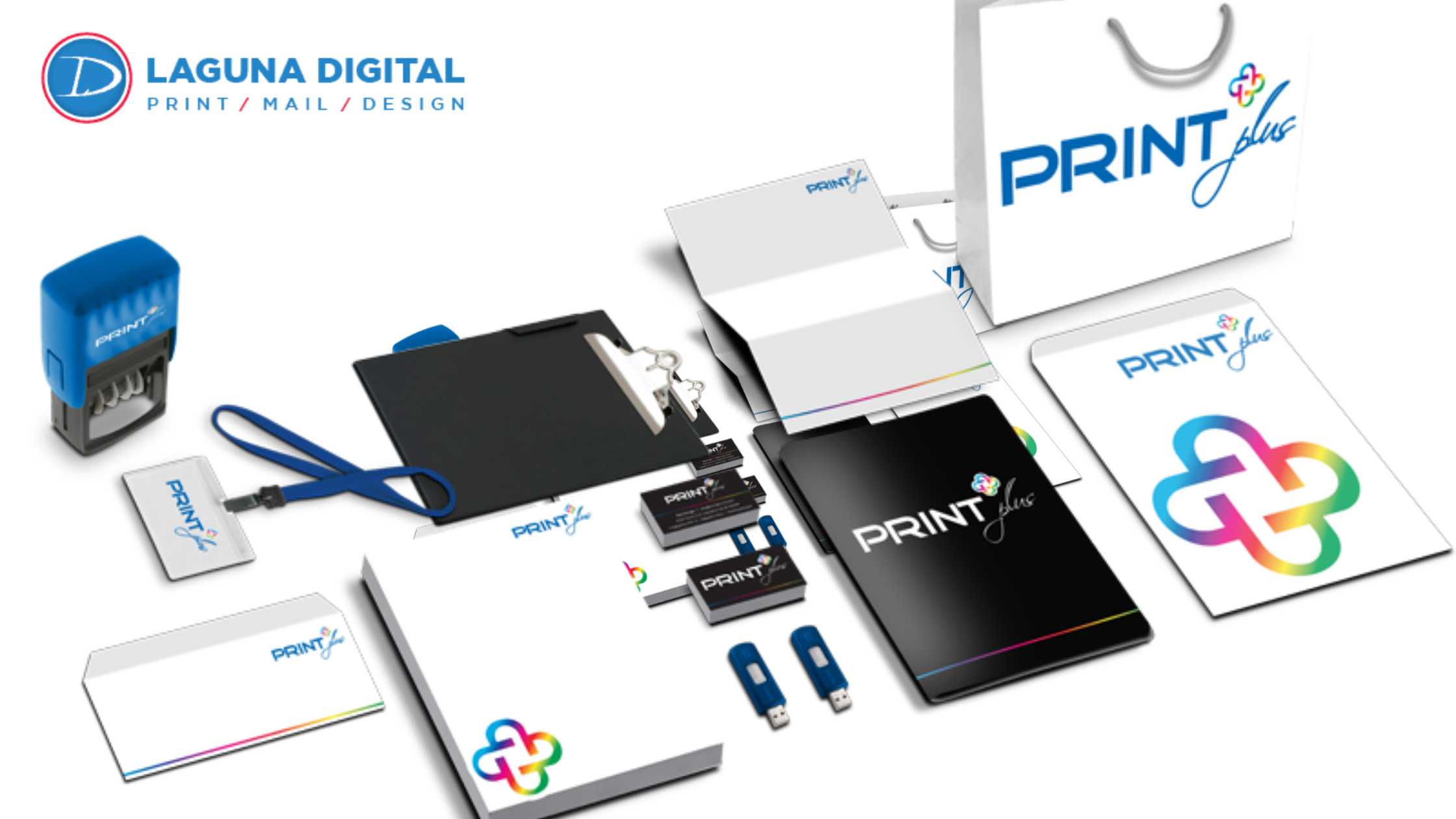
This is why we constantly emphasize the importance of business essentials like letterheads, envelopes, and presentation folders. These aren’t just administrative supplies; they are touch points. When you mail an invoice or a contract on premium paper, you are reinforcing your brand’s authority. It tells the client that you pay attention to the details, and if you care about your stationery, you likely care about your service delivery too.
We often see clients overlook the smaller details, like the utility of their cards. A business card has two sides, yet so many people leave the back blank. Utilizing creative card ideas such as adding appointment slots, a QR code, or a quick reference guide can turn a throwaway item into a tool your client keeps in their wallet. That retention is the ultimate goal of physical branding.
Dominating the Physical Landscape with Signage
While digital ads depend on a user being on a specific device at a specific time, large-format printing works for you 24/7. Think about your local area; the businesses that stand out are the ones with crisp, vibrant signage. A faded or peeling banner suggests a business that is struggling or doesn’t care, while bright, high-resolution graphics suggest a thriving enterprise.
We have helped many retail stores and event organizers revamp their presence using banners, posters, and signs that actually match their brand colors. Consistency is key here. If your website uses a specific shade of blue, your storefront window graphics need to match that blue exactly. This visual consistency builds recognition, which eventually turns into trust.
Effective, impactful signage acts as your silent salesperson. Whether it is a sidewalk A-frame catching foot traffic or a trade show backdrop that draws people across a crowded hall, these physical assets stake your claim in the real world. They prove you are established, local, and ready to do business.
The “Refrigerator Effect”: Longevity of Marketing Materials
One of the biggest advantages of print is its shelf life. We call it the “Refrigerator Effect.” If you send a promotional email, it is buried in five minutes. However, if you send a high-quality postcard or a well-designed menu, it often ends up pinned to a refrigerator or sitting on a desk for weeks. Every time the customer walks by, they see your brand. That creates dozens of impressions for the cost of a single print.
To achieve this longevity, however, the design and print quality must be top-tier. Marketing materials like trifold brochures, rack cards, and catalogs need to be visually appealing enough that people want to keep them. We often advise clients to include “evergreen” content information that stays useful for a long time to ensure the material isn’t discarded immediately.
This is where the flexibility of modern digital printing shines. Unlike the old days where you had to order 10,000 copies to get a good price, digital technology allows us to print shorter runs with incredible quality. This means you can update your brochures seasonally or target specific neighborhoods without breaking the bank, keeping your branding fresh and relevant.
Professionalism vs. The DIY Trap
We understand the temptation to save money. We have seen business owners try to print their own flyers on office inkjet printers, and the results are almost always underwhelming. The ink smears, the paper curls, and the colors look muddy. In the long run, this damages your brand more than the few dollars saved. Investing in professional printing is an investment in your reputation.
Professional equipment uses color management systems that ensure your “Coca-Cola Red” doesn’t come out looking pink. Furthermore, professional finishing options—like UV coating, matte lamination, or precise die-cutting add a layer of sophistication that home equipment simply cannot achieve. In a competitive market, these subtle cues of quality are what differentiate a premium service provider from a budget amateur.
Adapting to Future Trends
As we move through 2025 and look ahead, the printing industry is evolving, not dying. The businesses winning today are those combining digital data with physical print. This might mean sending a personalized direct mail piece that references a customer’s recent online purchase.
Staying on top of printing trends is vital. We are seeing a shift toward sustainable, textured papers and “smart” print that bridges the gap to digital via AR (Augmented Reality) or dynamic QR codes. Your brand needs to look modern, and using outdated paper stocks or old-fashioned design layouts can make your business feel behind the times.
Choosing the Right Partner
If you are feeling overwhelmed by paper weights, bleeds, and resolution requirements, you are not alone. That is why having a printing partner is better than just finding a cheap online vendor. A partner catches mistakes before they hit the press. We check files to ensure images aren’t pixelated and that text isn’t too close to the edge.
If you have a project in mind or just want to audit your current branding materials, we encourage you to contact us. We can look at what you are currently using and suggest upgrades that fit your budget and boost your brand image.
FAQs
Why does my printed branding look different than it does on my computer screen?
Screens emit light using RGB (Red, Green, Blue), which can display very bright, neon-like colors. Printers use CMYK (Cyan, Magenta, Yellow, Black) ink to reflect light. Some bright screen colors cannot be perfectly replicated in ink. A professional printer helps adjust your files to get the closest possible match so your branding remains consistent.
Is print marketing still effective for online businesses?
Absolutely. In fact, it can be more effective because it is less common. Online businesses using direct mail or including high-quality package inserts with their shipments create a “premium” unboxing experience that encourages repeat orders and social media sharing.
What is the most important print item for a new business?
Start with a high-quality business card. It is often the first physical exchange you have with a partner or client. After that, focus on whatever signage or marketing collateral (brochures/flyers) is most relevant to how you meet your customers.
How does paper quality impact brand perception?
Heavier paper stocks (measured in points or pounds) imply durability and value. If a restaurant menu is printed on flimsy paper, customers might subconsciously expect low-quality food. Printing on sturdy, water-resistant synthetic paper or heavy cardstock elevates the perceived value of your offering.
Can I print professional marketing materials in small quantities?
Yes. With modern digital printing technology, you can print as few as 50 or 100 brochures with professional quality. This is great for A/B testing different designs or for small businesses that don’t have the storage space for thousands of copies.
Conclusion
In a world that is increasingly virtual, the businesses that succeed are the ones that can bridge the gap between the digital and the physical. Professional printing gives your brand a body and a voice in the real world. It builds trust through touch, captures attention through visibility, and creates lasting impressions that digital ads simply cannot achieve.
Your branding is the face of your business don’t let it fade into the background with poor-quality materials. Invest in print that speaks to the quality of your work. For more insights on how to elevate your business presence and stay ahead of industry trends, be sure to explore our blog.