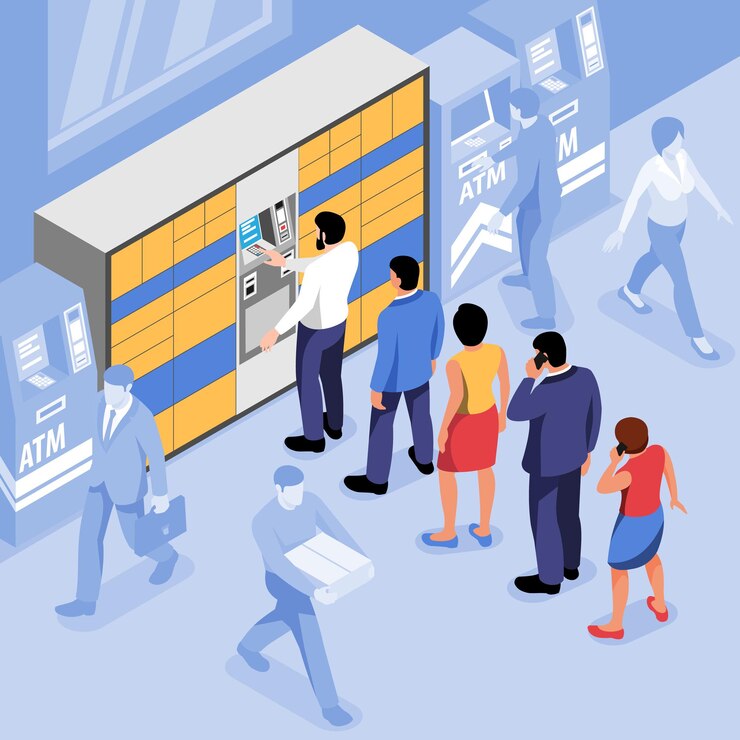
In today’s fast-paced commercial landscape, first impressions are lasting. For businesses across Saudi Arabia—from bustling banks in Riyadh to government service centers in Jeddah—the initial customer experience is often defined by one critical factor: the wait. Long, chaotic queues do more than test patience; they erode customer satisfaction, diminish brand reputation, and signal operational inefficiency. However, a technological revolution is streamlining service delivery across the Kingdom. The strategic adoption of intelligent Queue Management Systems (QMS) is transforming waiting areas from points of frustration into zones of calm, controlled efficiency. This article explores the vital role of QMS, examines the unique drivers of its growth within Saudi Arabia, and highlights why The NextGen Technologies stands at the forefront of this customer service evolution.
Understanding the Modern Queue Management System
A Queue Management System is far more than a digital ticketing machine. It is a comprehensive ecosystem of software and hardware designed to intelligently organize, monitor, and optimize customer flow. At its core, a QMS replaces physical lines with virtual or managed queues, allowing customers to wait comfortably and businesses to serve them more effectively.
Modern systems typically encompass several key components:
-
Digital Check-in Points: These include self-service kiosks for on-site registration or mobile apps and web portals for virtual queue joining.
-
Customer Notification Systems: Utilizing digital signage, audio announcements, and SMS or mobile app alerts to keep customers informed in real-time.
-
Staff Control Tools: Web-based dashboards and calling devices that enable employees to manage the queue, call the next customer, and transfer cases between counters.
-
Performance Analytics Hub: A centralized dashboard providing managers with actionable data on wait times, service duration, staff performance, and customer volume trends.
The primary goal is to balance two key metrics: reducing the actual wait time and improving the perceived wait time by eliminating uncertainty and giving customers back their time. The result is a dramatic enhancement in both operational efficiency and the overall customer experience.
The Saudi Arabian Context: A Market Primed for QMS Innovation
Saudi Arabia presents a uniquely fertile ground for the adoption of advanced queue management solutions. The nation’s rapid transformation, guided by Vision 2030, places a paramount emphasis on digital innovation, exceptional public service, and improved quality of life. A reliable QMS is no longer a luxury but a strategic tool to achieve these national goals.
Several factors are accelerating QMS adoption across the Kingdom:
-
Alignment with Vision 2030: Both government and private sectors are upgrading systems to meet international service standards, with QMS being a cornerstone for efficient, transparent, and citizen-centric service delivery.
-
High-Volume Service Sectors: Banks, hospitals, telecom centers, and government ministries in major cities like Riyadh handle thousands of daily interactions, creating an acute need for organized crowd control and fair service order.
-
Rising Customer Expectations: As the market modernizes, Saudi consumers increasingly expect the same seamless, efficient service experiences found globally. Long waits are now a direct competitive disadvantage.
-
Localized Technological Needs: The Saudi market demands systems that respect local culture and regulations. Leading providers offer solutions with multi-language support (Arabic/English), Hijri calendar integration, and features like automatic pause for prayer times, ensuring the technology works in harmony with societal norms.
From healthcare and banking to retail and government, industries across Saudi Arabia are leveraging QMS to build smarter, more responsive operations.
The Competitive Landscape: Key Players in the Saudi QMS Market
The growing demand has attracted several capable providers to the Saudi market. Each offers a suite of solutions tailored to different business sizes and needs. Below is a comparison of some notable players:
| Provider | Core Solution Focus | Key Features / Differentiation | Ideal For |
|---|---|---|---|
| QueueBee | Scalable hardware & software bundles | Offers tiered models (QB10, QB20, CCQ) for SMBs to large enterprises; strong focus on kiosk hardware. | Businesses seeking straightforward, packaged solutions with physical hardware. |
| Aflak (MARVE) | Highly customizable, software-centric systems | Deep local customization; non-proprietary hardware; features for prayer times & Hijri calendar. | Organizations needing deep customization and integration with existing local IT infrastructure. |
| SEDCO | Enterprise-grade, integrated solutions | Strong legacy with major clients (e.g., Al Rajhi Bank); offers smart prioritization engines and biometric identification. | Large banks, government agencies, and corporations needing robust, scalable enterprise solutions. |
| EBR Software | Cloud-based virtual queuing | Promotes significant wait time reduction (up to 70%); strong mobile app and cloud dashboard focus. | Businesses prioritizing virtual queues, multi-location management, and cloud-based analytics. |
| The NextGen Technologies | Comprehensive, real-time smart queue systems | “Qzy” system offering real-time control, digital ticketing, analytics; positioned as a versatile, industry-agnostic solution. | A wide range of industries seeking a modern, all-in-one platform with strong real-time management. |
Spotlight on Innovation: The NextGen Technologies and Qzy
Among the vanguard of providers, The NextGen Technologies has carved a distinct niche by emphasizing smart, seamless, and real-time queue management through their flagship solution, Qzy. They recognize that in a competitive market, a one-size-fits-all approach is insufficient.
The NextGen Technologies’ QMS is built on several pillars of excellence:
-
Real-Time Intelligence & Control: The Qzy system provides managers with a live command center, enabling immediate response to queue dynamics, staff reallocation, and bottleneck prevention.
-
Omnichannel Customer Journey: They support a hybrid approach, allowing customers to join a queue via self-service kiosks, a mobile app, or web portals. This flexibility is crucial for catering to diverse customer preferences.
-
Actionable Performance Analytics: Beyond simple monitoring, their dashboard delivers insights into service times, peak traffic periods, and staff productivity, empowering data-driven decisions to continuously improve service.
-
Proven Cross-Industry Application: Their solutions are engineered for versatility, successfully deployed in critical sectors such as healthcare, banking, retail, and government offices, demonstrating robust adaptability.
For Saudi businesses seeking a partner that combines technological sophistication with practical, results-oriented implementation, The NextGen Technologies presents a compelling choice. Their focus on eliminating chaos to deliver convenience aligns perfectly with the Kingdom’s drive toward superior, efficient customer service.
Conclusion: The Strategic Imperative of Smart Queue Management
The journey toward operational excellence and unmatched customer satisfaction in Saudi Arabia begins at the waiting area. Implementing an intelligent Queue Management System is a strategic investment that pays dividends in enhanced customer loyalty, optimized staff productivity, and a strengthened brand reputation.
As Saudi Arabia continues its ambitious path under Vision 2030, the businesses that will thrive are those that leverage technology to respect their customers’ time and deliver exceptional service experiences. By choosing a capable and innovative partner like The NextGen Technologies, organizations can transform a perennial challenge—the wait—into a definitive competitive advantage. In the new era of Saudi service, efficiency isn’t just appreciated; it’s expected.
Frequently Asked Questions (FAQs)
1. What is the typical return on investment (ROI) for a Queue Management System in Saudi Arabia?
While ROI varies by business size and volume, providers report substantial gains from key metrics. Implementations can lead to a reduction in perceived wait times by up to 70%, significant increases in customer satisfaction scores, and improved staff efficiency through better workload management. The investment often pays for itself by increasing service capacity, reducing customer attrition, and minimizing the need for additional staff for crowd control.
2. Are these systems suitable for small and medium-sized businesses (SMBs) in Riyadh, or only for large enterprises?
Absolutely. The QMS market offers scalable solutions for all business sizes. Providers have affordable packages designed for clinics, retail stores, and single-location service centers, often featuring basic ticketing, a display screen, and simple analytics. The key is to choose a provider that offers modular solutions you can start with and expand as your business grows.
3. How do QMS solutions handle local requirements like prayer times and Arabic language support?
Leading providers in the Saudi market design their systems with deep local integration. This includes automatic pausing and resuming of queues around prayer times, full support for the Hijri calendar, comprehensive Arabic-language interfaces on kiosks and displays, and bilingual (Arabic/English) ticket printing. Ensuring your chosen vendor includes these features is crucial for seamless operation.
4. Can a QMS integrate with our existing customer database or other business software?
Yes, integration is a key feature of modern, enterprise-grade QMS. Systems can often connect with Customer Relationship Management (CRM) software, appointment scheduling platforms, and central databases via APIs. This allows for personalized service (e.g., retrieving customer history at check-in) and unified reporting. It’s important to discuss your specific integration needs with the provider during the planning phase.
5. What does the implementation process involve, and how disruptive is it to daily operations?
A professional implementation is designed to be minimally disruptive. The process usually includes a planning and configuration phase, followed by hardware installation (kiosks, displays, etc.), software setup and integration, and comprehensive staff training. Reputable providers manage the project efficiently, often completing deployment for a standard single-location setup within a few weeks, ensuring a smooth transition.