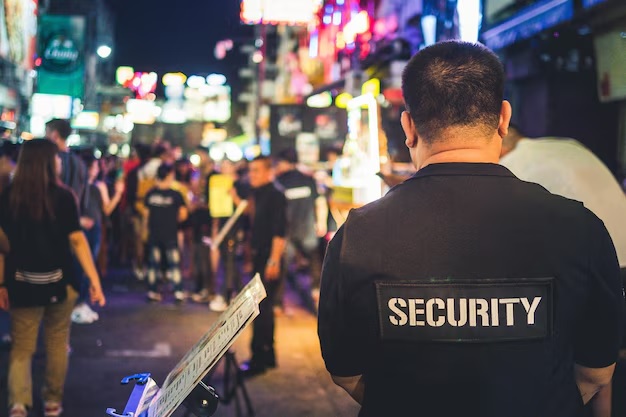
Metro cities face unique security challenges that require more than mere routine vigilance. A heavily populated Delhi needs guards who can respond promptly and adapt to unpredictable situations, given its complex transport systems and ever-expanding commercial hotspots. Because of that, any training framework should be well-structured, covering enough depth to prepare personnel for this challenging environment by any Delhi security guard company.
Understanding the Urban Risk Landscape
Urban risks are different from those of small towns. High footfall, mixed-use neighbourhoods, and continuous mobility of the public lead to thefts, trespassing, accidents, and disputes.
That would also mean that the security personnel in Delhi have to be prepared for any eventuality regarding traffic, congregation of people, and sudden evacuation plans. This makes behavioural awareness and rapid decision-making just as important as physical readiness.
Increasingly, the focus has been on the personal security guard price to reflect the expectations of consumers about specialised training and preparedness.
Foundational Training: A Discipline and Situational Awareness Trend
Preliminary training emphasises discipline, timeliness, and powers of observation. Training is offered to guards to identify suspicious behaviour and to scan the surroundings for potential threats; action will be conducted accordingly depending on the perceived level of threat.
Early introduction of physical fitness routines includes endurance-enhancing drills that keep guards going through long hours of patrolling or monitoring entry points.
Another vital component is communications training. Guards are trained to communicate a specific message in an articulate, polite, yet firm way to ensure compliance without conflict.
Technical Skills for High-Density Public Spaces
The modern metro cities rely extremely on the electronic security systems. Thus, the technological training has emerged as a focus point in guard preparation.
They are trained in the operation of CCTV cameras, biometric access controls, alarm systems, and two-way radios. This will enable them to communicate effectively with control rooms and supervisors.
Practical drills are also a very intrinsic part of the program. Intrusion scenarios, fire alarms, medical emergencies, and stalled lifts are some of the simulations carried out. Repetitive training enables guards to tackle actual emergencies with composed finesse.
It also deals with techniques in the management of crowds: guards are trained to handle queues and dispersal when there is congestion, and how to prevent panic during high-pressure hours in offices, malls, and transport centres.
Legal and Ethical Preparedness
Legal boundary understanding would come under professional conduct. A few of the rules training on self-defence, reasonable force, cooperation with police and detention protocols that the guards undergo or receive in training are hereby stated.
Ethical guidance helps guards treat everyone justly, neutrally, and without aggression if necessary. Such training in a diverse, busy urban environment will deter minor conflicts from escalating.
Soft Skills and Conflict Resolution
Security activities today go beyond the physical protection of facilities; moreover, guards are expected to act as frontliners in various settings, and interpersonal skills are considered a prerequisite.
Training will involve techniques of conflict de-escalation, calm dialogue, and ways of offering help to the person without intrusion. In a high-density metro setting, it provides the skills needed for keeping harmony flowing and avoiding unnecessary disputes.
Crest Force India’s Emphasis on Training
Crest Force India offers multi-tiered training methodologies that match the various challenges posed by metro cities. Emphasis will be on discipline and physical fitness, technology management, and behavioural training. Practical simulations and scenario exercises ensure that the guards also emerge with quick-response capabilities so essential in complicated urban environments. By doing so, it primes guards not only for routine duties but for high-pressure situations when alertness and decisive action become the need of the hour.
Conclusion
The personal security guard’s price is somewhat justified by the level and type of training he has received: the one who has received extensive technical, legal, and behavioural preparation brings greater value and understanding to residential and commercial establishments. A Delhi security guard company invests in all-around training for personnel who can appreciate the changing vulnerabilities in metro settings.
Guards of this nature remain better at incident prevention, maintaining emergency situations, and sustaining orders with less supervision. After all, the quality behind the uniform is what will define good urban security. This kind of preparation will finally allow the guard to deal with the intricacies and the high-speed surroundings that define Delhi.