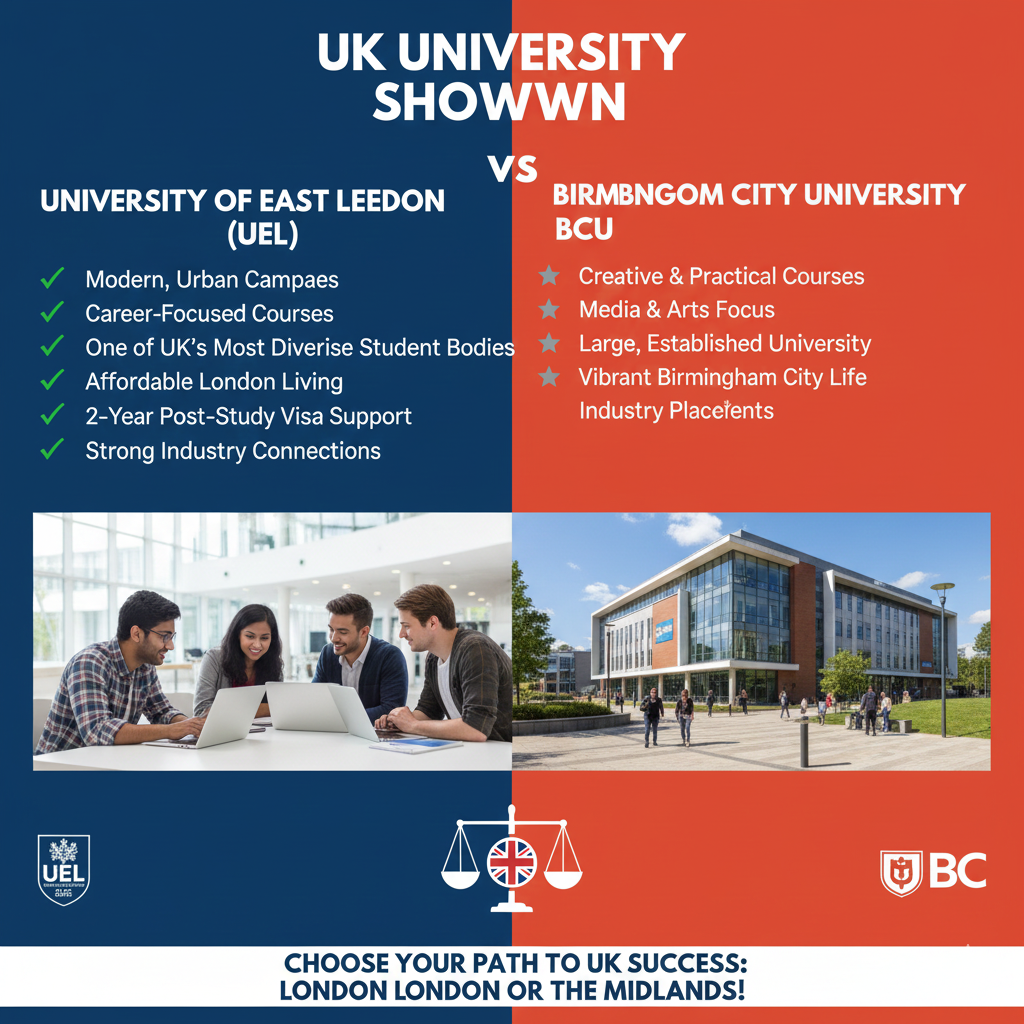
The UK is becoming the destination for higher education, real-world skills, and career opportunities for Indian students, who in great numbers are opting for British universities. The University of East London (UEL) and Birmingham City University (BCU) are both modern, practical universities that attract numerous international applicants. However, some factors typically make UEL a better fit for many Indian students, such as more accessible admission, being located in the middle of London’s global activity, and more tailored assistance for our community.
Admission Accessibility and Acceptance Rates
Securing an offer is usually the first big concern for Indian students. UEL has a fairly open door, with acceptance rates around 55-60% overall, though for international applicants it often sits closer to 45-55% based on the course and intake. That gives breathing room for students with good, solid grades rather than needing perfect ones.
BCU lands in a similar spot, with rates typically 50-53%, sometimes a touch higher for certain programs. Both are moderately selective, but students who choose University of East London with a high acceptance rate tend to feel less stressed, especially with decent but not standout academics.
You apply directly or via UCAS for undergrads at either, and there are rolling options that help if you’re cutting it close.
Location and Access to Opportunities
Location really shapes your daily life and job prospects. UEL puts you in East London, proper capital territory, close to powerhouses like Canary Wharf and the City, packed with finance, tech, and creative companies.
BCU is in Birmingham, the UK’s lively second city, with solid connections to manufacturing, arts, health, and engineering. It’s got its own energy and growth, but not the same sheer volume of global firms as London.
For anyone keen on networking while studying, UEL’s London position gives a real boost in those high-demand sectors.
Cost of Living Considerations
Budgets hit hard for families in India. London’s no secret, it’s pricier, with student living costs (not counting tuition) usually £1,500-£2,000 a month, mostly down to housing.
Birmingham comes in cheaper, often £1,000-£1,500 monthly, about 30-40% less in total.
Both have scholarships, bursaries, and on-campus work to help, so good planning makes a difference either way.
Support for International and Indian Students
Both campuses draw people from over 100 countries, keeping things diverse and lively. UEL steps it up for Indian students with a new partnership from late 2025 with the National Indian Students and Alumni Union (NISAU UK). It covers welfare, employability, belonging, pre-arrival tips, events, and ties to recruiters like TCS, Infosys, HSBC, and more.
BCU has reliable general support, orientations, an Indian society, career help, but not that specific Indian-focused link.
Top choices at UEL for internationals often include MSc Data Science, Computer Science, MBA, and Business Management, fields hot in India or the UK market. BCU stands out in creative and hands-on areas like fashion, media, nursing, and health courses.
Career Prospects and Post-Study Options
The UK’s Graduate Route visa is the same for grads from both: two years of work rights (three for PhDs) as long as the university has sponsor status, which they do. Note that from 2027, it might drop to 18 months for most non-PhD grads, but current rules hold for now.
UEL’s London spot makes spotting placements and starter jobs easier during studies, helping bridge to full-time work. Both have good employability numbers from hands-on teaching and industry ties.
Making the Right Choice
No clear winner overall, it depends on priorities. Smoother entry, London networking, and targeted Indian support often point to UEL, letting students choose University of East London with high acceptance rate for an easier launch.
Lower costs, a buzzing Midlands vibe, and strengths in creative or health fields suit BCU better. Folks thinking long-term might look at applying for Birmingham City University in 2026 to secure that affordability before any rises.
In the end, both give Indian students practical training and strong prep for blending quality education with career steps. It comes down to fitting the university to your aims and wallet.