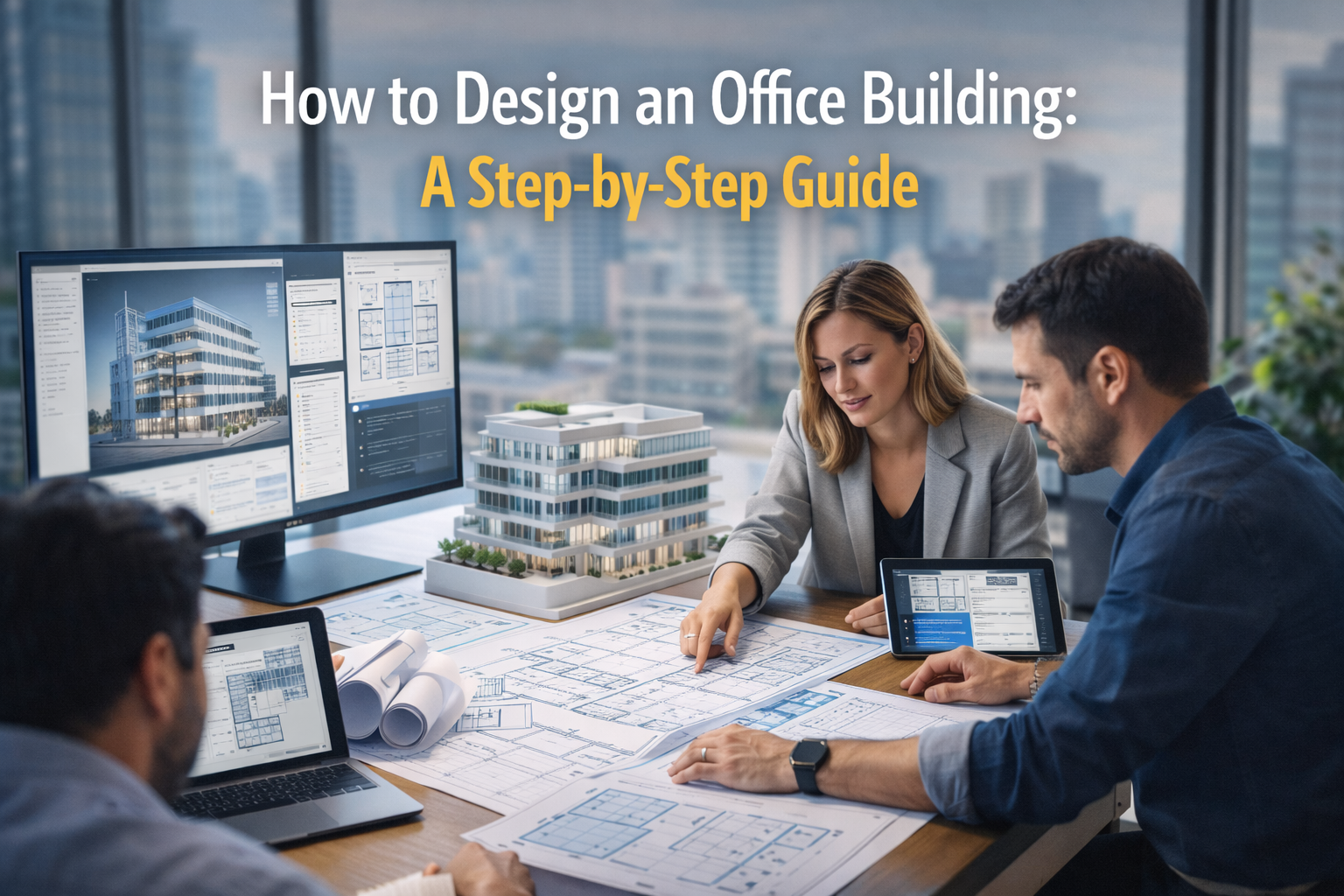
The task of designing an office building is not just a matter of creating the workspace and making it functional, it is a matter of creating an atmosphere in which productivity, efficiency, and innovativeness will flourish. Whether you’re planning a small corporate hub or a large multi-floor commercial facility, understanding the commercial design process is essential. In this guide, we break down how to design an office building step by step, so developers, business owners, and designers can work seamlessly together to bring a vision to life.
Setting the Purpose and Vision
The first step in any successful office building design project is identifying its purpose. Will the space be able to facilitate working together? Private offices? Hybrid teams? Tech operations? Retail?
Every decision in the future is guided by a clear vision.
At this stage, the stakeholders are supposed to:
- Establish business objectives and space requirements of the long term.
- Take into account workflow tendencies and group dynamics.
- Find out preferred aesthetics and brand identity.
This foundational clarity ensures the entire commercial building design guide aligns with both functionality and organizational culture.
Carry out Professional Office Space Planning
One of the most important initial steps is the office space planning. It dictates the way individuals circulate in the building, the interaction between departments and the effectiveness of the available space in operating the building.
Key elements include:
- Calculation of needed square space.
- Reservation of meetings, reception, working stations, storage and common areas.
- Future expansion planning.
- Combining accessibility and ergonomic designs.
Smart space planning maximizes comfort and movement, minimizes the inefficiency in operations, and makes all the square feet serve the purpose of the building.
Building Design and Building Layout
When the space requirements are known, architects start giving the office building a physical appearance. This stage involves schematic design, conceptual drawings and architectural models.
The design elements may tend to consist of:
- Edifice outline and plan.
- Movement routes and floor plans.
- Natural lighting measures.
- Heating and ventilation and mechanical factors.
- Energy efficiency planning
A powerful architectural design makes a working place not only efficient but also inspiring.
Combine Technical Systems and Engineering
Trailing behind all these eye-catching office structures are the engineering systems that ensure that the buildings are operational. In the stage of planning the office construction, the engineers work in collaboration with architects in order to integrate the basic systems that include:
- Lighting and electrical systems.
- The fire safety, plumbing, and HVAC.
- Telecommunication and IT infrastructure.
- Access control systems and security.
- Sustainability and energy efficiency.
This combined method guarantees that the building is up to date, safe and technologically future-proof.
Select Materials, Interiors and Finishes
Interior design is a crucial factor at the workplace. Mood, brand presence, and employee satisfaction are determined by colors, textures, materials and finishes.
Key considerations include:
- Strong building flooring and wall.
- Brand-aligned color schemes
- Noise reduction in the workplace.
- Natural materials and greenery, biophilic.
- Furniture: functional furniture, custom millwork.
Considerate interior selections make architectural plans usable, attractive and enjoyed by the employees.
Adhere to Design-Build Office Construction Approach
The design-build office construction method is becoming popular among more companies due to its ability to simplify work processes. Rather than employing different design and construction teams, a single team is employed to handle the whole project. This removes misunderstanding, lessens time wastage and in many cases, cost is minimized.
Benefits include:
- Faster project delivery
- Single point of responsibility.
- Better cooperation and budgeting.
- Better quality control
This will make the vision remain the same at the point of conception to the end.
Monitor Construction and Final Expertise
After the constructions commence, project managers monitor schedules, budgets, inspection, and everyday activities. Activities to be performed at this stage are:
- Structural completion
- Installation of mechanical and electrical systems.
- Interior finishing
- Quality inspections
- Final space walkthroughs
Effective project management will make the new office building completed on time and will be used.
Final Thoughts
The office building is a multi-layered process that involves strategic planning of office space, good architectural understanding and integration that necessitates a coordinated effort. Using a well-defined roadmap, step-by-step process, i.e., vision-setting to construction, companies may develop efficient and beautiful workplaces that promote growth and attract talents.
Whether you’re developing a new commercial hub or redesigning an existing space, this commercial design process ensures every detail contributes to a workplace built for the future.