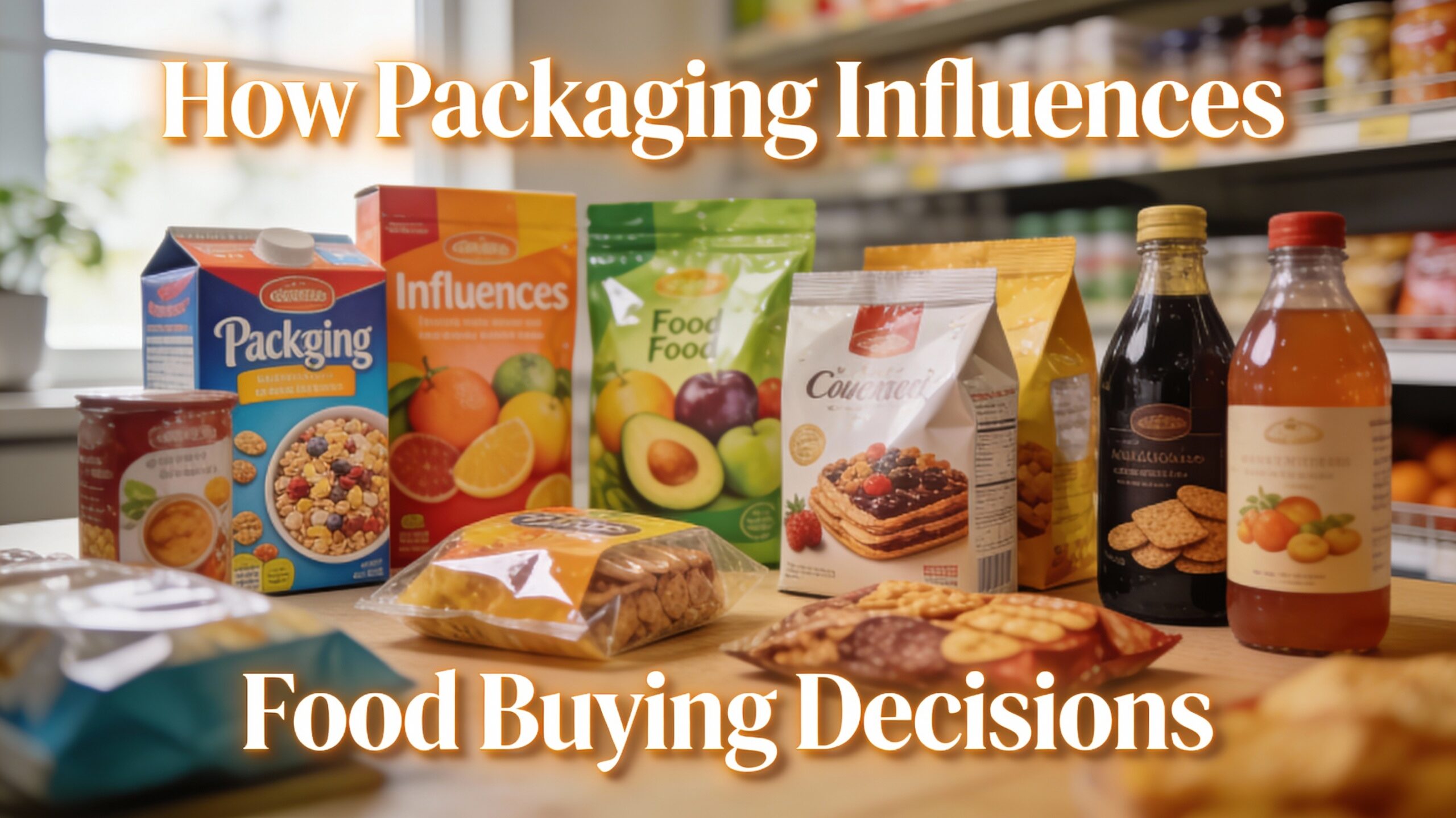
Packaging plays a direct role in how people choose food products. Before taste price or brand loyalty packaging is what shoppers see first. In crowded grocery aisles packaging acts as the silent salesperson. It builds trust, communicates quality and influences buying decisions within seconds.
This article explains how packaging affects food buying behavior using real world consumer psychology and industry experience. The focus is on clarity usability and trust not hype.
First Impression Shapes Buying Choices
Most food buying decisions are made quickly. Shoppers scan shelves not labels. Packaging that looks clear clean and professional instantly signals value.
Good packaging helps customers answer three questions fast
What is it
Is it safe
Is it worth buying
If packaging fails at any one of these points the product is skipped.
Visual clarity matters
Consumers prefer packaging that is easy to understand. Overdesigned packs confuse buyers. Clear visuals and readable text perform better especially for food.
Key visual elements that influence choice
- Clear product name
- Easy to read fonts
- Logical color use
- Visible food cues like grains snacks or fruits
Packaging that looks honest builds trust faster than packaging that looks clever.
Color Psychology in Food Packaging
Color strongly affects appetite and perception. People associate colors with taste freshness and quality based on experience.
Common color effects in food packaging
- White suggests cleanliness and purity
- Brown suggests natural and organic
- Red increases appetite and urgency
- Green suggests health and freshness
- Yellow signals energy and value
Color should match the food type and brand promise. A mismatch creates doubt even if the product is good.
Packaging Builds Trust and Safety Perception
Food buyers care deeply about safety even when they do not say it out loud. Packaging is the main signal of hygiene and protection.
Packaging that looks weak, damaged or poorly sealed reduces confidence instantly.
Trust building packaging features
- Strong material feel
- Tight seals
- Food grade appearance
- Clean edges and finishes
For items like snacks, candies and baked goods, clear protection such as custom cellophane bags wholesale allows customers to see the product while still feeling safe. Visibility combined with protection increases confidence and conversion.
Convenience Drives Repeat Purchases
Buying once is not enough. Packaging must support repeat buying. If packaging is hard to open store or reseal customers remember the frustration.
Convenience factors that influence buying decisions
- Easy opening
- Resealable options
- Stackable shape
- Storage friendly size
Busy households prefer packaging that saves time and reduces mess. Practical packaging often outperforms premium looking but inconvenient designs.
Information That Matters to Buyers
Modern consumers read packaging more than before. They look for information that helps them make quick decisions.
Most important information buyers look for
- Ingredients
- Allergens
- Serving size
- Storage instructions
- Freshness cues
This information must be clear, not hidden. Crowded labels reduce trust. Simple layouts increase credibility.
Packaging and Brand Recognition
Consistent packaging builds memory. When shoppers recognize a pack they trust they stop comparing and buy faster.
Strong packaging branding includes
- Consistent colors
- Same logo placement
- Familiar shape
- Repeated visual elements
For example breakfast brands rely heavily on custom cereal boxes to create shelf recognition. Shoppers often choose the box they remember, not the one with the lowest price.
Emotional Connection and Storytelling
People buy food emotionally then justify logically. Packaging helps create that emotional link.
Packaging storytelling can include
- Origin of ingredients
- Family brand story
- Quality promise
- Ethical sourcing message
Simple honest stories work better than marketing language. Consumers value authenticity especially in food.
Shelf Impact and Competitive Advantage
On a crowded shelf packaging competes visually. The product with the clearest message usually wins.
Factors that improve shelf impact
- Bold but simple design
- Clear differentiation
- Strong contrast with competitors
- Visible product category cues
Packaging should stand out while still fitting category expectations. Too different can confuse buyers.
Table Packaging Elements and Buyer Impact
| Packaging Element | Buyer Reaction | Purchase Impact |
| Clear design | Builds trust | Higher conversion |
| Strong material | Feels safe | Reduces hesitation |
| Easy opening | Feels convenient | Increases repeat buys |
| Consistent branding | Feels familiar | Builds loyalty |
| Visible product | Feels honest | Improves confidence |
This table shows how practical packaging choices directly affect buying behavior.
Sustainability and Buying Decisions
Eco awareness affects buying especially among younger consumers. Packaging that looks wasteful can turn buyers away.
Sustainability cues buyers notice
- Recyclable look
- Minimal excess material
- Natural colors
- Simple structure
Packaging does not need loud eco claims. Subtle responsible design is often enough to influence decisions positively.
Final Thoughts
Packaging is not decoration. It is a decision making tool. It influences trust, safety , emotion and convenience all at once.
Food brands that invest in smart packaging design see better shelf performance, stronger brand loyalty and higher repeat sales. Clear honest and practical packaging consistently wins over flashy designs.
When packaging aligns with buyer expectations the product sells itself.