Anyone who has worked on a bathroom, kitchen, or poolside project has seen it happen. The tiles look perfect on day one. A few months later, there’s a hollow sound, hairline cracks, or worse, tiles lifting at the edges. Honestly, it’s frustrating, especially when the surface looked fine during installation. In most cases, the issue isn’t the tile. It’s the tile bond underneath.
Tile bond plays a far bigger role in wet installations than many people realize. Water exposure, humidity, and daily cleaning routines change how adhesives behave. This article explains why waterproof tile bond matters, where failures usually begin, and how choosing the right tile bonding solution protects installations long after the work is done.
Why Wet Installations Are a Different Challenge Altogether
Wet areas don’t behave like dry rooms. Moisture finds its way into gaps, joints, and substrates, even when things look sealed on the surface. Over time, this moisture works against the tile bond.
From experience, these environments create consistent pressure on the bonding layer:
- Constant moisture weakens adhesion strength if the tile bond is not designed for wet areas
- Water seepage beneath tiles slowly breaks down standard tile adhesive
- Temperature changes cause expansion and contraction, stressing the bond
- Poor substrate preparation makes moisture problems worse, not better
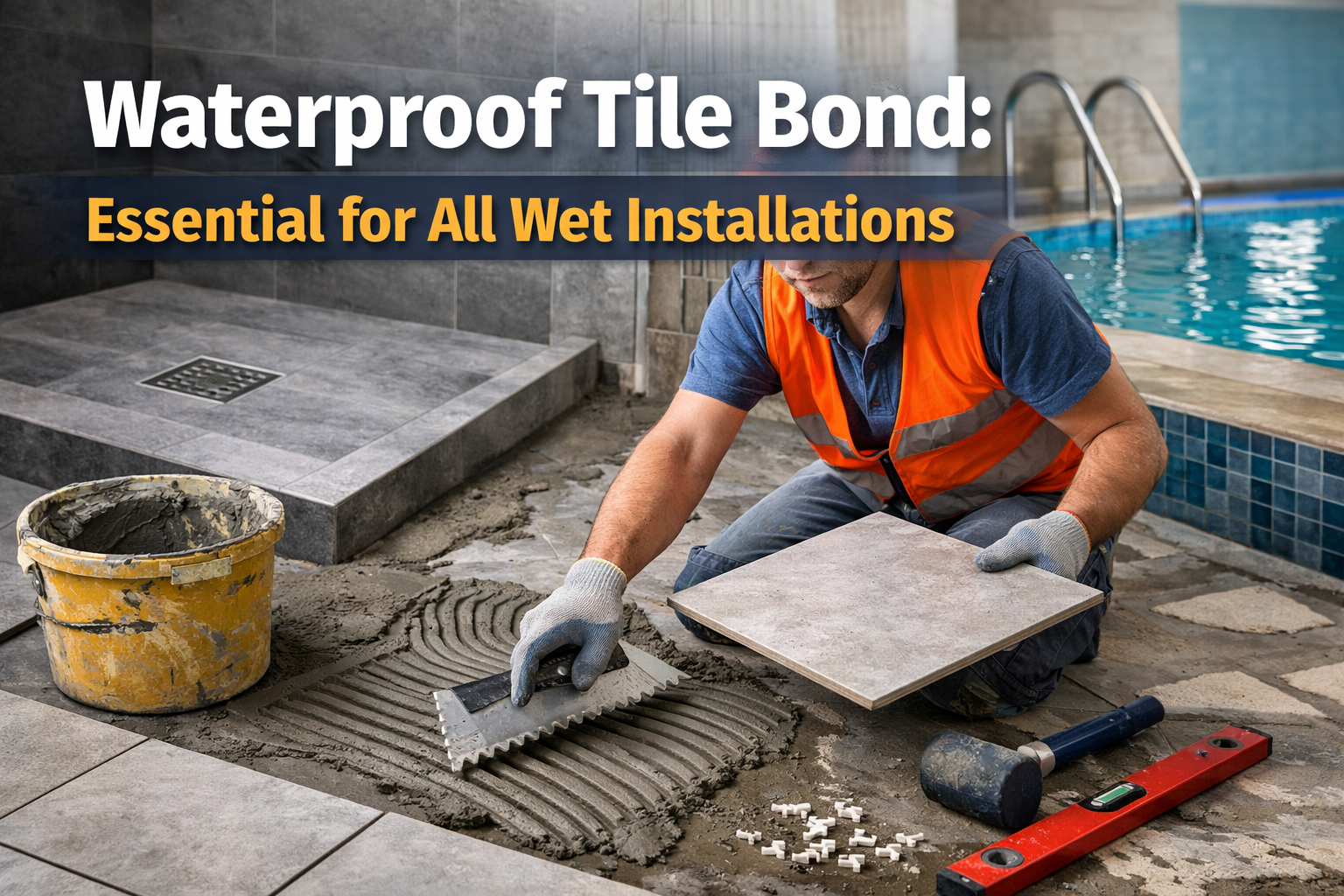
Bathrooms, kitchens, and swimming pools are areas exposed to constant moisture. Using a basic construction adhesive or generic tile bonding material in these spaces almost always leads to problems later. Tile bond for wet areas needs to handle moisture resistance without losing grip.
What Makes a Tile Bond Truly Waterproof
Not every product labeled as water resistant is a waterproof tile bond. The difference becomes clear only after months of use. I’ve noticed that truly waterproof systems behave differently once water exposure becomes routine.
A reliable tile bond adhesive for wet installations typically offers:
- Strong adhesion strength that does not soften when exposed to water
- Low water absorption to limit seepage beneath tiles
- Crack resistance to handle minor substrate movement
- Long-term durability rather than short-term holding power
Polymer-based tile bond systems perform better here because they maintain bonding performance even when moisture is present daily. Preventing tile loosening over time depends on how the adhesive reacts after curing, not how fast it sets.
Common Mistakes I See in Wet Area Tile Installations
I’ve seen skilled tile installers run into issues simply because the wrong product was used. Most tile failure in wet areas isn’t caused by poor workmanship. It usually comes down to material choice or process shortcuts.
Common mistakes include:
- Using standard tile adhesive in bathrooms and kitchens
- Ignoring moisture levels during substrate preparation
- Applying tile bond too thin in corners and joints
- Allowing water exposure before proper curing
These errors often lead to tile adhesive breakdown and weak tile bonding issues. Once water damage under tiles starts, repairs become expensive and disruptive. Preventing moisture-related tile damage is far easier than fixing it later.
Where Waterproof Tile Bond Matters the Most
Not all wet installations face the same challenges. Understanding where waterproof tile bond is essential helps reduce installation failures.
Bathrooms and Wash Areas
Bathrooms experience daily water exposure and trapped humidity. Waterproof tile bond for bathrooms keeps tiles firmly in place even when moisture is constant. Tile bond is so important for moisture-resistant flooring and is especially important near showers and drains.
Kitchens, Residential and Commercial
Tile bond for kitchens and wet areas must withstand frequent washing, spills, and temperature swings. Commercial kitchens face even more pressure due to aggressive cleaning routines and heavy foot traffic.
Swimming Pools and Balconies
Tile bond for swimming pools deals with continuous water exposure and hydrostatic pressure. Outdoor balconies add weather changes to the mix. Using tile bond for water exposure in these spaces prevents detachment and surface failure.
Commercial and Industrial Spaces
Tile bond for commercial wet installations supports wash-down areas, factories, and service zones. Industrial tile bond systems are designed to handle moisture, chemicals, and mechanical stress together.
Why Professionals Are Shifting Toward Advanced Tile Bonding Solutions
Construction professionals are paying more attention to what happens after handover. Long-term maintenance costs matter more now than ever. Replacing failed tiles in wet areas disrupts operations and damages reputations.
From what I’ve seen on projects, installers and contractors prefer solutions that offer:
- Predictable curing behavior
- Reduced tile fixing system failures
- Better control over moisture-related tile damage
- Lower long-term maintenance costs
Manufacturers with experience in advanced bonding formulations understand these pressures. Companies like Famsa Polymers Industry, known for epoxy-based bonding solutions and manufacturer-tested tile bond systems, focus on performance that holds up in real conditions rather than ideal ones.
How to Choose the Right Tile Bond for Wet Areas
Choosing a tile bond should never be an afterthought, especially for wet installations. A practical checklist helps avoid costly mistakes.
- Confirm the tile bond is designed for constant moisture
- Look beyond fast setting and focus on adhesion strength
- Ensure compatibility with flooring and wall tiles
- Verify performance in commercial projects if required
- Consider durability over short-term material savings
The best tile bond for water exposure balances flexibility and strength. Tile bond for flooring and tile bond for wall tiles may behave differently, so matching the product to the application matters.
Conclusion
Wet installations demand a different approach. Water doesn’t forgive shortcuts, and tile bond failures rarely show up immediately. Choosing a waterproof tile bond, often enhanced with epoxy resin, protects the surface, the structure beneath it, and the credibility of everyone involved.
When tile bond selection is treated as a system decision rather than a quick purchase, installations last longer and perform better. Learning from manufacturers with hands-on experience, such as Famsa Polymers Industry, helps professionals avoid repeating common mistakes and deliver results that hold up over time.
FAQs
What makes a tile bond suitable for wet areas?
A suitable tile bond maintains adhesion strength, resists water absorption, and performs reliably under constant moisture.
Can standard tile adhesive be used in bathrooms?
Standard tile adhesive often fails in wet environments and should be avoided for bathrooms and similar areas.
Is waterproof tile bond necessary for swimming pools?
Yes, tile bond for swimming pools must handle continuous water exposure and pressure to prevent failure.
How does moisture affect tile bonding over time?
Moisture weakens improper adhesives, leading to tile loosening, cracks, and eventual detachment.
What mistakes cause tiles to fail in wet installations?
Using the wrong tile bond, poor substrate preparation, and early water exposure are the most common causes.