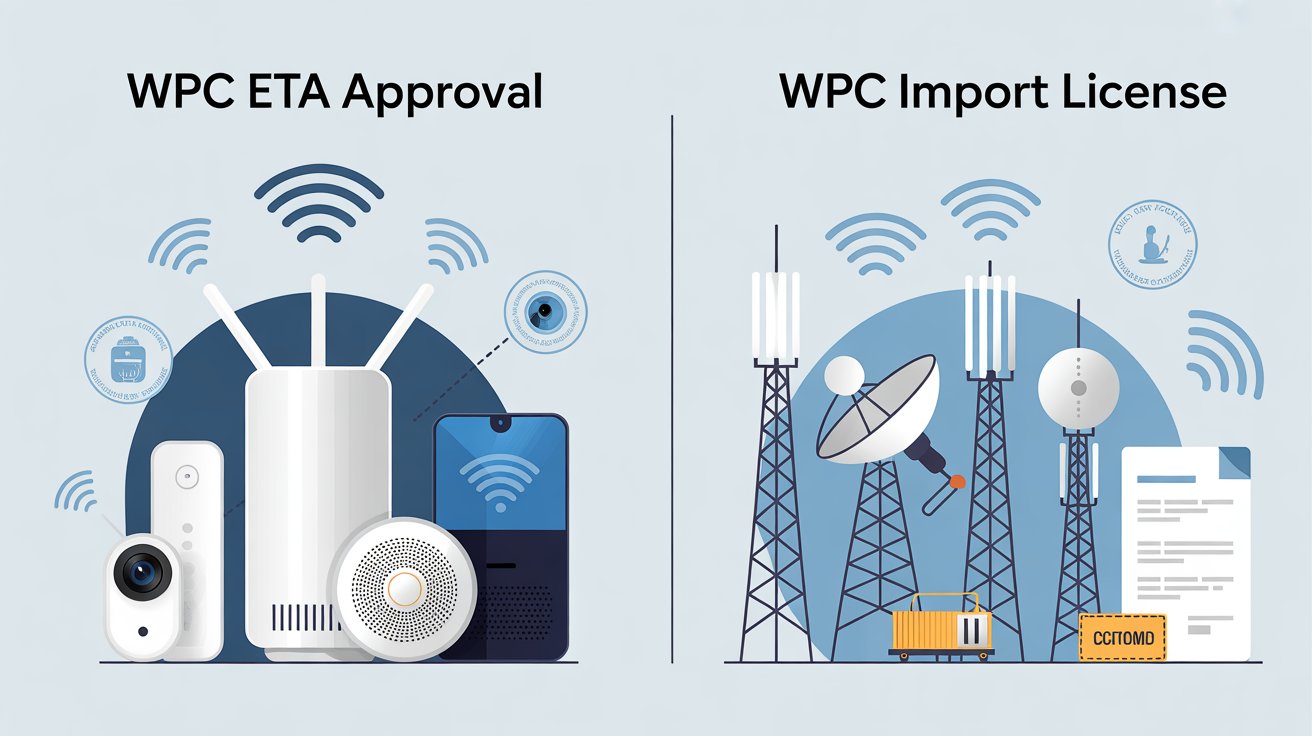
When importing wireless and electronic products into India, regulatory approvals are not optional. Many businesses face confusion between two common requirements, ETA approval and import licensing from the Wireless Planning & Coordination (WPC) Wing. Understanding the difference between them is essential to avoid shipment delays, penalties, or rejection at customs.
This guide explains both approvals in a clear and practical way, helping importers, manufacturers, and sellers choose the right compliance path for their products.
Why WPC Approval Is Important in India
India regulates wireless communication devices to ensure that radio frequencies are used safely and do not interfere with national networks. Any product that uses radio frequency technology, such as Wi-Fi, Bluetooth, RFID, or wireless modules, falls under WPC regulations.
The WPC Wing, which operates under the Department of Telecommunications (DoT), controls how these devices enter the Indian market. Depending on the product type, frequency band, and usage, businesses may need approval before import or sale.
Understanding WPC ETA Approval
ETA stands for Equipment Type Approval. It is required for wireless devices that operate in license-exempt frequency bands, such as 2.4 GHz or 5 GHz. Products like smart devices, routers, wireless cameras, Bluetooth speakers, and IoT equipment usually fall under this category.
WPC ETA Certification is mainly a one-time approval per product model. Once approved, the product can be imported and sold in India without needing repeated permission for each shipment.
The process involves:
- Submitting RF test reports from an accredited laboratory
- Declaring the frequency range and technical specifications
- Applying through the WPC online portal
Since this approval is product-specific, it simplifies long-term business operations and reduces compliance burden for importers.
What Is a WPC Import License?
A WPC Import License is required when a product operates on licensed frequency bands or when the equipment is meant for restricted or special use. This usually applies to telecom equipment, defense-related devices, satellite communication products, and certain industrial wireless systems.
Unlike ETA approval, this license is often shipment-based or usage-based, meaning approval may be required each time you import the product or for a specific purpose.
This type of approval involves deeper technical evaluation and may require additional documents such as:
- End-use details
- Import justification
- Network or deployment plans
Because of these factors, the approval timeline is usually longer.
Key Differences Between ETA Approval and Import Licensing
Understanding the difference between these two approvals helps businesses choose the right compliance route.
Nature of Approval
ETA approval focuses on confirming that the device works within permitted frequency bands. Import licensing focuses on controlling restricted spectrum usage.
Product Scope
Consumer electronics and general wireless products usually require ETA approval. Specialized or sensitive equipment often requires import licensing.
Validity
ETA approval is product-based and reusable. Import licensing may be limited to a single shipment or specific use case.
Processing Time
ETA approvals are generally faster when documents are complete. Import licenses may take longer due to additional scrutiny.
WPC ETA Certification is ideal for businesses dealing in standard wireless products, while import licensing is meant for controlled or sensitive technologies.
Which Approval Do You Actually Need?
The approval you need depends on three main factors:
- Frequency band used by the device
- Purpose of use (commercial, testing, defense, or research)
- Nature of the product (consumer vs. specialized equipment)
If your product uses license-free bands and is meant for general sale, ETA approval is usually sufficient. However, if it operates on restricted frequencies or is intended for specific applications, an import license may be mandatory.
WPC ETA Certification helps most electronics brands enter the Indian market smoothly without repeated approvals, making it the preferred choice for large-scale imports.
Common Mistakes Importers Should Avoid
Many businesses face delays because of simple compliance errors. Some common mistakes include:
- Applying for the wrong approval type
- Submitting incomplete RF test reports
- Importing products before receiving approval
- Assuming all wireless devices need the same clearance
Working with professionals who understand WPC regulations can help avoid these issues and save time.
How Professional Support Makes the Process Easier
WPC compliance may look simple on paper, but practical execution requires accuracy. From understanding frequency classifications to preparing correct documentation, every step matters.
Our company specializes in helping businesses secure approvals smoothly and without confusion. We assist importers, manufacturers, and sellers by managing documentation, coordinating test reports, and ensuring timely submission.
For businesses dealing with wireless products, WPC ETA Certification remains the most efficient route for long-term compliance and hassle-free imports.
Final Thoughts
Choosing between ETA approval and import licensing is not about preference, it is about compliance. Each approval serves a different purpose, and selecting the wrong one can lead to costly delays or legal trouble.
By understanding how WPC regulations work and matching them correctly to your product, you can ensure smooth customs clearance and uninterrupted business operations. When in doubt, expert guidance can make all the difference.