
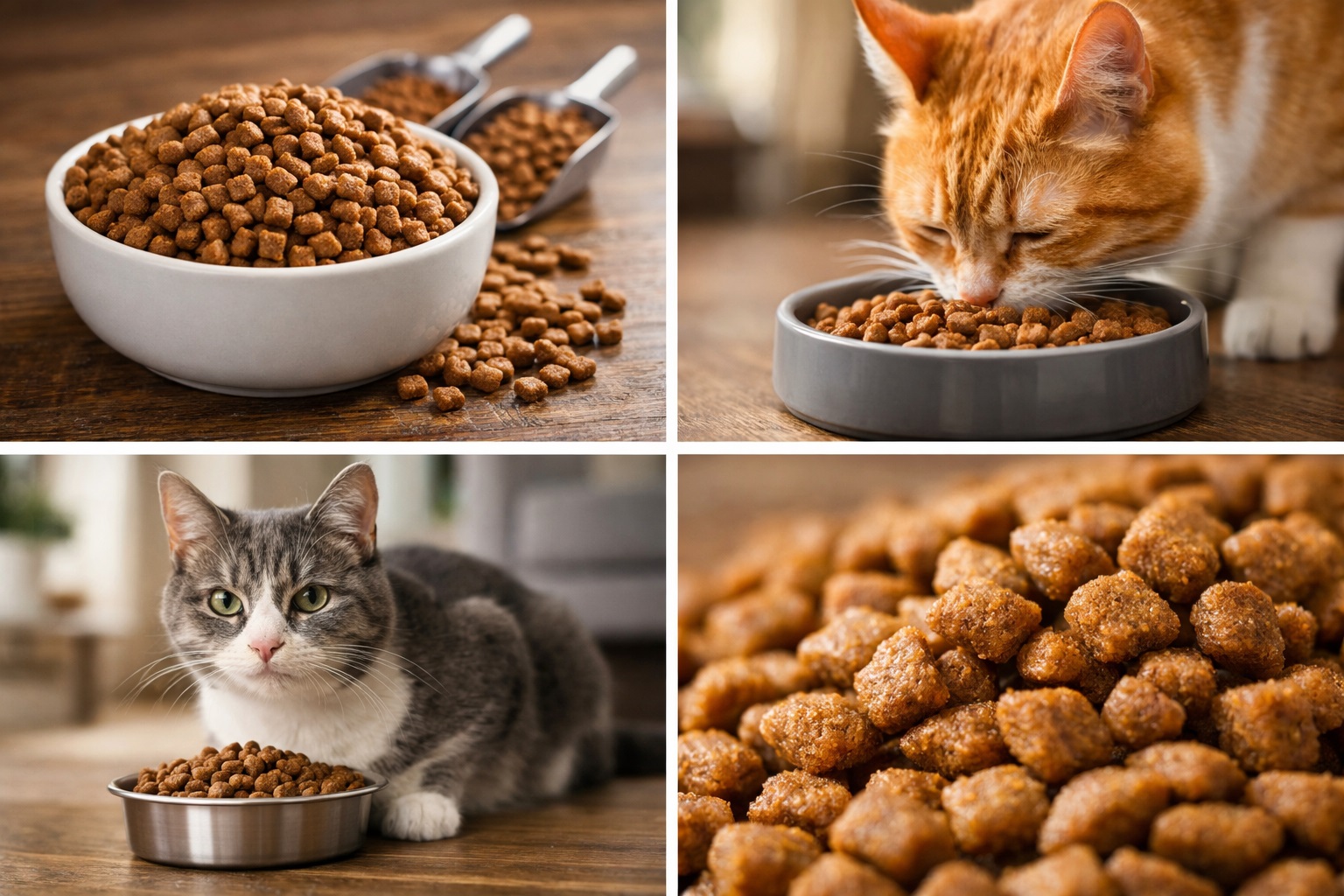
Dry cat food remains one of the most popular feeding choices for pet parents worldwide—and for good reason. It’s convenient, cost-effective, easy to store, and offers complete nutrition when chosen correctly. However, not all dry cat food is created equal. With dozens of formulas, flavors, and claims on the shelf, choosing the best dry cat food can feel confusing.
This comprehensive guide will help you understand what dry cat food really is, how it supports feline health, how to compare dry cat food brands, and how to select the right option based on your cat’s age, lifestyle, and health needs.
What Is Dry Cat Food?
Dry cat food, commonly known as kibble, is a shelf-stable form of cat food made by combining ingredients such as meat, grains or grain alternatives, fats, vitamins, and minerals, then cooking and drying them into bite-sized pieces.
High-quality dry cat food provides:
- Complete and balanced nutrition
- Essential proteins and fats
- Vitamins and minerals for daily health
- Long shelf life and easy feeding routines
When formulated correctly, dry cat food can support a cat’s health just as effectively as other food types.
Why Pet Parents Choose Dry Cat Food
Dry cat food continues to be a top choice for busy pet parents and multi-cat households.
1. Convenience and Storage
Dry cat food is easy to measure, doesn’t require refrigeration, and can be left out for free-feeding without spoiling quickly.
2. Budget-Friendly Nutrition
Compared to wet food, dry cat food is often more affordable while still offering balanced nutrition.
3. Dental Benefits
The crunchy texture of kibble may help reduce plaque buildup when combined with proper dental care.
Is Dry Cat Food Healthy for Cats?
Yes—when you choose the best dry cat food, it can be a healthy and reliable option. The key lies in ingredient quality and formulation.
Cats are obligate carnivores, meaning protein should always be the foundation of dry cat food. Poor-quality options rely heavily on fillers, while premium dry cat food focuses on animal-based nutrition.
Understanding Dry Cat Food Ingredients
Reading labels is essential when comparing dry cat food brands.
1. Protein Comes First
The first ingredient should always be a named animal protein such as chicken, turkey, salmon, or lamb. This is a key indicator of the best dry cat food.
2. Healthy Fats
Look for sources like chicken fat or fish oil. These support energy, skin health, and coat shine.
3. Carbohydrates in Balance
While cats don’t need large amounts of carbs, small quantities from whole grains or vegetables can provide energy and fiber.
4. Essential Nutrients
Taurine, vitamins, and minerals must be present to support heart health, vision, immunity, and digestion.
Types of Dry Cat Food
Not all dry cat food serves the same purpose. Choosing the right type depends on your cat’s needs.
Grain-Free Dry Cat Food
Designed for cats with grain sensitivities. Uses alternatives like peas or lentils instead of wheat or corn.
High-Protein Dry Cat Food
Ideal for active cats or cats that thrive on meat-rich diets.
Weight Control Dry Cat Food
Lower in calories and fat to support healthy weight management.
Hairball Control Dry Cat Food
Contains added fiber to reduce hairball formation.
Best Dry Cat Food by Life Stage
Kitten Dry Cat Food
Kittens need higher calories, protein, and nutrients for growth. Kitten-specific dry cat food supports bone, muscle, and brain development.
Adult Dry Cat Food
Balanced formulas help maintain ideal weight, energy, and overall wellness.
Senior Dry Cat Food
Easier-to-digest dry cat food with joint-support nutrients is best for older cats.
Choosing age-appropriate formulas is essential when selecting the best dry cat food
How to Evaluate Dry Cat Food Brands
When comparing dry cat food brands, focus on quality rather than marketing claims.
Top-performing brands usually offer:
- Transparent ingredient sourcing
- Clear nutritional information
- Veterinary or nutritional research backing
- Consistent product quality
The best dry cat food brands prioritize animal protein, balanced formulas, and safety standards.
Common Myths About Dry Cat Food
Myth 1: Dry Cat Food Causes Dehydration
Dry cat food itself doesn’t cause dehydration, but cats eating only dry food should always have access to fresh water.
Myth 2: All Kibble Is the Same
Ingredient quality varies significantly between dry cat food brands.
Myth 3: Dry Cat Food Is Only for Adult Cats
There are specialized dry cat food options for kittens and seniors as well.
How to Transition to a New Dry Cat Food
Switching dry cat food suddenly can cause digestive upset. Follow a gradual transition:
- Days 1–2: 75% old food + 25% new food
- Days 3–4: 50% old food + 50% new food
- Days 5–6: 25% old food + 75% new food
- Day 7: 100% new dry cat food
This helps your cat adjust comfortably.
Signs You’ve Chosen the Best Dry Cat Food
Your cat will show clear signs when their food is working well:
- Healthy body weight
- Shiny coat and clear eyes
- Consistent energy levels
- Good digestion and stool quality
- Enthusiastic appetite
If any negative symptoms appear, consult a veterinarian.
Dry Cat Food vs Wet Cat Food
Many pet parents wonder which is better. The truth is both have benefits.
Dry cat food advantages:
- Convenience
- Cost-effectiveness
- Dental support
Wet cat food advantages:
- Higher moisture content
- Strong aroma and taste
Many vets recommend a combination of both for balanced nutrition.
Feeding Tips for Dry Cat Food
- Measure portions to prevent overeating
- Store dry cat food in an airtight container
- Keep feeding bowls clean
- Provide fresh water at all times
These habits help maximize the benefits of even the best dry cat food.
Final Thoughts on Choosing the Best Dry Cat Food
Dry cat food can be an excellent foundation for your cat’s diet when chosen carefully. The best dry cat food focuses on high-quality protein, essential nutrients, and balanced formulation. While many dry cat food brands compete for attention, the right choice depends on your cat’s age, health, and preferences.
By learning how to read labels, understanding nutritional needs, and observing your cat’s response, you can confidently select dry cat food that supports long-term health and happiness.
Frequently Asked Questions (FAQs)
1. Is dry cat food enough for daily nutrition?
Yes, high-quality dry cat food provides complete and balanced nutrition when fed properly.
2. What should I look for in the best dry cat food?
Look for animal protein as the first ingredient, added taurine, and no unnecessary fillers.
3. Are dry cat food brands safe?
Reputable dry cat food brands follow strict safety and nutritional guidelines.
4. Can kittens eat dry cat food?
Yes, but only kitten-formulated dry cat food designed for growth and development.
5. Should I mix dry and wet cat food?
Many cats benefit from a combination, but dry cat food alone can still meet nutritional needs with proper hydration.