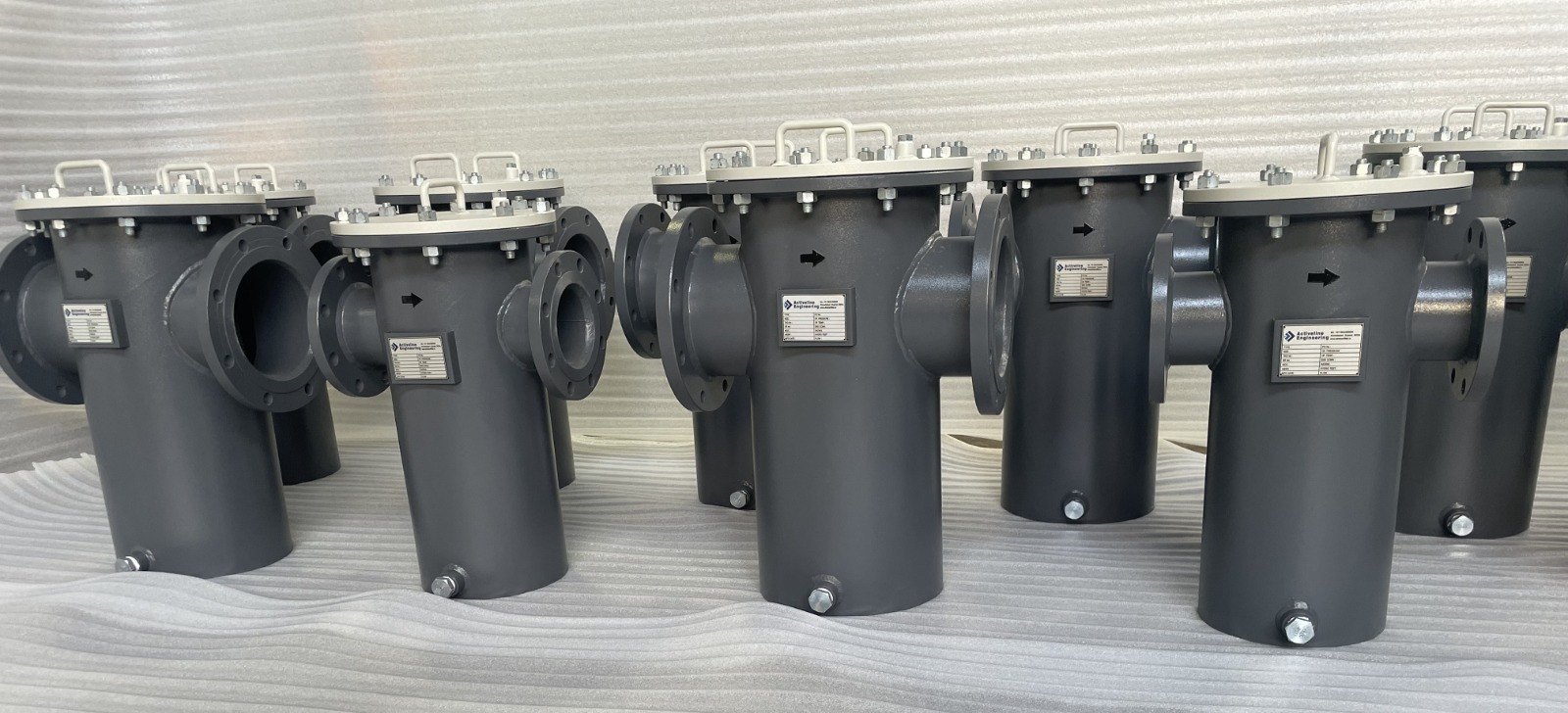
The manufacturing industry in India is presently witnessing a major change. The “Make in India” campaign is geared towards raising the share of the manufacturing sector in the overall GDP to 25%. As a result, the reach of the process industries, for example, chemicals and power generation, has achieved new heights. In such a scenario, dependable filtration assumes the role of an indispensable operational foundation. Although filtration is considered to be a minor component, a good-quality Basket Strainer India acts as the first line of defense for costly downstream equipment like high-pressure pumps, flow meters, and sensitive control valves.
By 2026, industrial strainers’ demand will not be limited to mere trash elimination only. It will be primarily aimed at uptime preservation and meeting the demands of process purity in a system that is constantly being compared with global standards. Heads of procurement and plant managers taking an informed decision concerning these components is what separates an uninterrupted production cycle from disastrous, multi-crore equipment breakdown(s).
The Shifting Landscape: Market Demand for Basket Strainers in India
The Indian market transformation visually seems quite intriguing. Not only volume increase is happening, but there is also a major change in the technical requirements. In the past, due to the lesser initial cost, Y-strainers were primarily used in many applications but basket strainers are now the most rapidly expanding segment in the Indian industrial sector.
The reasoning is very sensible. When plants expand, flow rates become higher. Compared to Y-strainers, basket strainers provide a bigger filtration surface thus giving rise to a lower pressure drop and longer time between the necessary cleanings. In a manufacturing setting with very high volumes, those additional hours of uptime are directly reflected in the enhanced bottom-line margins.
Key sectors currently driving this demand include:
- Water & Wastewater Treatment: It is the prime application segment of basket strainers in India presently. Large-scale municipal desalination projects and industrial effluent treatment plants (ETP) necessitate the deployment of filtration systems capable of dealing with high volumes of organic and inorganic debris.
- Pipes cough up crude, filters stand tough – carbon steel parts hold firm through rough phases of digging and refining. Growth? Around five percent yearly tags along, steady but never rushing. Tough alloys earn their keep where pressure builds and grit flies without warning.
- Out in drug labs and food plants, spotless gear matters most. Lately, outfits choose stainless setups with 3A approval – built so nothing seeps out, simple to clean down. These parts go up more often now.
Critical Use Cases: Industrial Applications in the Indian Context
The selection of the right Basket Strainer India contact should be guided mainly by the identification of the most crucial application “pain point”. Not all strainers are equally effective, and one of the most common mistakes which cost dearly is to choose a model that does not fit the environment.
1. Pump Protection in Chemical Processing
Gujarat and Maharashtra’s chemical processing hubs use centrifugal pumps extensively. Such pumps are vulnerable to solid particles. Therefore, a basket strainer is installed on the suction side in order to completely stop the intrusion of solids into the impeller housing.
Implementation Tip: In principle, go for a mesh size that is just a bit smaller than the smallest particle that might theoretically cause pump failure. However, please note that you shouldn’t go for over-filtration. Using a 100-mesh screen rather than a 40-mesh one unnecessarily increases the pressure drop and thus the pump must make more effort, which causes the motor to wear out prematurely.
2. Continuous Flow in Power Generation
System downtime for so-called “routine maintenance” in large power plants is not an option. That explains why “Duplex” basket strainers are considered to be the lifeline of the power production. A duplex-type installation consists of two strainer housings joined by a diverter valve. Once one of the baskets is full of impurities, the flow is redirected to the second compartment, and the first one is cleansed without the process being halted. It is the so-called “perpetual flow” that the electricity distribution system must have at all times for it to be stable.
3. Purity Standards in the F&B Sector
Strainers that are used in the F&B industry when manufacturing liquid products such as fruit juices, milk, and edible oils normally come in a series. At the intake, the initial coarse basket strainer gets rid of the large-sized debris. Then, smaller-sized stainless-steel units take care of further filtration in order to meet the rigorous purity standards of FSSAI or the like.
Sourcing Strategy: The Professional’s Checklist
India is a country of contrasts. It is the place where globally renowned manufacturers have their facilities which make products to be exported to the European and American markets. However, at the same time, it has a sizable unorganized sector where, in order to reduce costs, manufacturers usually disregard quality standards. When procuring a Basket Strainer India product, you must be very selective and thereby ensure that your vendors meet the following criteria.
Step 1: Material Selection and Compatibility
Cold facts first – cast iron works just fine where pressure stays low. Money-wise, it makes sense for basic water setups. Think everyday pipes, nothing fancy. Sturdy stuff, yet cost effective when things do not need to push hard.
Firm under heat, carbon steel shows up often where oil, gas, or chemical work runs hot. Though plain in look, it handles tough conditions without surprise failures. When temperatures climb, this metal stays reliable across heavy industries.
When it comes to handling harsh chemicals or making medicine and food, stainless steel 304 or 316L isn’t optional. Tough environments demand materials that won’t give in – this one fits the job by staying strong where others fail.
A typical setup uses cast strainers, yet here’s the twist – fabrication opens doors to tailored designs. When space near the machinery feels cramped, or nozzle positions demand odd angles, built-to-order units often fit better. Sure, they ask more from engineers on paper. Still, that flexibility quietly solves problems most overlook.
bcvStep 2: Maintenance and safety features
When buying, people usually forget about getting inside for upkeep. Yet once things run, safe entry matters most. Easy-to-open lids save trouble later on. Special tools should not be needed just to get them off. Bigger models – over eight inches wide – need extra thought. See whether a “Davit Lifting” aid exists from the maker. That kind of gear lets a single worker move a bulky lid. A mechanical arm lifts it clear. Swinging weight out of the way cuts down injuries. Cleaning becomes quicker too.
The 2026 Trend: The Rise of “Smart” Filtration
It really seems that the period when the only kind of basket strainers temperature control involved was that of a “static iron pot” is about to come to an end in the very near future. One of the most substantial trends in the market is the incorporation of Industrial Internet of Things (IIoT) sensors in Basket Strainer India.
Today, state-of-the-art systems come with electronic differential pressure transmitters that send the data directly to a central SCADA system. There is no need for the technician to look at the dial anymore. The system delivers an instant notification when the basket is 75% full. And, in sophisticated duplex arrangements, the diverter valve can even be activated remotely by the system. The transition from repair to prevent maintenance is absolutely crucial for the Indian industry in terms of minimizing unplanned downtimes.
Avoiding the “Total Cost of Ownership” Trap
Usually, in the B2B sector, the lowest initial price does not mean that the equipment will be the cheapest over the entire life. For example, a “value” strainer might share all the external dimensions required but if the mesh inside the basket is thin and low-grade, it will bend or eventually tear under pressure.
Also, if the unit (housing) has not been properly cast or fabricated according to international standards (like ASME or ANSI), the chances of casting porosity or weld failure going up significantly. I mean, the price of the strainer is just a drop in the ocean compared to the loss of production hours if the strainer breaks down.
- Implementation Tip: In every shipment, insist on nondestructive testing (NDT) reports and material test certificates (MTC). Established manufacturers have these documents ready to be handed over as proof of the pressure-retaining components’ integrity.
Managing Pressure Drops for Energy Efficiency
This is a detail that is often missed by the engineers. Each strainer causes some level of obstruction in the line which results in a pressure drop. If the selection of a strainer has been done solely on the basis of minimizing the initial capital expenditure, then there will be a requirement for more electricity from the downstream pump in order to maintain the flow rate that has been set.
In a five-year time frame, the additional energy cost resulting from the use of an undersized strainer can be higher than the initial price of that strainer. It is advisable that before the purchase of a strainer, the engineering personnel of the manufacturer in question be consulted so as to determine the Clean Pressure Drop and whether it is compatible with the pump curve that is going to be used or not.
Conclusion: Data Driven Procurement for Industrial Success
The Indian market for basket strainers is in a much more evolved state now than before. It offers a large variety of high-performance choices to meet the industrial requirements of every sector
When choosing a Basket Strainer India supplier, the primary focus should be on the aspects like documented quality, application-specific engineering (for example, picking duplex units for continuous and critical processes), and long-term maintenance availability.
Ultimately, the very existence of an industrial complex worth several crores depends on the tiniest details. Indian manufacturers, by giving priority to high-purity materials, correct pressure ratings, and intelligent monitoring systems can take their operations to a global level of competitiveness, safety, and efficiency. In a very literal sense, the “Make in India” success story is carried forward by these essential components.