In today’s fast-paced manufacturing world, efficiency, precision, and scalability are everything. One technology that quietly powers countless everyday products is the Injection Moulding Machine. From plastic containers and medical devices to automotive components and electronic housings, this machine plays a critical role in shaping modern industries.
This blog explores what an injection moulding machine is, how it works, its types, applications, benefits, and how to choose the right machine for your production needs.
What Is an Injection Moulding Machine?
An Injection Moulding Machine is industrial equipment used to manufacture parts by injecting molten material—most commonly plastic—into a specially designed mould. Once the material cools and solidifies, the mould opens to release a finished product with consistent shape and dimensions.
The process is widely preferred for mass production because it delivers high accuracy, repeatability, and minimal material waste.
How Does an Injection Moulding Machine Work?
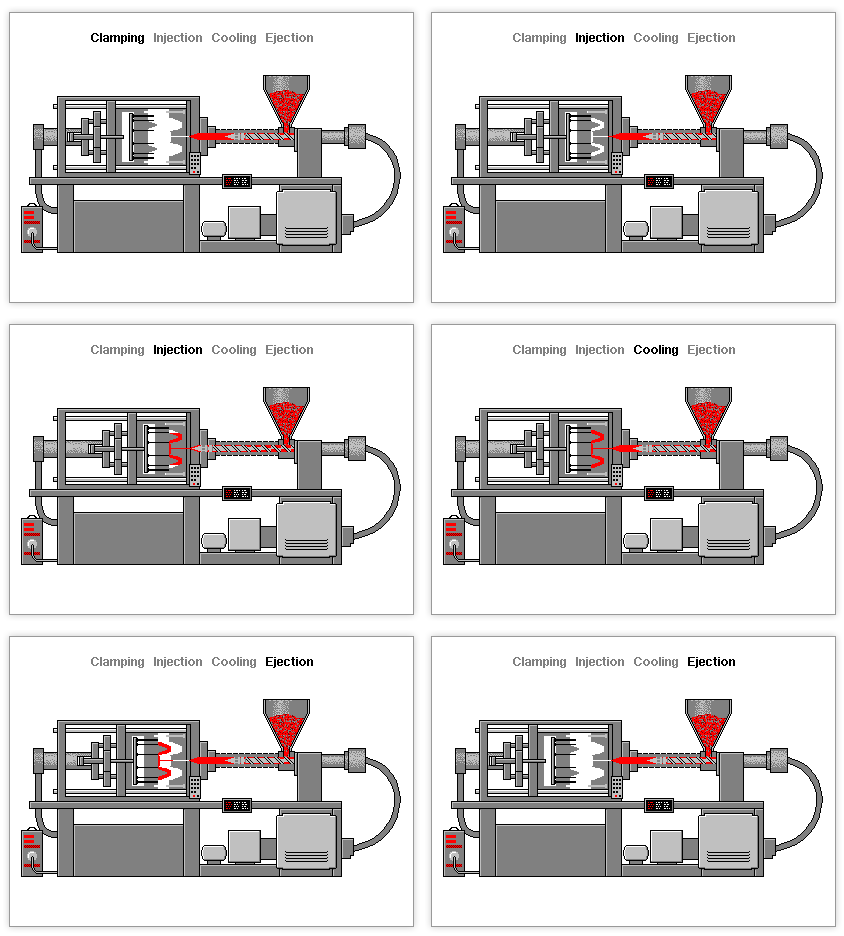
The working process of an injection moulding machine follows a systematic cycle:
1. Material Feeding
Plastic granules or pellets are fed into a hopper. These raw materials are typically thermoplastics such as polypropylene, ABS, polyethylene, or nylon.
2. Melting
The material moves through a heated barrel, where rotating screws melt it into a homogeneous molten form.
3. Injection
The molten plastic is injected into a closed mould cavity under high pressure. This ensures the material fills even the smallest details of the mould.
4. Cooling
Once inside the mould, the plastic cools and solidifies, taking the exact shape of the mould design.
5. Ejection
The mould opens, and ejector pins push the finished product out, ready for further processing or packaging.
This cycle repeats rapidly, allowing thousands of identical components to be produced efficiently.
Key Components of an Injection Moulding Machine
An injection moulding machine is made up of several critical parts that work together seamlessly:
-
Injection Unit – Responsible for melting and injecting the plastic material
-
Clamping Unit – Holds the mould securely during injection
-
Mould – A precision-engineered tool that shapes the final product
-
Hydraulic or Electric System – Powers the movement and pressure control
-
Control System – Allows operators to manage temperature, pressure, speed, and cycle time
Each component contributes to the accuracy and reliability of the production process.
Types of Injection Moulding Machines
Injection moulding machines are available in different configurations, each suited to specific production needs.
1. Hydraulic Injection Moulding Machine
These machines use hydraulic systems to generate clamping force and injection pressure. They are known for durability and high power, making them suitable for large and thick plastic parts.
2. Electric Injection Moulding Machine
Powered by servo motors, electric machines offer superior energy efficiency, faster cycle times, and precise control. They are commonly used in medical, electronics, and high-precision industries.
3. Hybrid Injection Moulding Machine
Hybrid machines combine hydraulic strength with electric precision. They provide balanced performance, reduced energy consumption, and excellent repeatability.
Applications of Injection Moulding Machines
The versatility of the injection moulding machine makes it indispensable across many industries:
-
Automotive Industry – Dashboards, bumpers, connectors, and interior panels
-
Medical Sector – Syringes, IV components, diagnostic device housings
-
Consumer Goods – Bottles, containers, toys, kitchenware
-
Electronics – Switches, cable insulation, enclosures
-
Packaging Industry – Caps, closures, thin-wall packaging
Its ability to produce complex shapes at scale gives manufacturers a strong competitive edge.
Advantages of Using an Injection Moulding Machine
Choosing an injection moulding machine offers several notable benefits:
High Production Efficiency
Once the mould is set, production cycles are fast, enabling large volumes in a short time.
Consistent Quality
Every part produced is nearly identical, ensuring uniform quality across batches.
Minimal Material Waste
Excess plastic can often be recycled, reducing overall material loss.
Design Flexibility
Complex geometries, fine details, and multiple material combinations are possible.
Cost-Effective for Mass Production
While initial tooling costs may be high, per-unit cost drops significantly at higher volumes.
Factors to Consider When Choosing an Injection Moulding Machine
Selecting the right injection moulding machine is crucial for optimal performance and profitability.
Clamping Force
The machine must provide enough clamping force to keep the mould closed during injection.
Shot Size
Ensure the machine can inject the required volume of material per cycle.
Material Compatibility
Different machines are better suited for specific plastic materials.
Energy Efficiency
Electric and hybrid machines can significantly reduce operational costs.
Automation and Control
Modern machines with advanced control systems improve consistency and reduce manual intervention.
Carefully evaluating these factors helps businesses align machine capabilities with production goals.
Future Trends in Injection Moulding Technology
The injection moulding industry continues to evolve with technological advancements:
-
Smart Machines with IoT Integration for real-time monitoring
-
Energy-Efficient Designs to reduce environmental impact
-
Advanced Materials such as biodegradable and recycled plastics
-
Automation and Robotics for faster and safer production
These innovations are shaping a more sustainable and intelligent manufacturing future.
Conclusion
The Injection Moulding Machine remains a cornerstone of modern manufacturing, offering unmatched efficiency, precision, and scalability. Its ability to produce high-quality components across diverse industries makes it a vital investment for businesses focused on growth and consistency.
By understanding how injection moulding machines work, their types, applications, and benefits, manufacturers can make informed decisions that improve productivity and long-term profitability. As technology advances, these machines will continue to redefine what’s possible in industrial production.